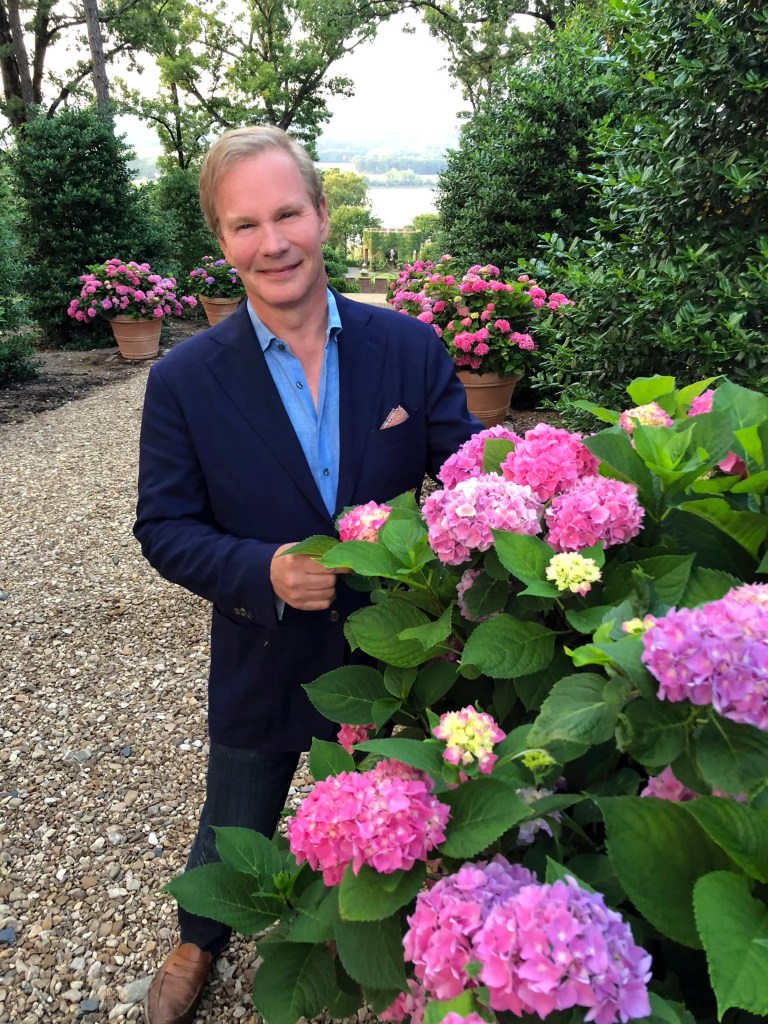
I’ve long been a fan of native Arkansan P. Allen Smith, who first achieved widespread fame with his PBS television shows P. Allen Smith’s Garden Home and P. Allen Smith’s Garden to Table. He’s a garden designer, horticulturalist, conservationist, lifestyle influencer and book author, and as I recently discovered, a really down-to-earth and friendly guy. (Full credit: this photo is from P. Allen Smith’s website.) By the way, he goes simply by “Allen.”
This March, I met up with my midwest-based sister, niece and grand-niece, for a mini-family reunion in Little Rock. The centerpiece event of the long weekend was visiting Allen’s Moss Mountain Farm, about 45 minutes outside of Little Rock, where we helped celebrate Allen’s 65th birthday (along with many other people who had bought tickets) with a lunch, and a tour of Allen’s home and the farm. As if visiting the farm and meeting Allen wasn’t enough, we actually stayed in his former home in Little Rock where he filmed his Garden Home TV show, which is now rented out by its current owners as an Airbnb.
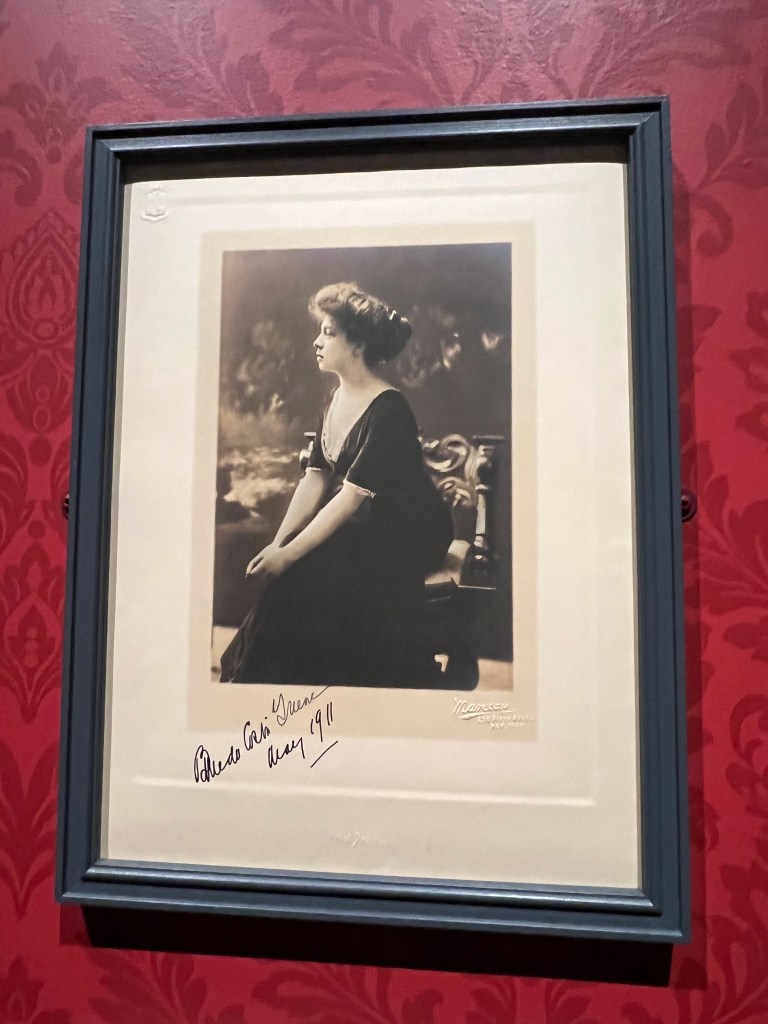
Several years ago I read a book – labeled historical fiction – entitled The Personal Librarian, by Marie Benedict and Victoria Christopher Murray. Published in 2021, the dust cover describes the book as “the remarkable story of J. P. Morgan’s personal librarian, Belle da Costa Greene, the Black American woman who was forced to hide her true identity and pass as white to leave a lasting legacy that enriched our nation.”
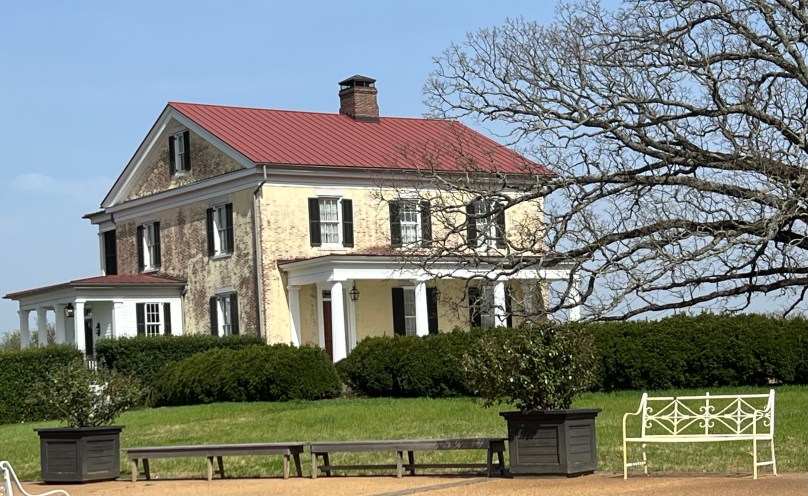
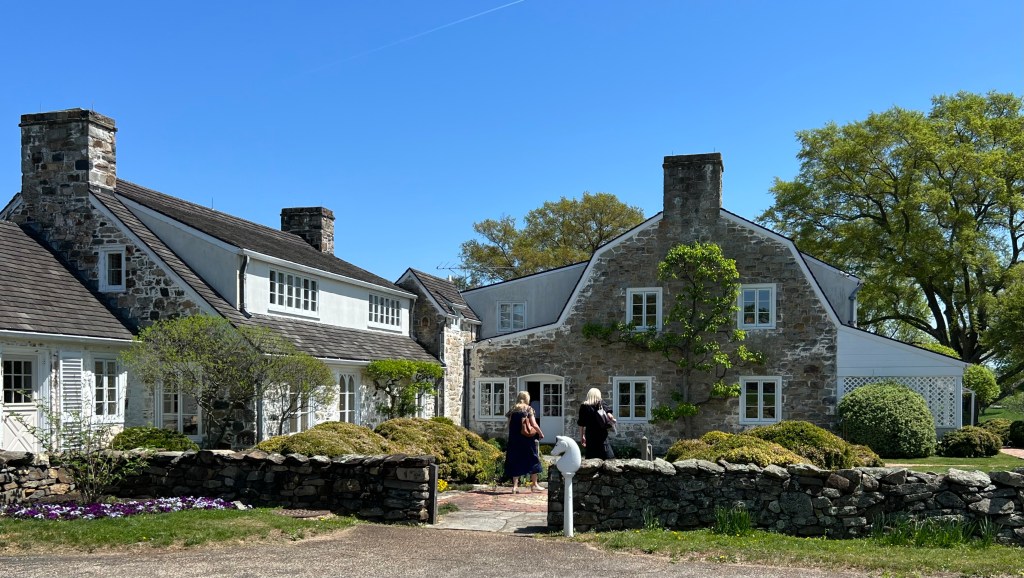
We recently had a rare opportunity to visit the Upperville, Virginia home of Paul Mellon (1907-1999) and Rachel “Bunny” Lambert Mellon (1910-2014), two of the most prominent American art collectors and philanthropists of the 20th century. The property, called Little Oak Spring, is part of what was the much larger Rokeby Farm, where Paul Mellon raised many famous thoroughbreds, including Sea Hero, who won the 1993 Kentucky Derby.
We made a quick visit to our Manhattan-based son last week, and we enjoyed a day and half of walking around and exploring the city’s Chelsea neighborhood and Meatpacking District.
We took Amtrak to NYC from Albany/Rensselaer (a gorgeous ride along the Hudson — make sure to sit on the river side!), arriving in the recently opened Moynihan Train Hall, now the entry point into the city for Amtrak and Long Island Rail Road trains. What a breath of fresh air after the dank, labyrinthian and underground Penn Station terminal.
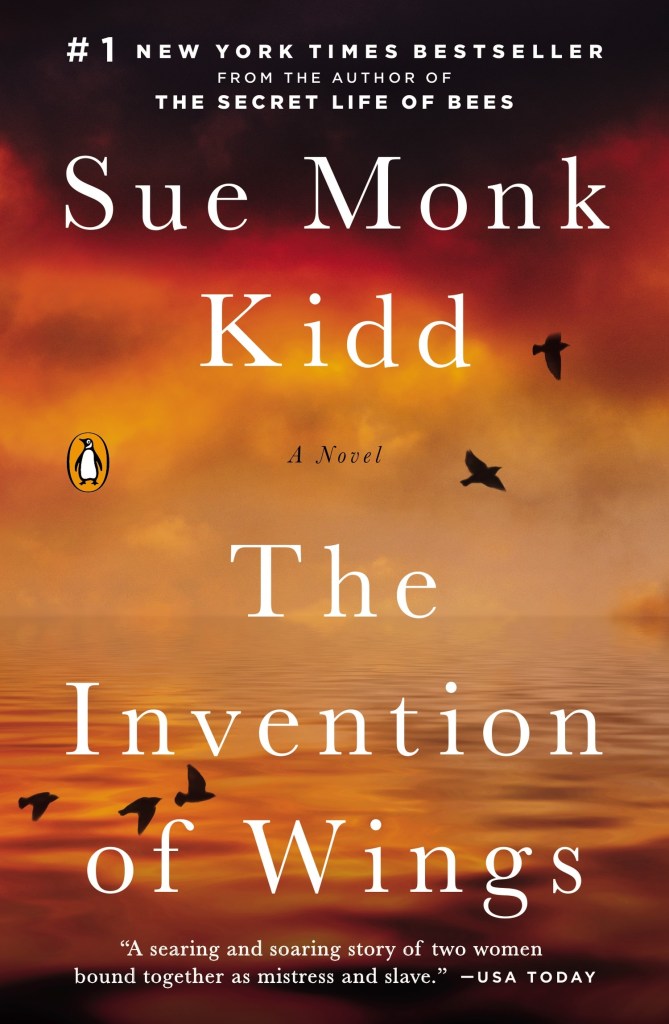
It wasn’t until I had read a few chapters of The Invention of Wings, by Sue Monk Kidd, that it dawned on me that the characters in the book might have some basis in fact. I think I flipped to the book’s prologue, where I was astonished to learn that indeed, Sarah and Angelina Grimké, the protagonists, fierce abolitionists and women’s rights advocates, were real. Not only that, but they were astonishing in their beliefs and bravery, given the antebellum society, and plantation-owning South Carolinian family, that they were born into.
While visiting Charleston recently (March 2022), we took a walking tour focused on the Grimké sisters, led by Lee Ann Bain. The tour took us through various neighborhoods of historic Charleston, where we saw places the sisters would have known in the early 19th century, and learned of some new research that a Grimké biographer has shared with Ms. Bain. Our tour lasted about 2 1/2 hours. Here’s a link to Ms. Bain’s site where tours can be booked: http://grimkesisterstour.com.
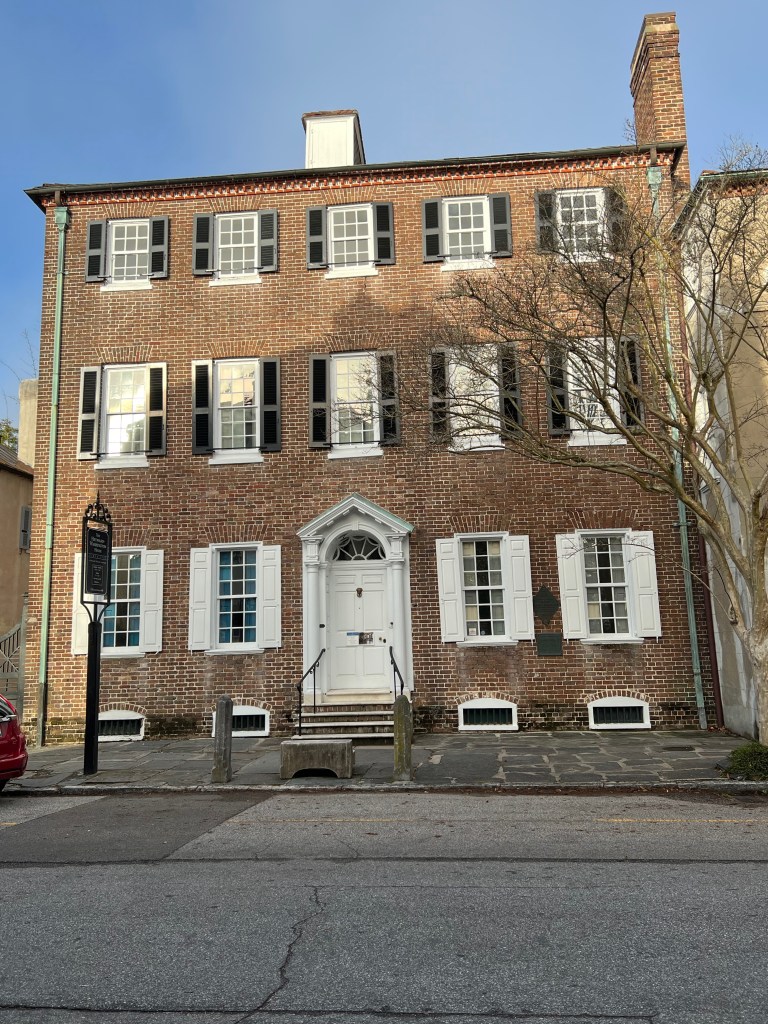
Interestingly, when I booked our accommodations for our spring trip at an 18th century outbuilding on Church Street, within the South of Broad neighborhood, I did not realize at the time that it was the kitchen to a home that sat directly across the street from the Heyward-Washington House, which was owned in the late 18th and early 19th century by the Grimké family. It was in this house, at 87 Church Street, where a horrified, young Sarah looked out her bedroom window and witnessed physical abuse of an enslaved person. It is believed that this deeply affecting event helped form her views towards slavery. Sarah lived in this home from age 2 to 11; the family later moved to a larger home to the north, on East Bay, where her sister Angelina was born.
Heyward-Washington House, 87 Church Street, Charleston, SC
This home was build in 1772 for Thomas Heyward, Jr., one of the four signers of the Declaration of Independence from South Carolina. When the British occupied Charleston in 1780, Hayward was captured and imprisoned in St. Augustine, Florida. The house was rented to George Washington for eight days during the new president’s tour of Charleston in May, 1791. In 1794, Heyward sold the property to John F. Grimké, who had also served as an officer during the war.
A couple of my favorite destinations are located in the vicinity of central/east Vermont — Simon Pearce, with two locations, and King Arthur Flour headquarters. I recently was in the area for a few days and was happy to be able to stop in.
The original Simon Pearce glassworks, in Quechee, Vermont.Continue reading →
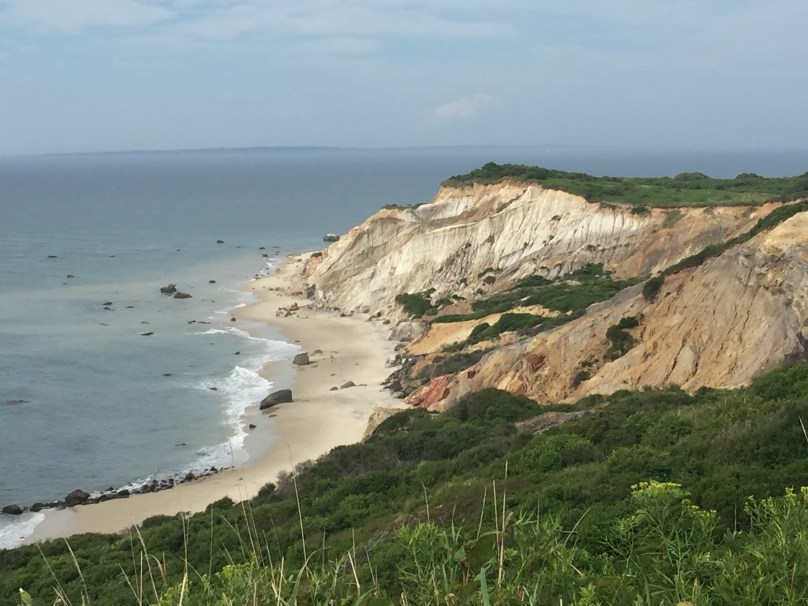
For nearly 35 years my closest friend from childhood, who now lives in New York State’s Dutchess County, has rented a place on the Massachusetts island of Martha’s Vineyard for an August getaway. She has been generous in her invitations to me to stay with her, and I’ve been blessed to spend time there. This summer, 2020, because of the Covid-19 pandemic, all of her plans, and mine, were cancelled because of concerns of being in crowded spaces in a place that attracts visitors from across the world.
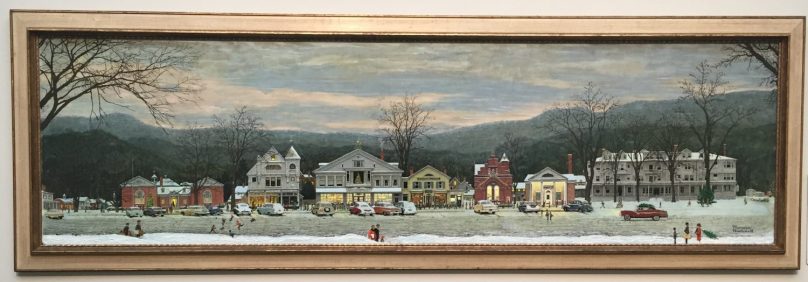
I recently managed a quick, two-night, mid-week, pre-Christmas getaway with my best friend at the historic Red Lion Inn in Stockbridge, Mass., in the heart of the Berkshires. The Inn is shown at the right of this 1967 illustration done for McCall’s magazine by Norman Rockwell, titled Home for Christmas (Stockbridge Main Street at Christmas). Rockwell’s own South Street home appears at the far right.



 Sandra's Town & Country