
by Sandra Hutchinson
Two days after Christmas my family convened in Barcelona, Spain, for our annual tradition of spending New Year’s together, away from our homes. I had rented two, three-bedroom apartments on Booking.com — one for five nights in Barcelona, and another for three nights in Madrid.
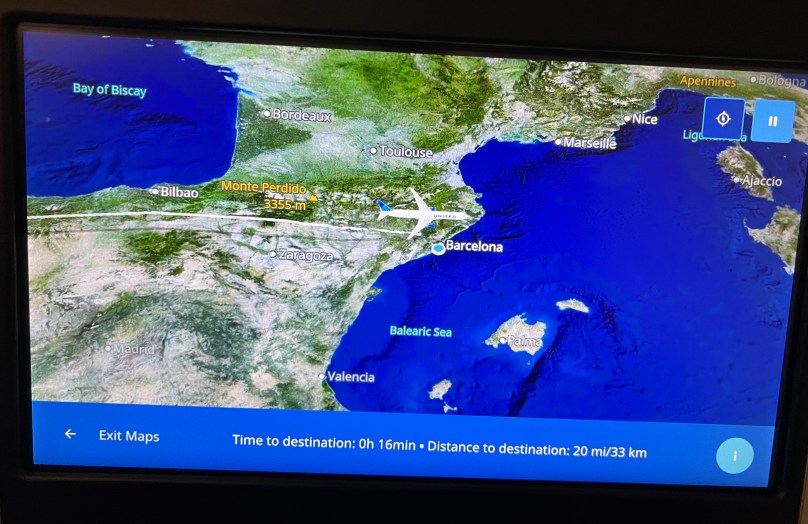
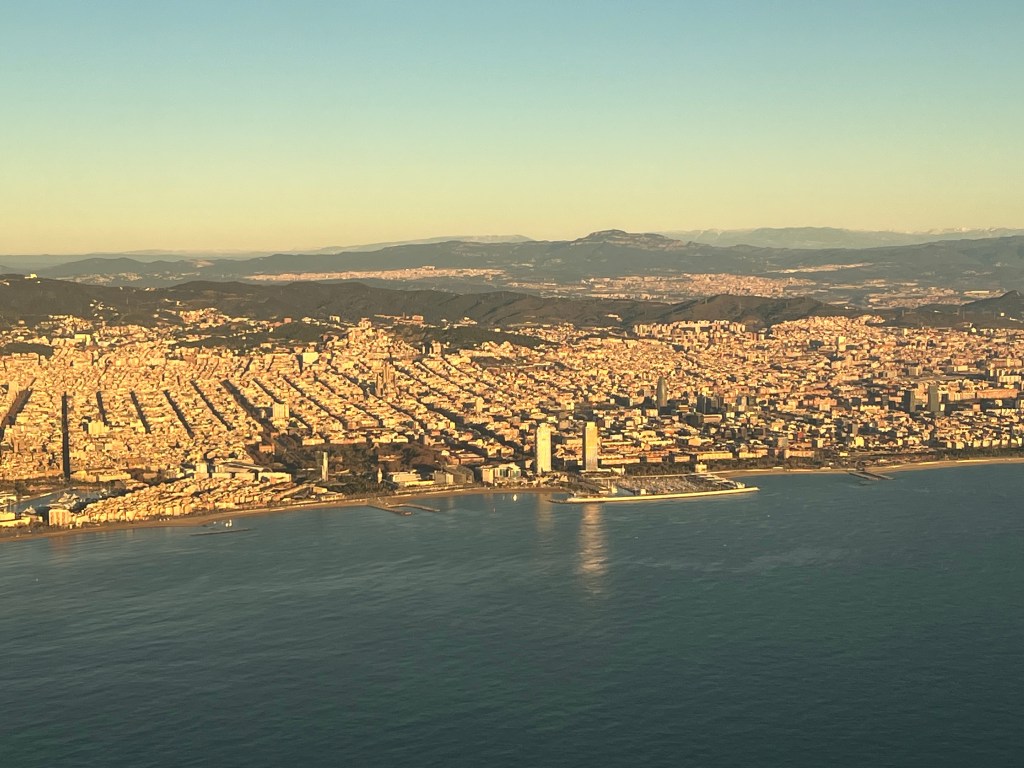
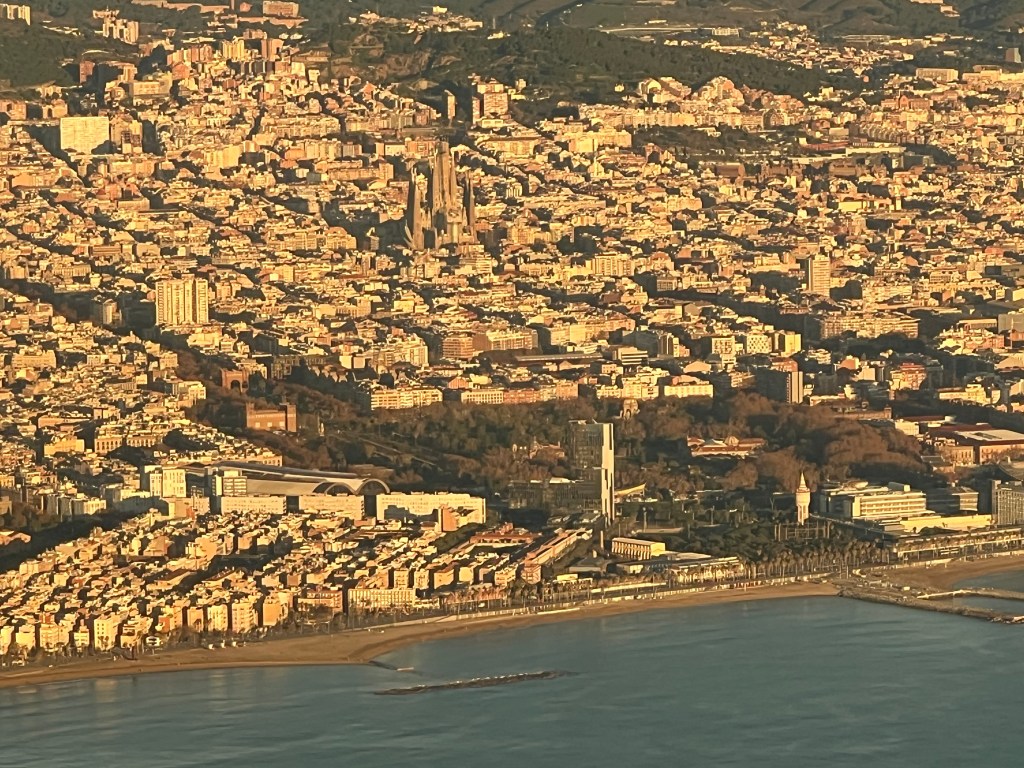
Flying into Barcelona, I was on the right side of the aircraft (take note!) and had a great view of the city as we swung out over the sea and approached the airport. La Sagrada Familia is visible in the photo that is more zoomed-in.
At least a couple of us (including me) had never been to Barcelona, so of course my first order of business while home after arranging flights and lodging was to evaluate whether we needed to purchase tickets online, in advance, to see the more popular sights.
NB: please forgive me for not inserting all the correct accents in the Catalan words I’ve used in this blog post! It is difficult to find them on my keyboard. Also, remember that this region of Spain is proudly Catalan. Many signs are in the Catalan language, and not necessarily in Spanish.
Indeed, perhaps the most famous site in the city, La Sagrada Familia, (“Sacred Family”) can only be visited by purchasing advance tickets. If you show up hoping to get in without tickets, you will be disappointed. The Sagrada Familia is of course, the extravagant basilica designed by the most well-known of Barcelona’s Catalan modernist architects Antoni Gaudi (1842-1926). Construction began in the 1880s, and astonishingly, is ongoing. Once it is done, it will be the tallest Catholic church in the world.
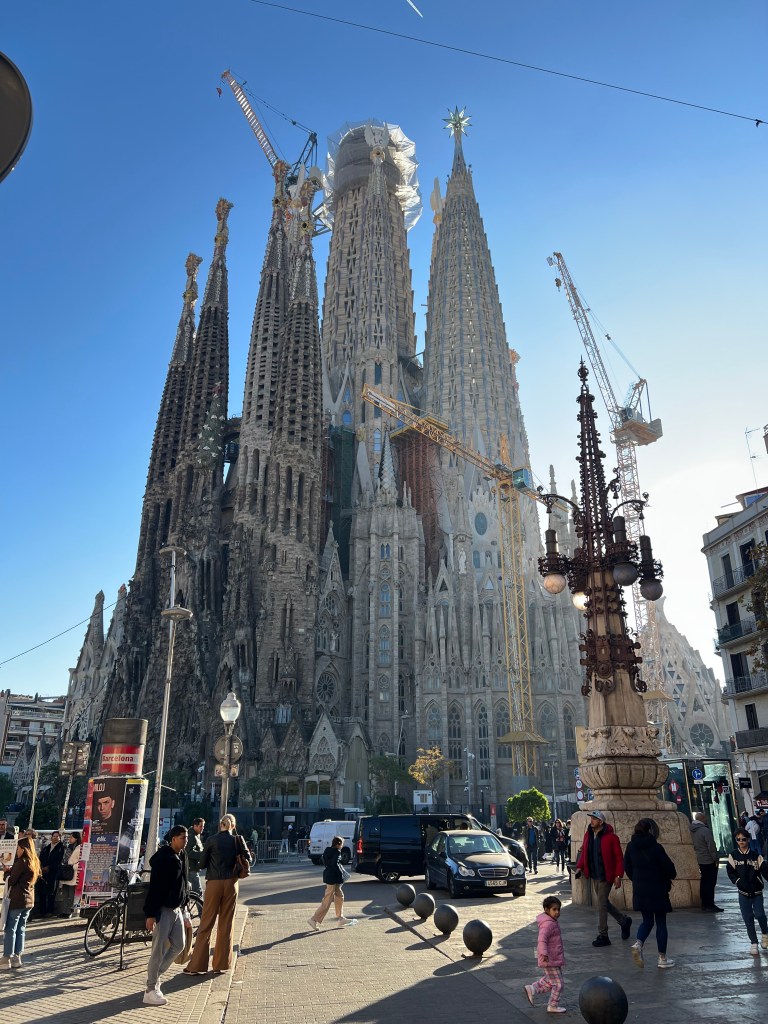
When you purchase tickets online, you are advised to download the official visitor app on your phone, which allows you to listen to explanations of the basilica when you visit, using your personal earbuds. You also have several options when purchasing tickets, including tickets to go up into one of the towers. I had purchased tickets for the Nativity Tower. When push came to shove, however, and I took a look at the base of the extremely tight stone spiral staircase, which is the only way down (the ascent is in an elevator), I elected to stay on terra firma and the rest of my clan went skywards. (I’m not big on tight, enclosed spaces!)
If you’re interested in visiting the basilica, there’s a huge amount of information to read online that explains its design and history, so I will leave that to the reader. Here’s a good place to start: https://sagradafamilia.org/en/the-booklets
I will say, though, that if you simply stand outside and look at the exterior facades, although fascinating in and of themselves, you will miss the experience of being present in the breathtaking, soaring space inside with its magnificent, richly colored stained glass, and the stunning Christ on the cross that is suspended in the air.
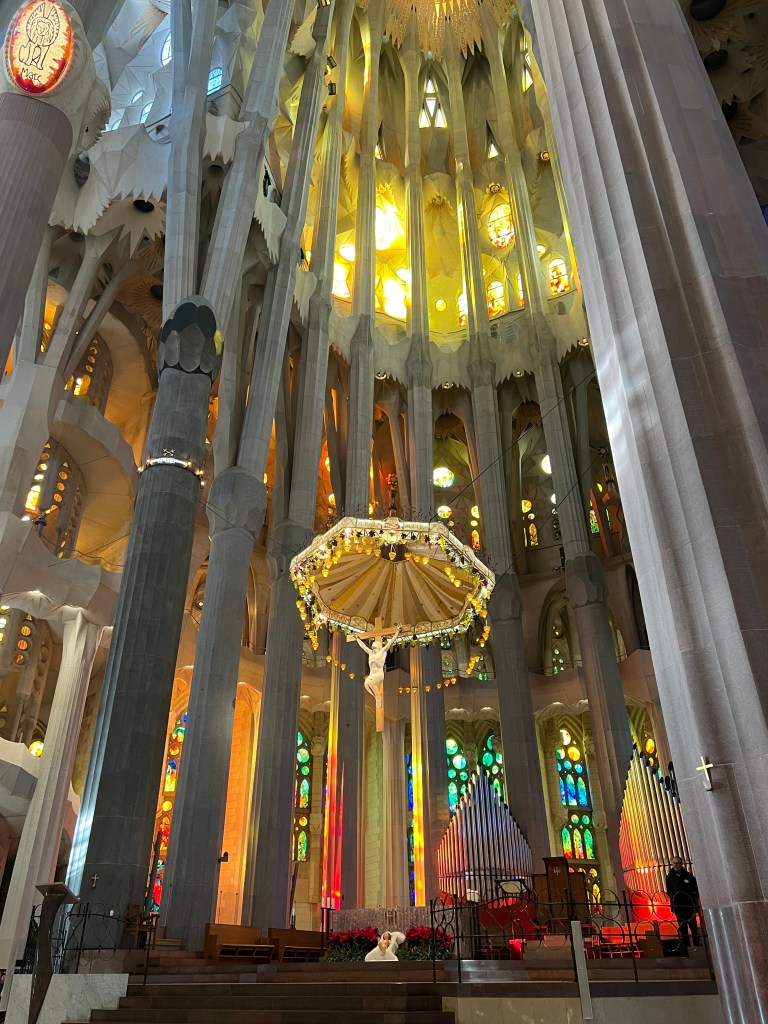
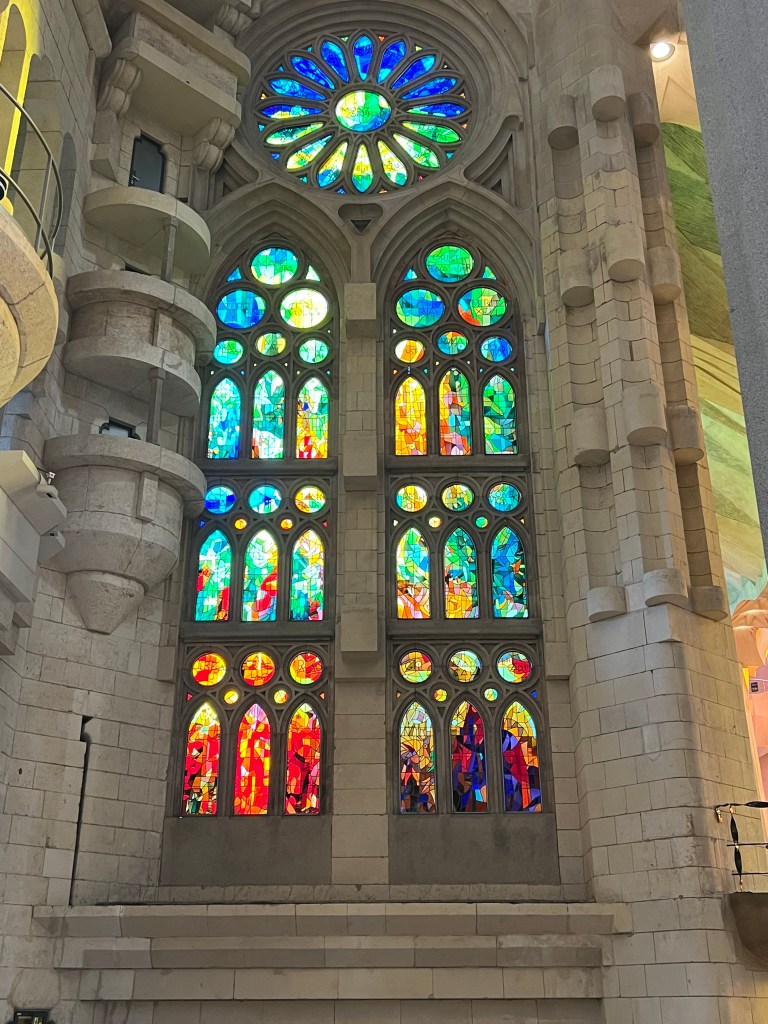
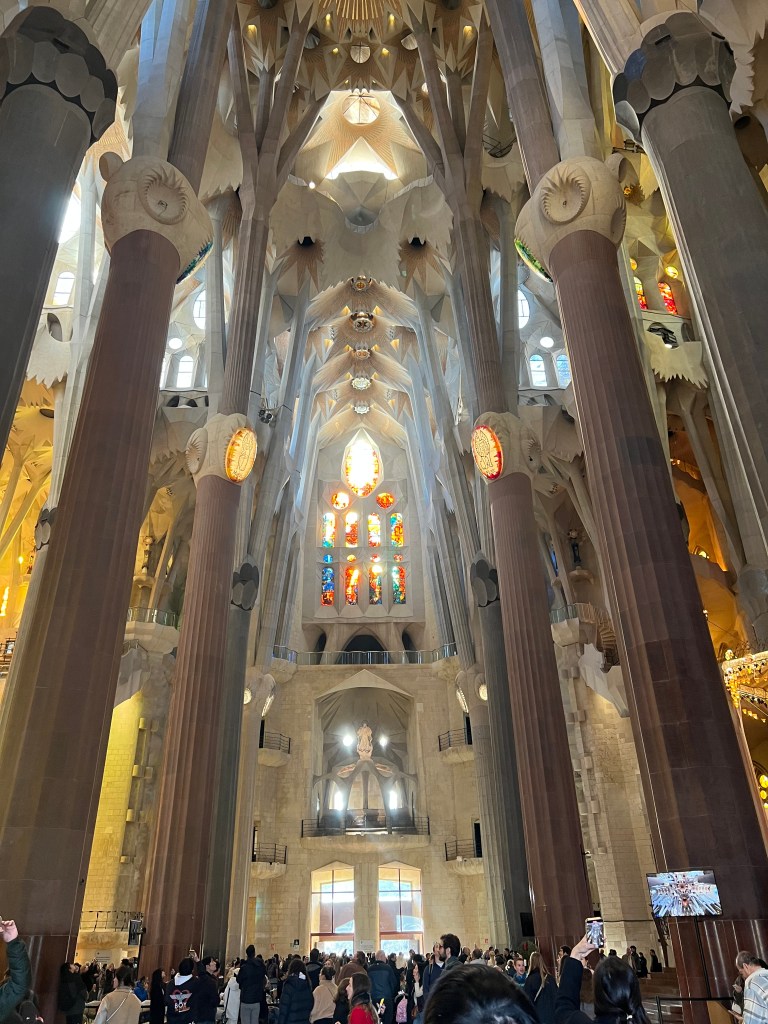
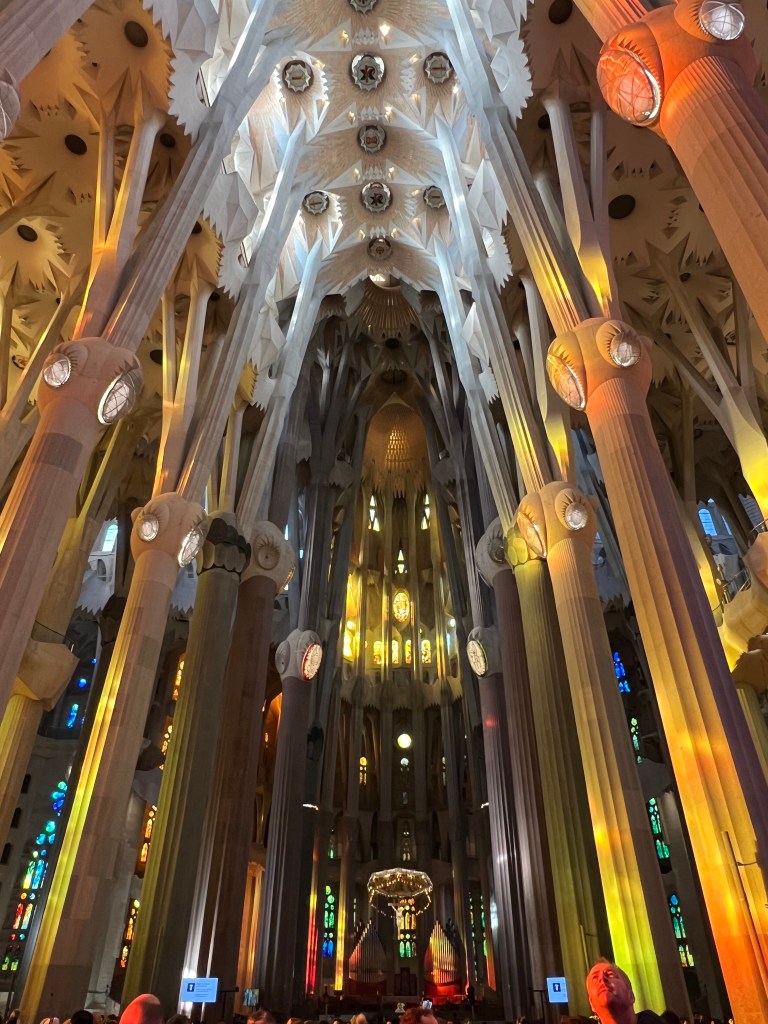
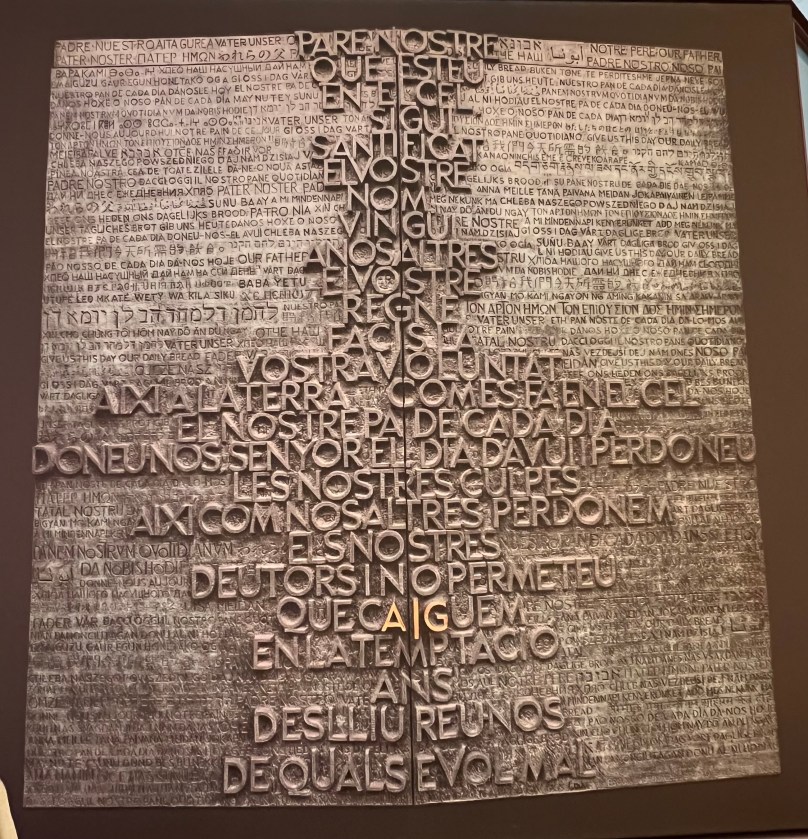
The interior door on the Glory facade features a bronze plaque on which the Lord’s Prayer is written in fifty languages.
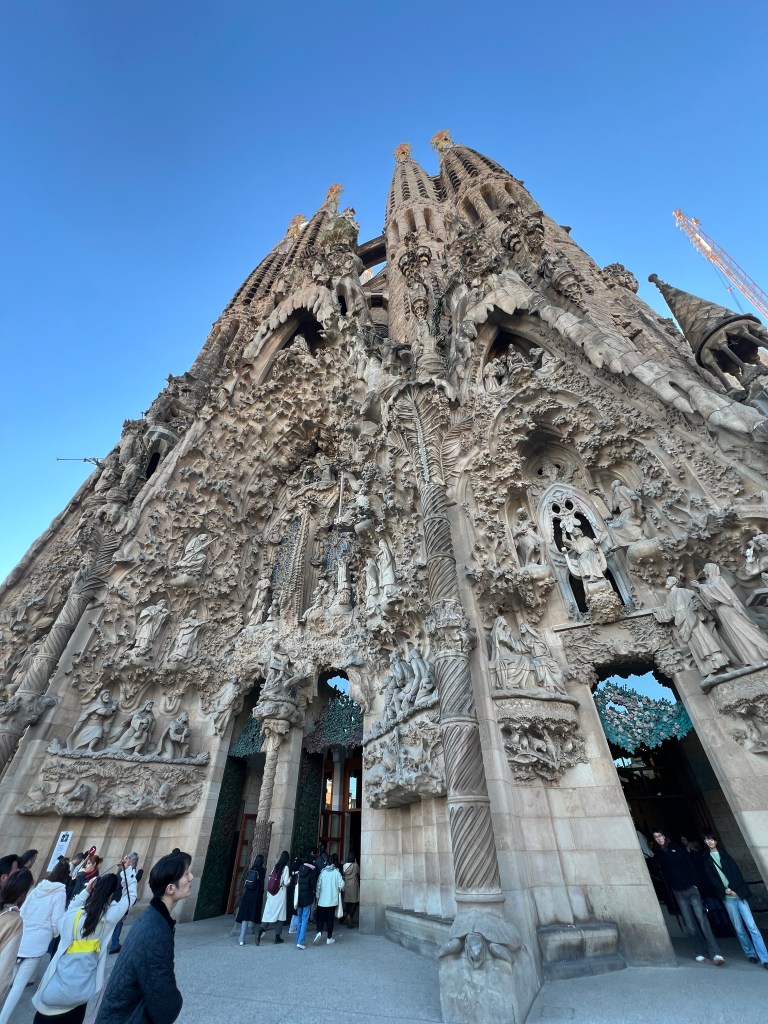
The main entry to the basilica is through what is called the Nativity facade, which basically tells the story of Christ’s birth. The three main facades — Nativity, Passion and Glory — are covered with carvings, sculptures and representations of Christ’s birth, his death and resurrection, and his everlasting glory. The photo below is looking up at the Nativity facade.
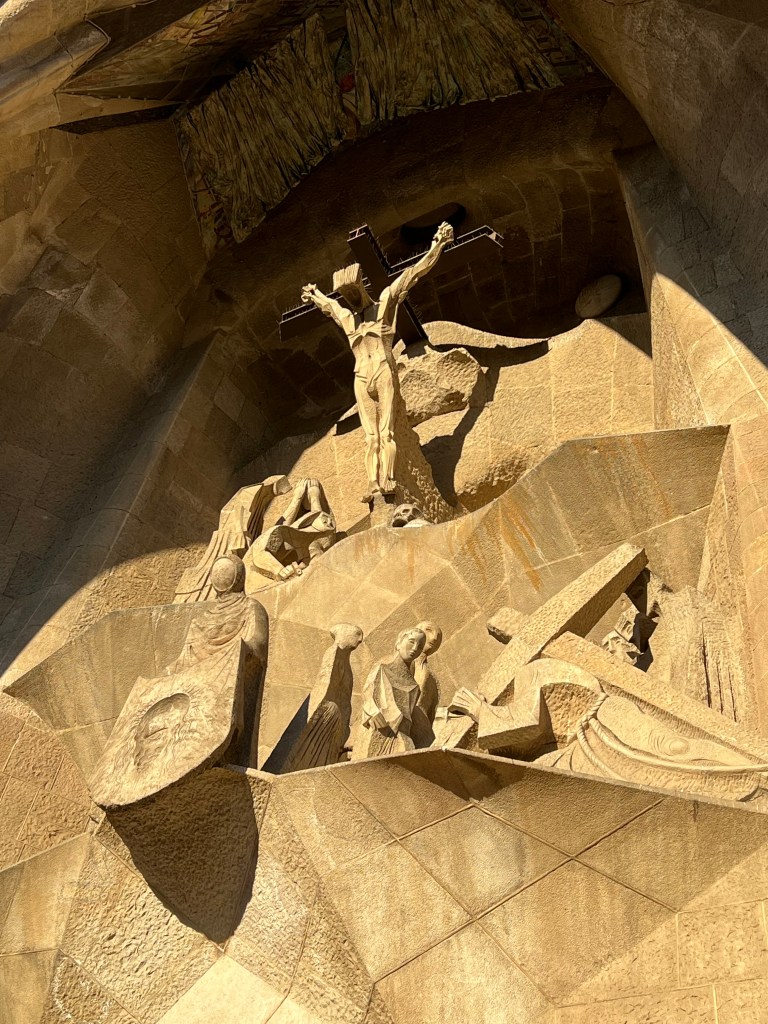
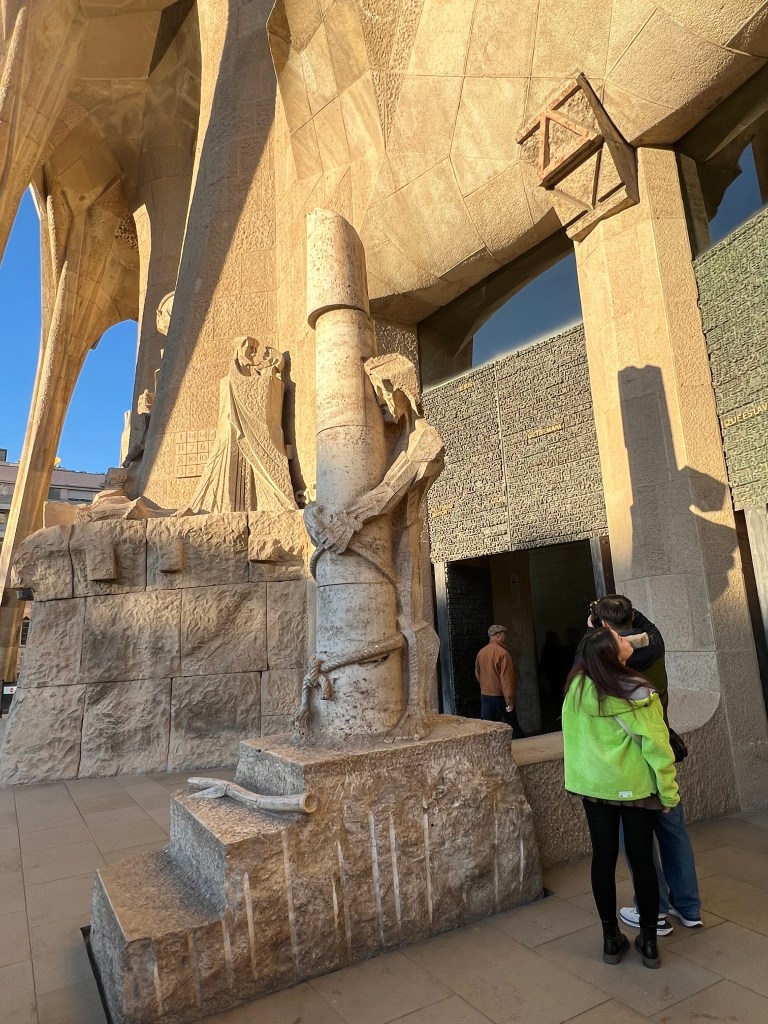
The Passion facade is of a highly different style than the Nativity. the sculptures are more abstract and angular. They depict such things as Judas hugging Christ before his betrayal, and the flagellation of Jesus.
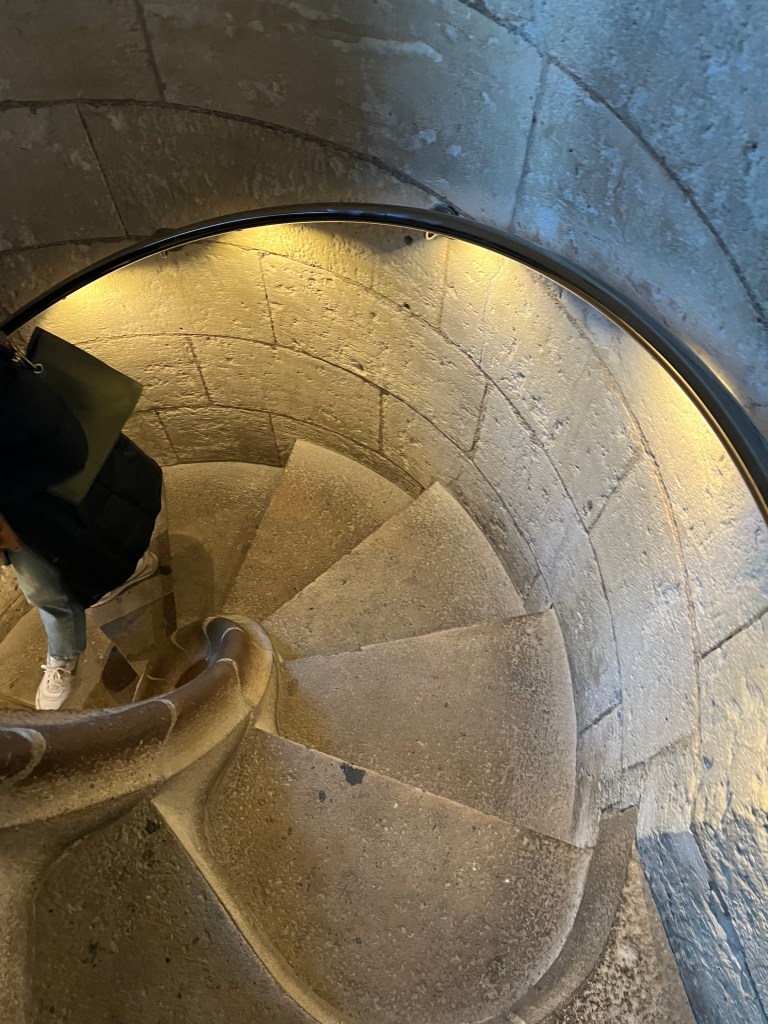
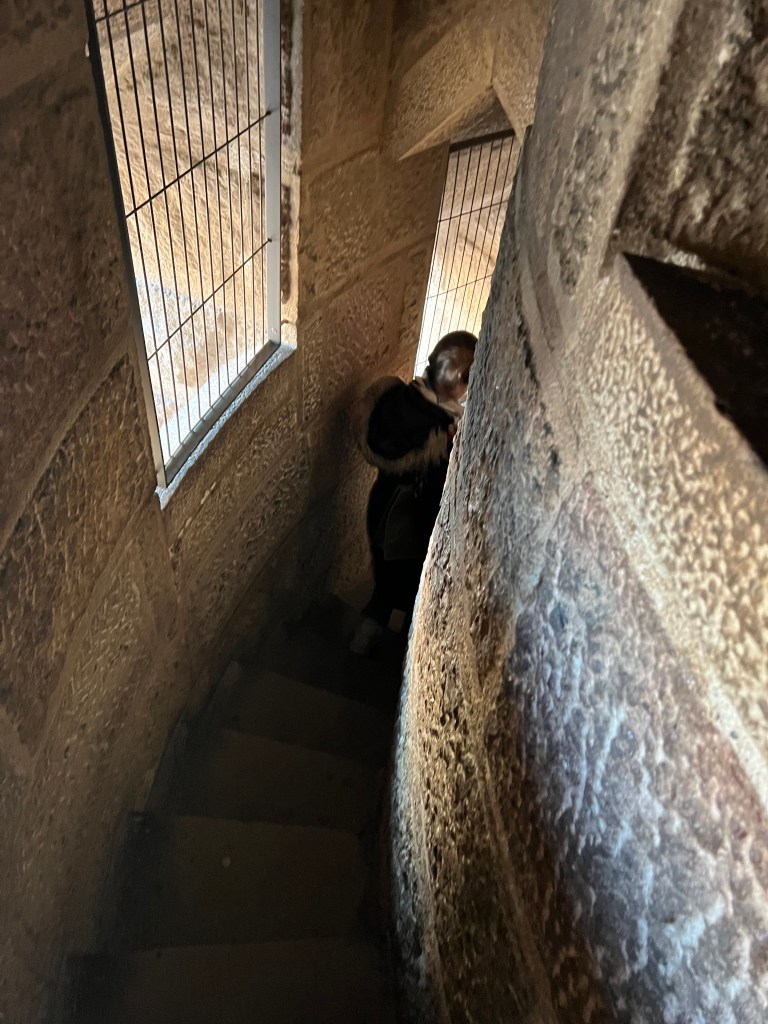
Just in case you decide to go up into one of the towers, here’s a few photos of the spiral staircase with about 340 steps that you will need to use to descend.
Other Barcelona highlights
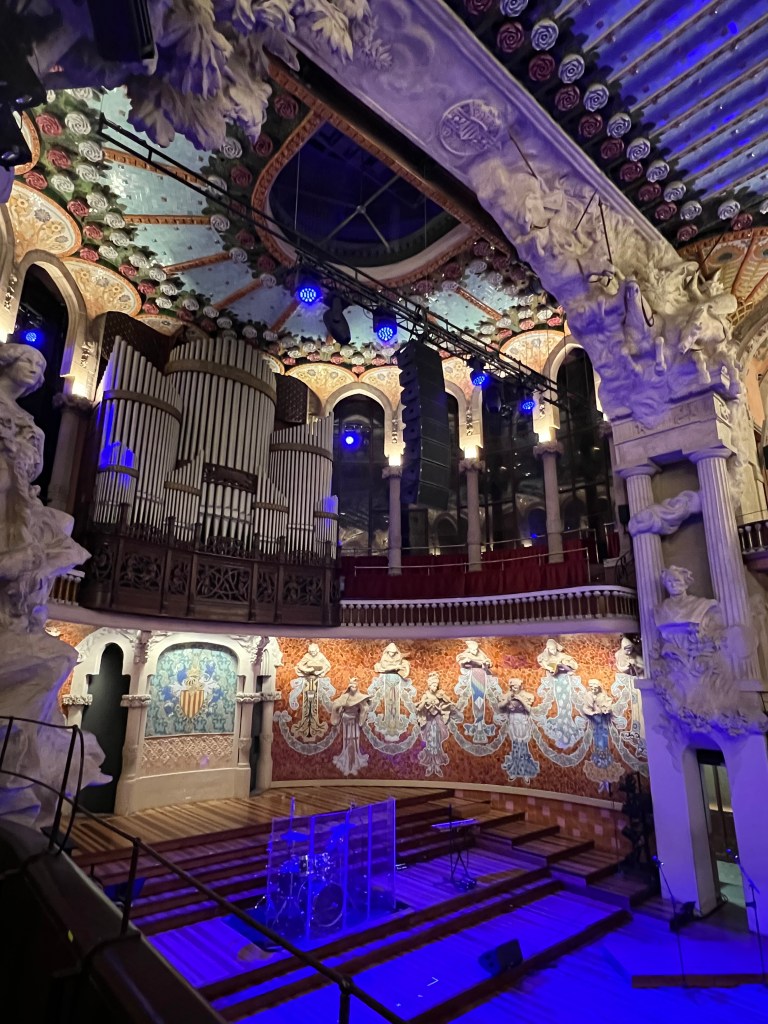
Perhaps the most famous music venue in Barcelona is the Palau de la Musica Catalana (Palace of Catalan Music). Designed in the Catalan modernist style by Louis Domenech i Montaner, it opened in 1908 and is known for its stunning concert hall that seats over 2000 people. Overhead is a fabulous stained glass skylight whose colors change after dark through various types of illumination.
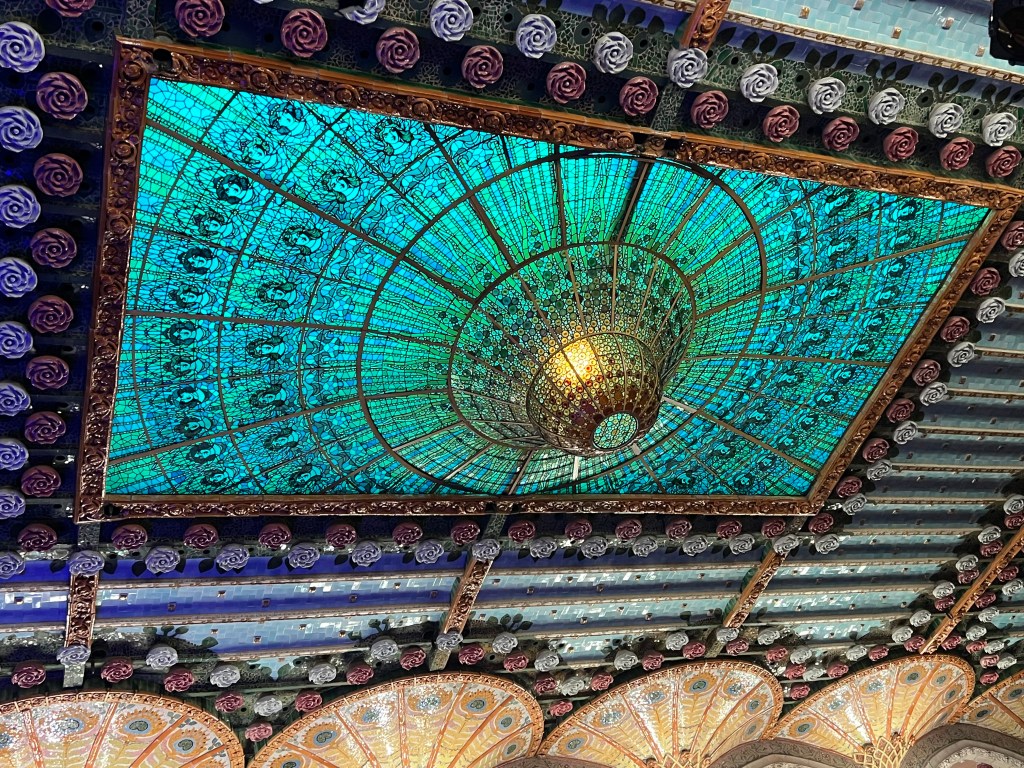
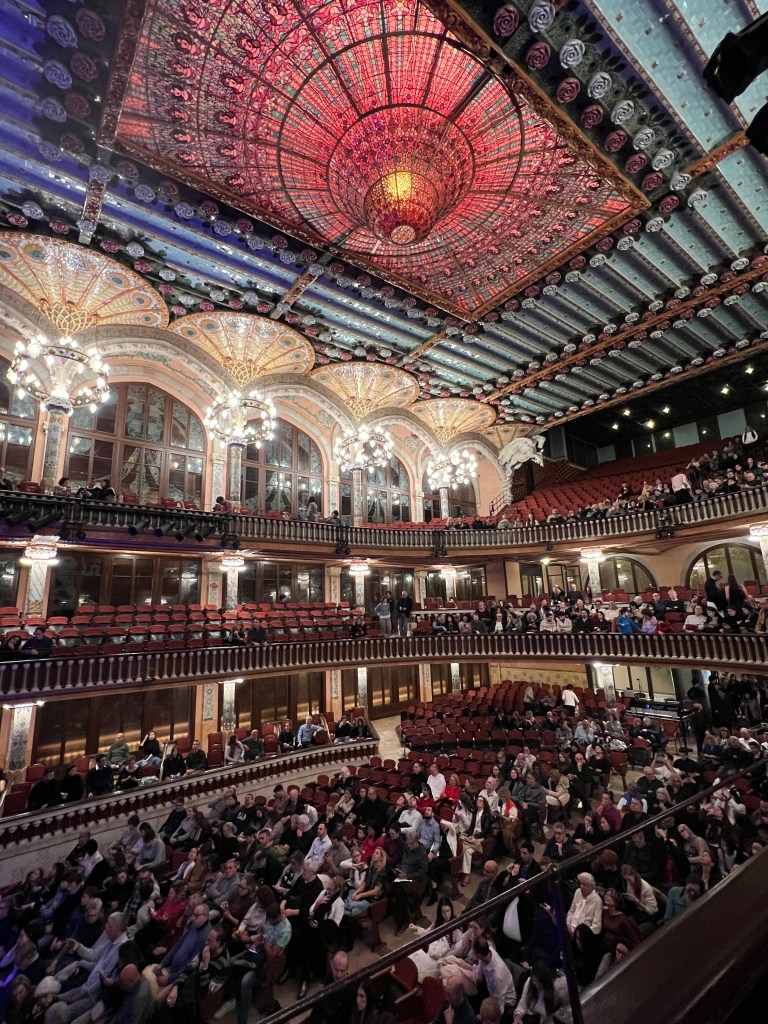
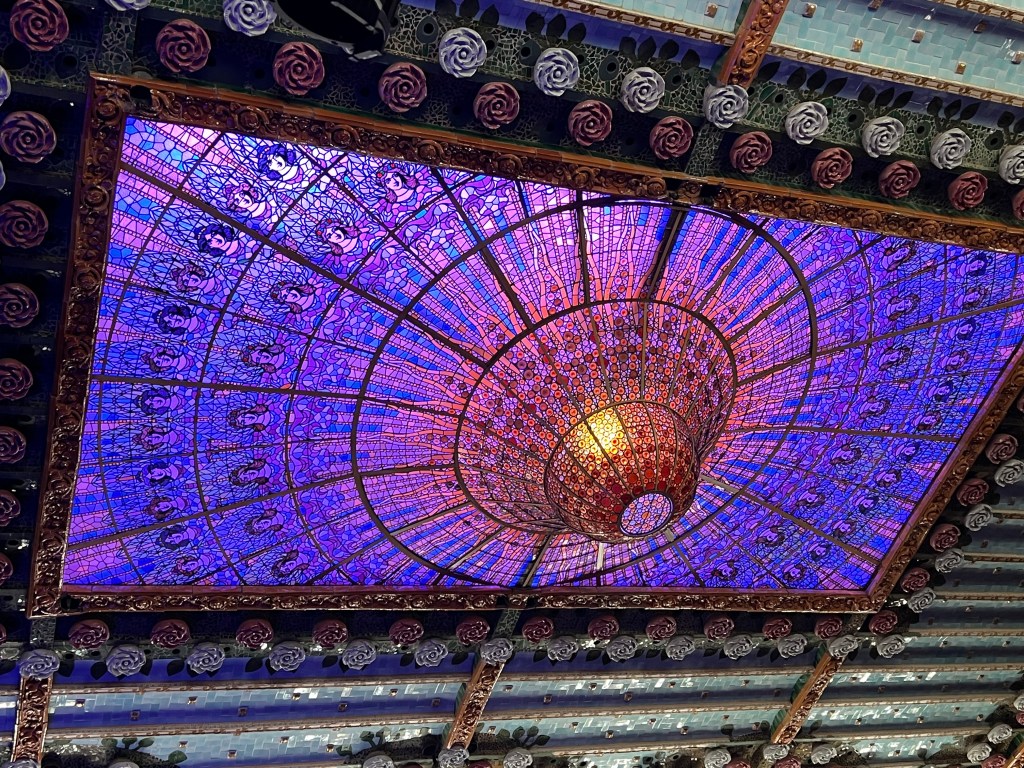
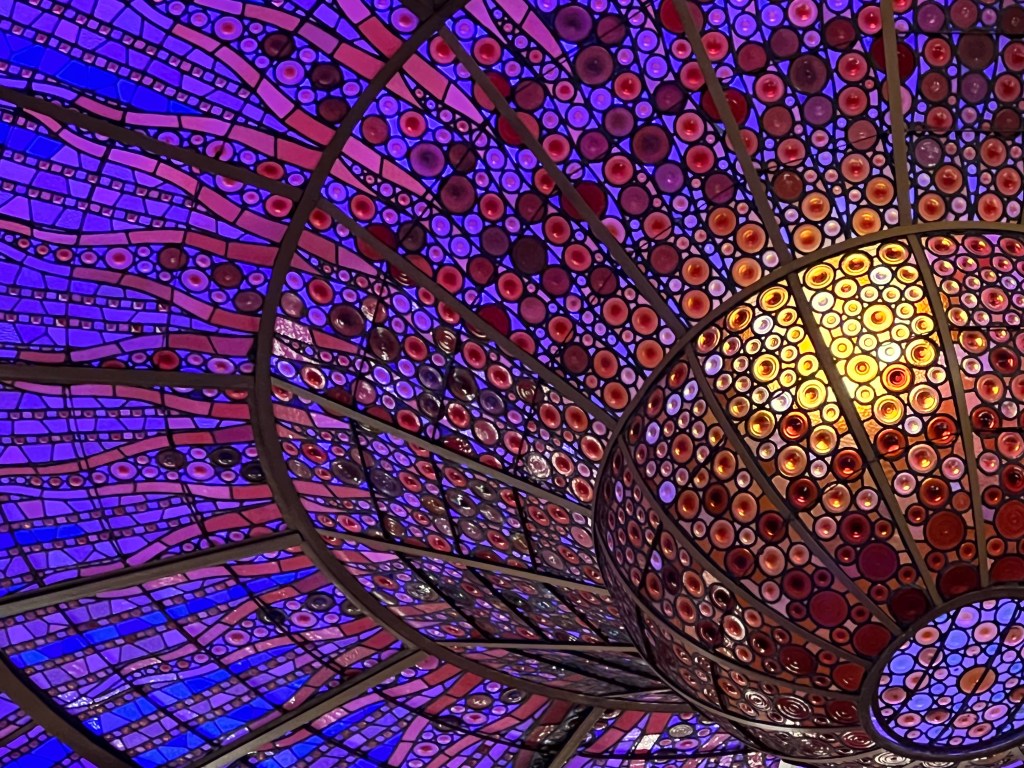
Prior to arriving in Barcelona, I knew I wanted to get inside the music hall and scope it out, but I doubted all the members of my family would be interested in the type of tour I wanted to book. So instead, I checked the concert schedule and saw that on New Year’s Eve, a tribute concert was scheduled, with performers depicting Michael Jackson, Prince and James Brown. How could I resist this? I booked tickets for all, and we had a blast, even though these were not the best renditions of the musicians.
More Gaudi
We visited a few other sites designed by Antoni Gaudi: La Pedrera, Park Guell, and the exterior of Casa Batllo in the row of buildings designed by several modernist architects known as the Block of Discord.
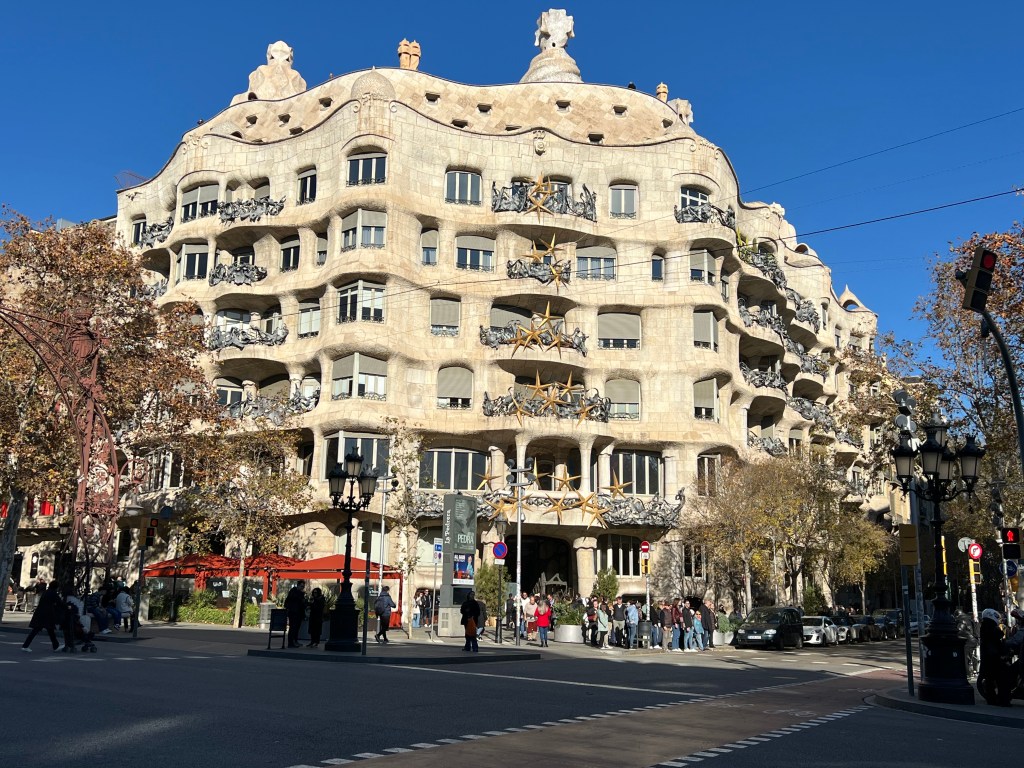
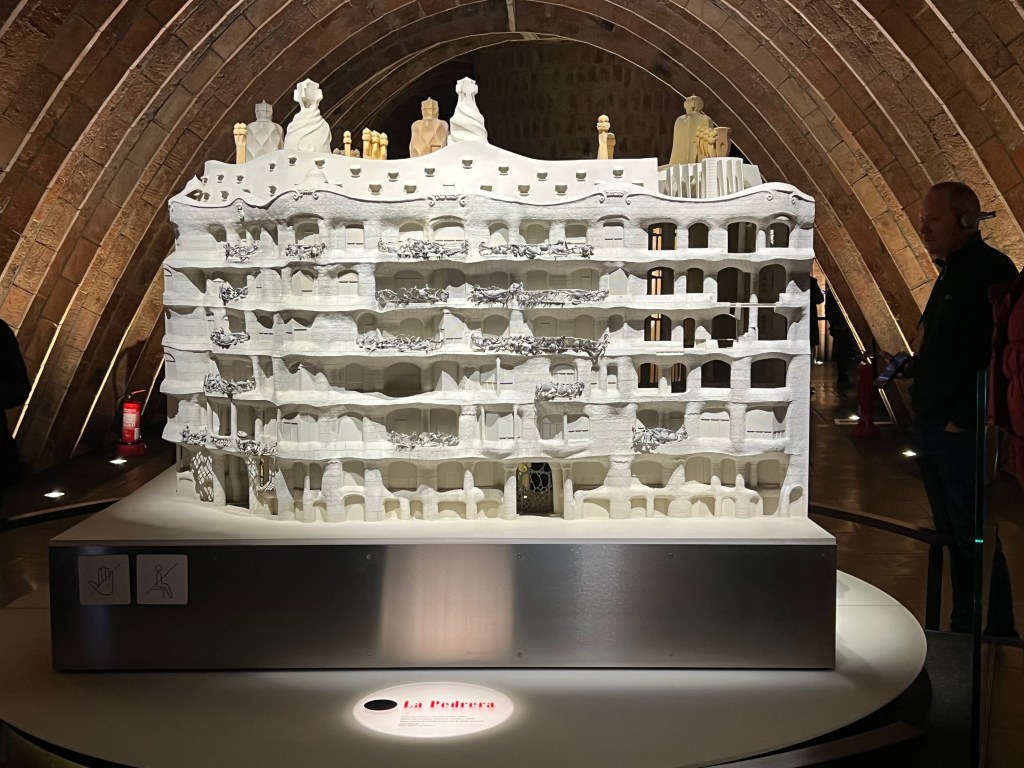
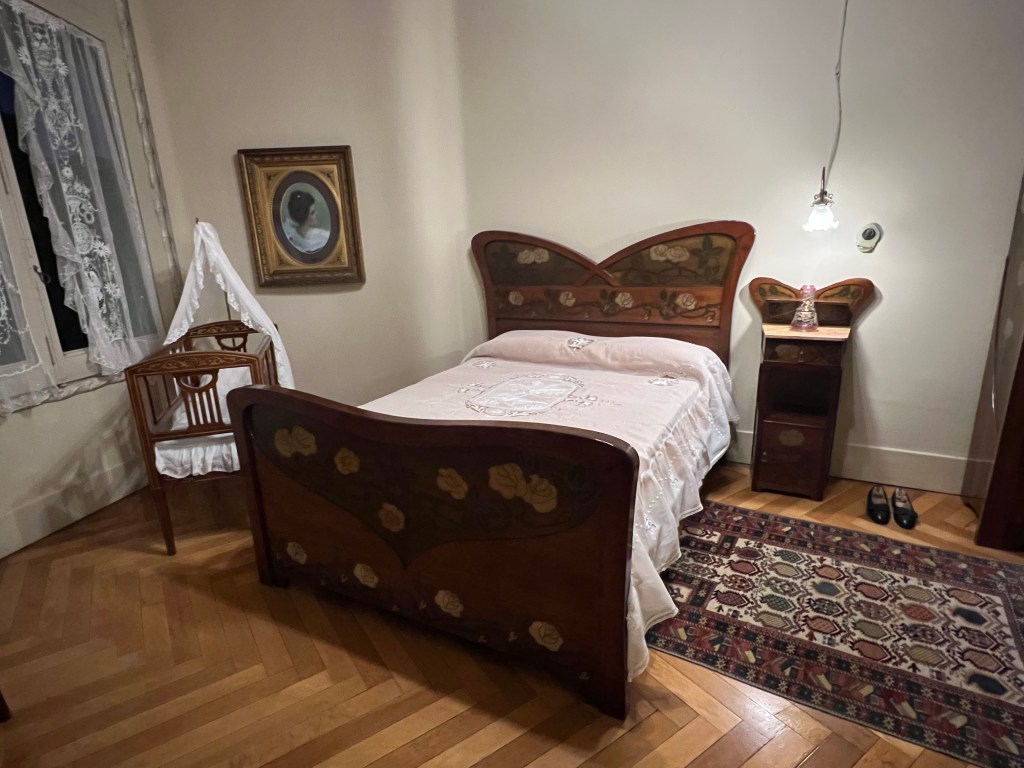
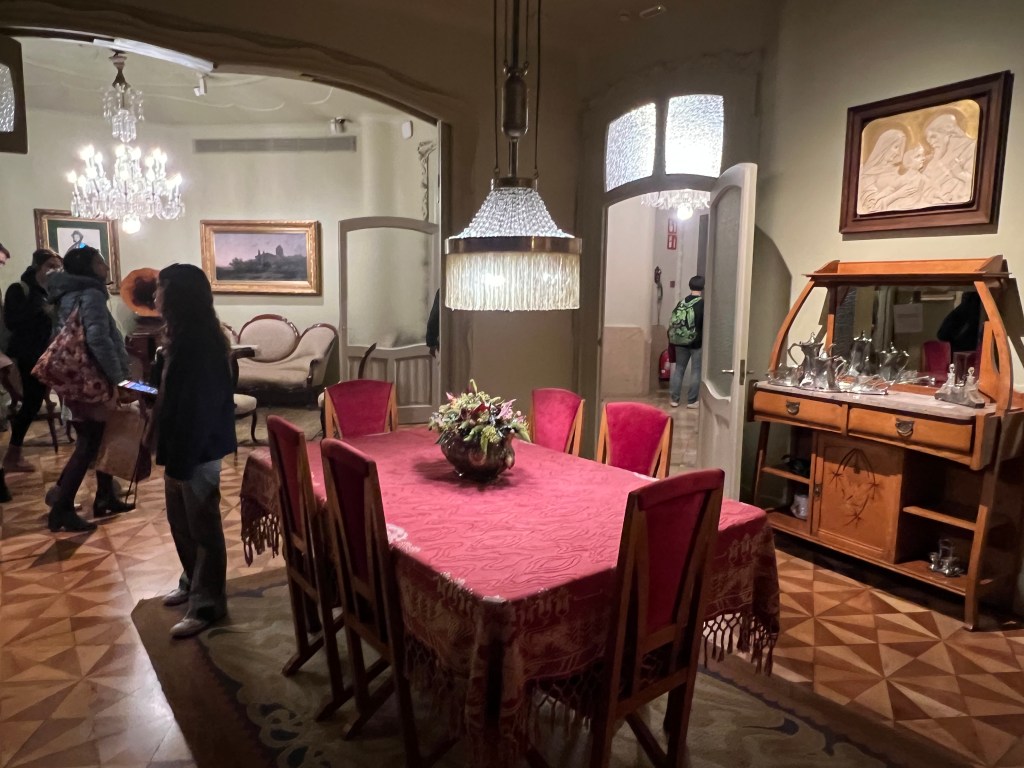
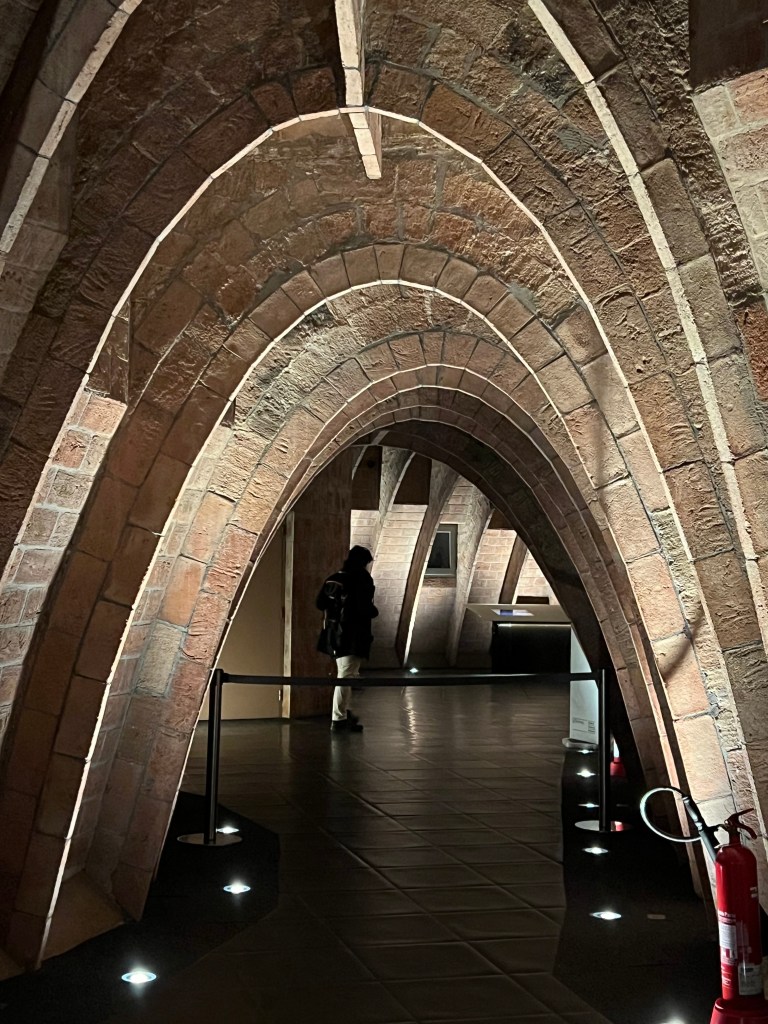
La Pedrera, also called Casa Mila, is the last private residence designed by Gaudi, built between 1906-1912. Highly curvilinear, it is actually two buildings with two courtyards, nine stories tall, with approximately 21 apartments. La Pedrera must be on every architecture student’s required study list, as it incorporates many different structural and design elements. Visitors have access to the top floor apartment, which is set up as if an upper class family lived there in the early 20th century. After touring the apartment, visitors go up into the the attic, where 270 parabolic vaults of different heights support the roof.
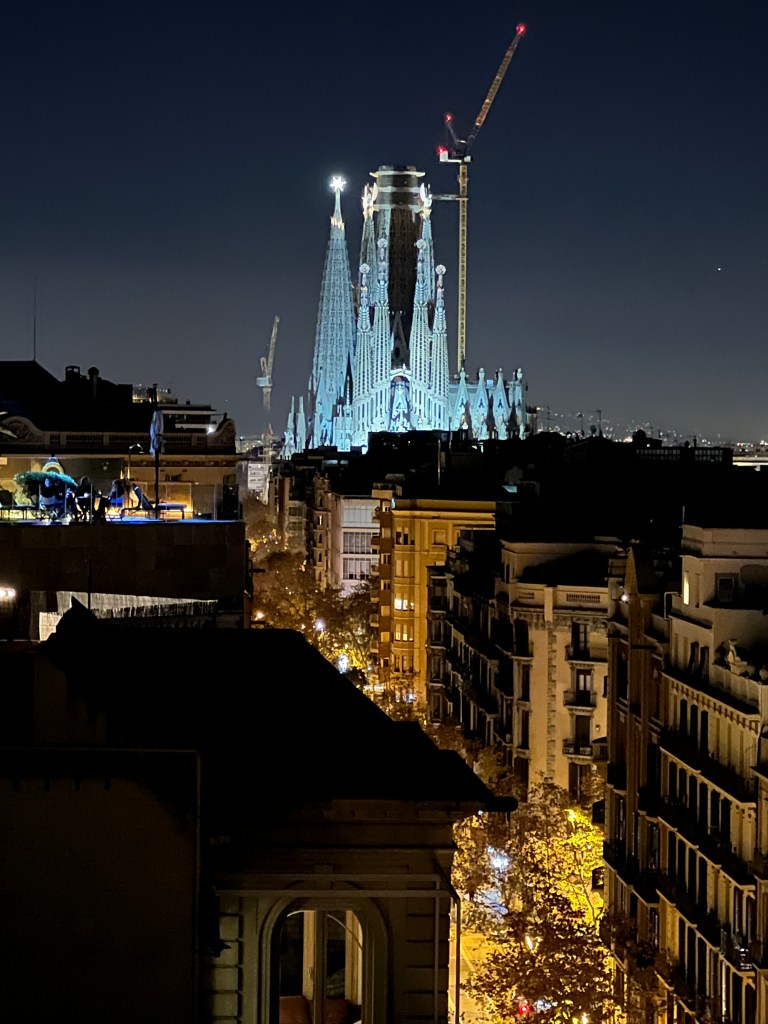
The roof itself, for many, is the real attraction. twenty-eight chimneys and vents resemble people, or warriors, as one poet described them. We were there at night and wandered around the uneven walkway and steps, marveling at the illuminated figures. In the far distance we could see the Sagrada Familia, lit up.
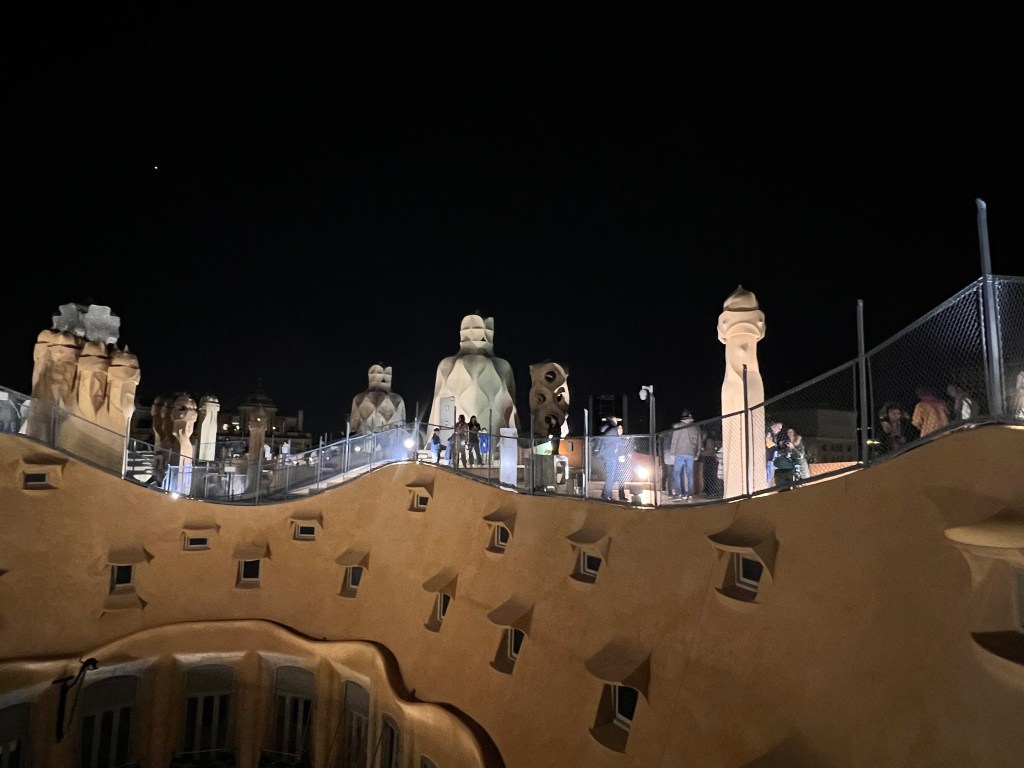
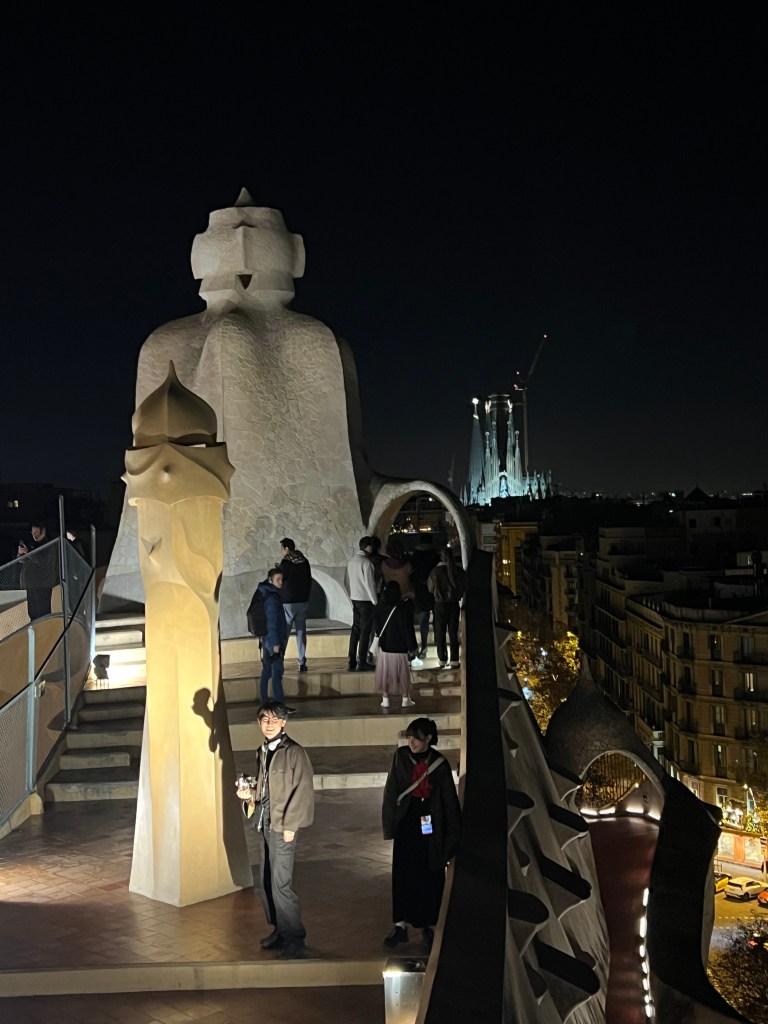
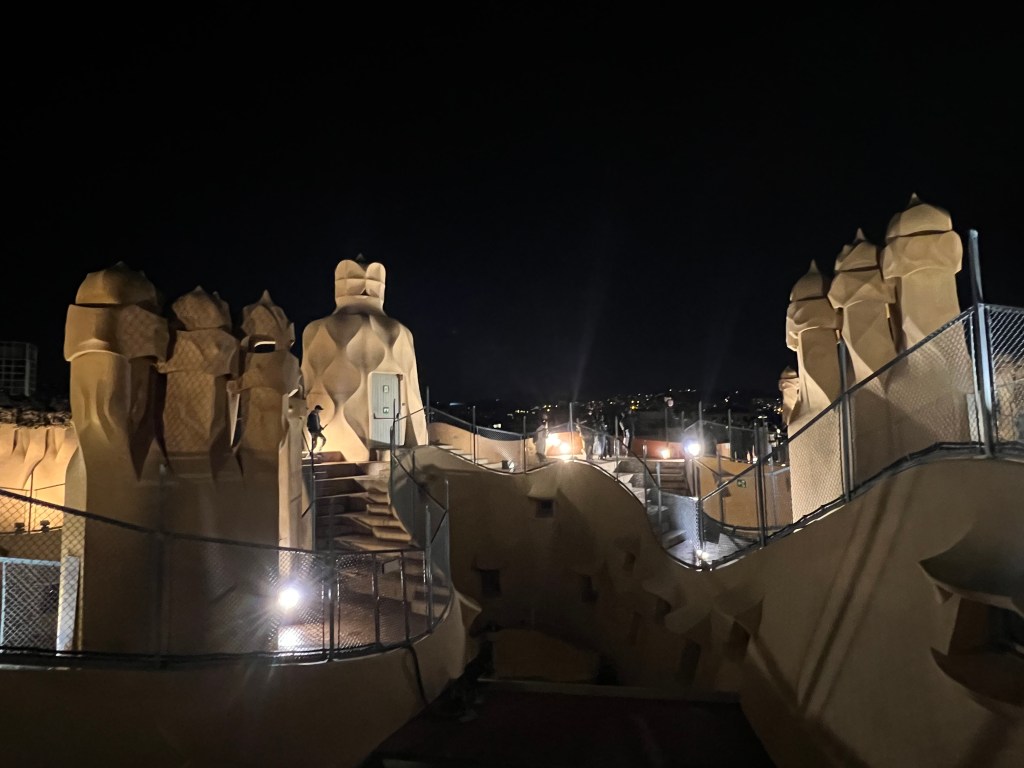
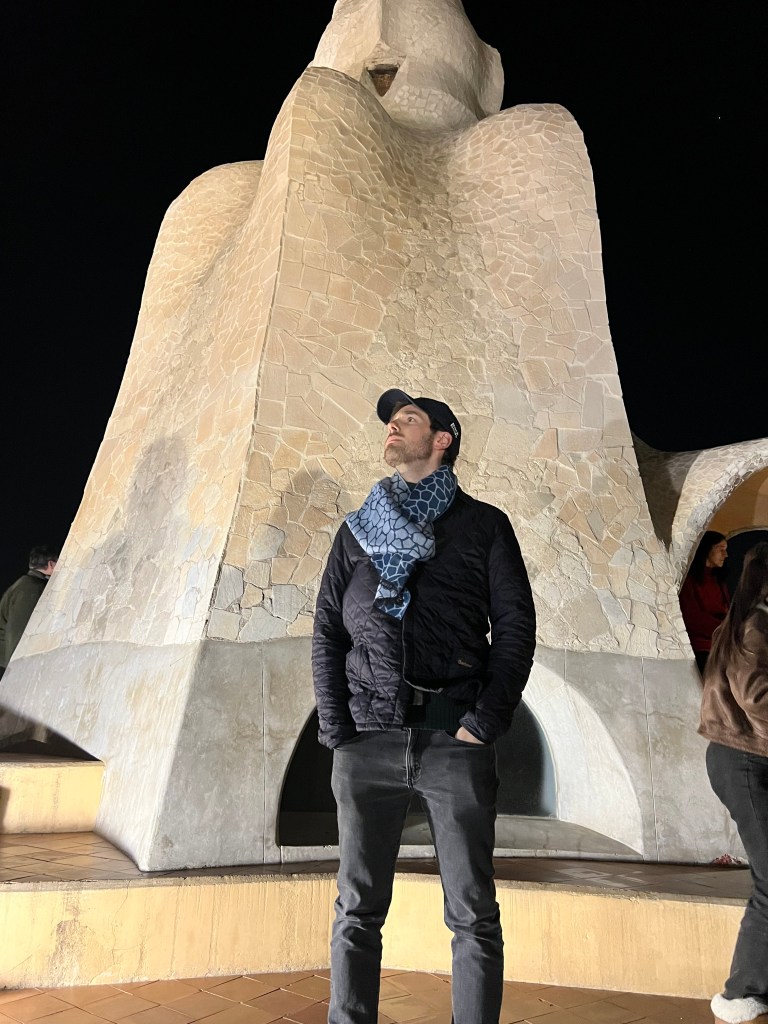
In the photo of the young man (one of my sons), the Gaudi technique of covering a surface with broken tiles or pieces of marble, called trencadis, is visible on the chimney. The scarf my son is wearing is based on this design.
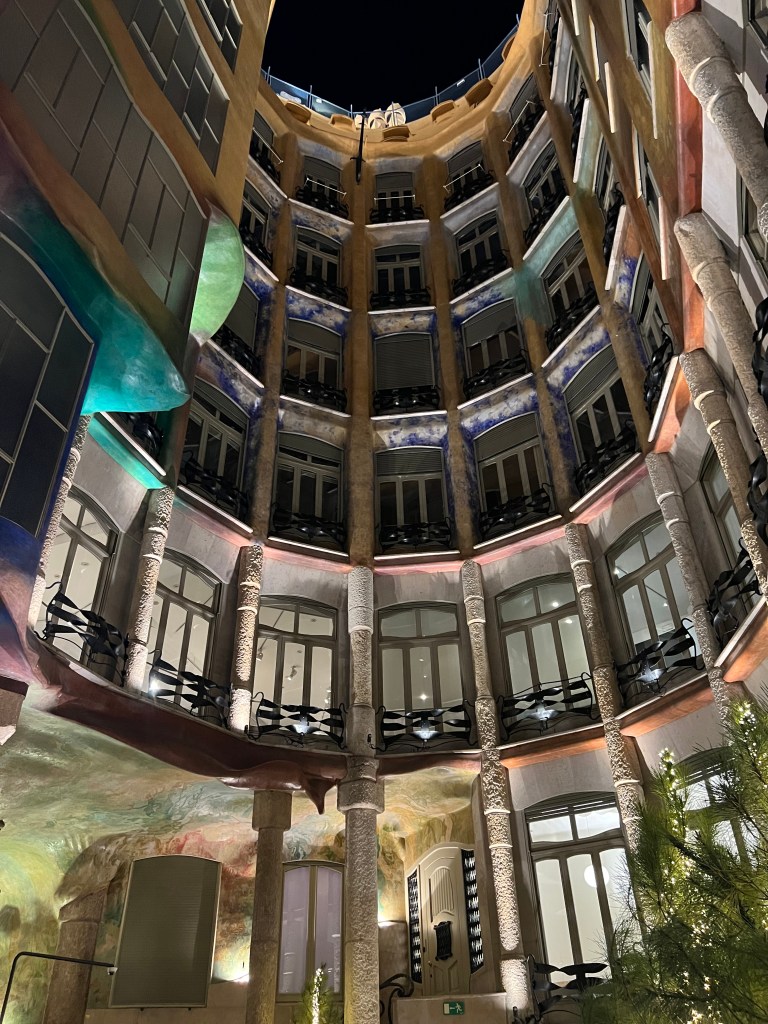
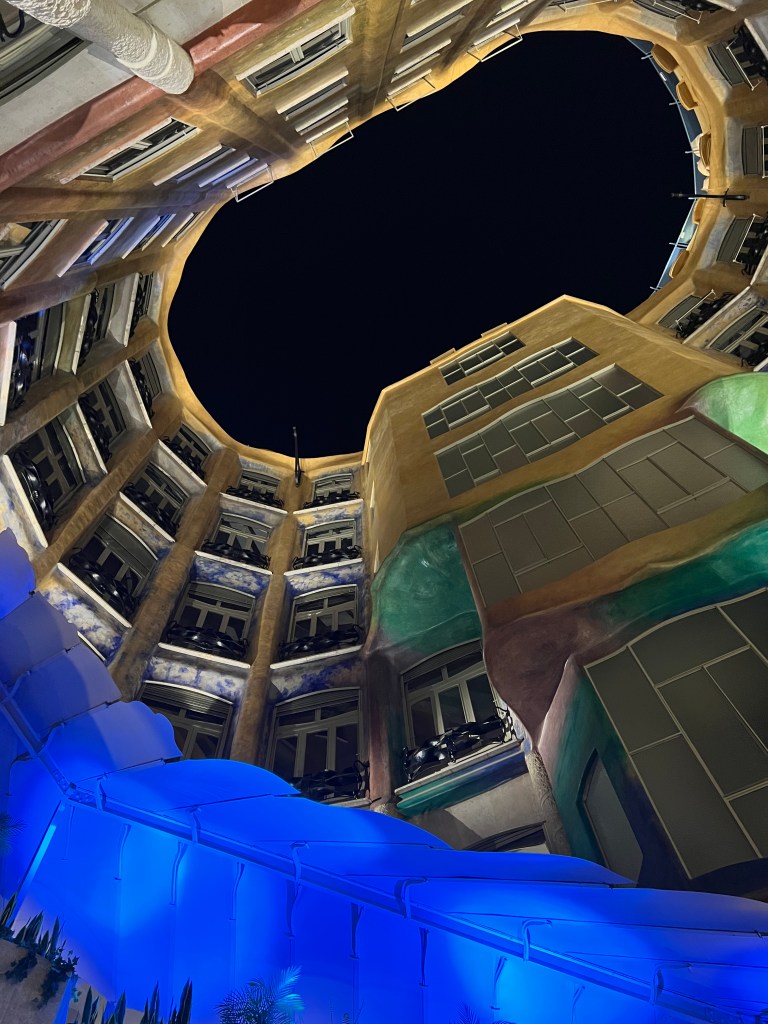
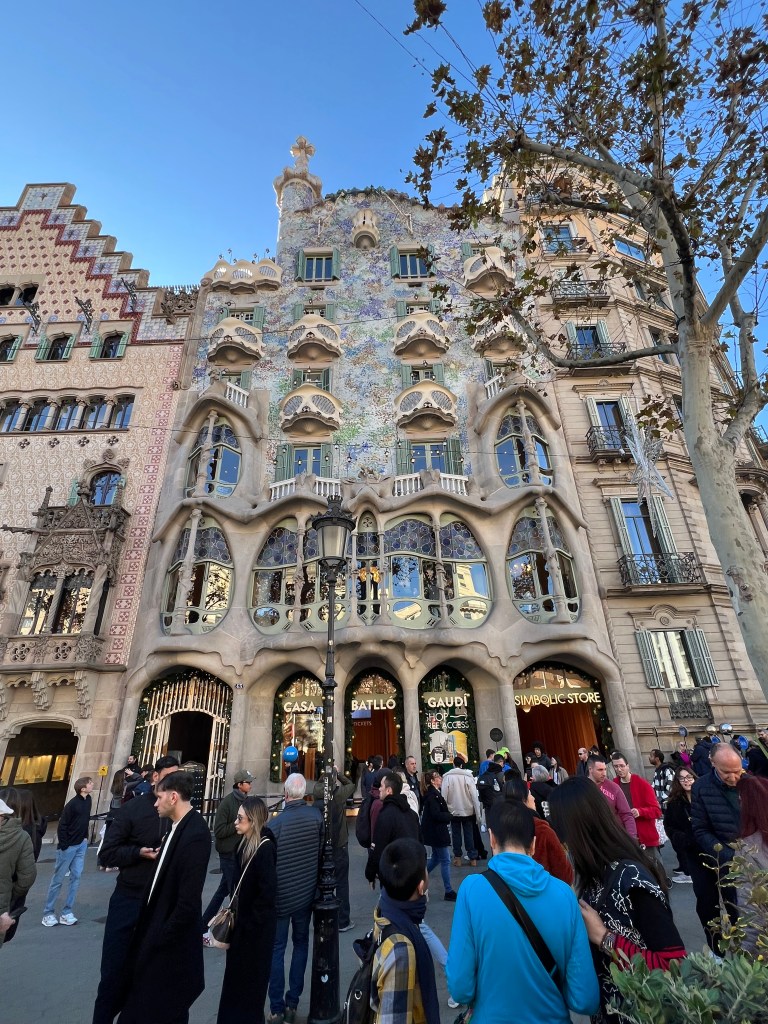
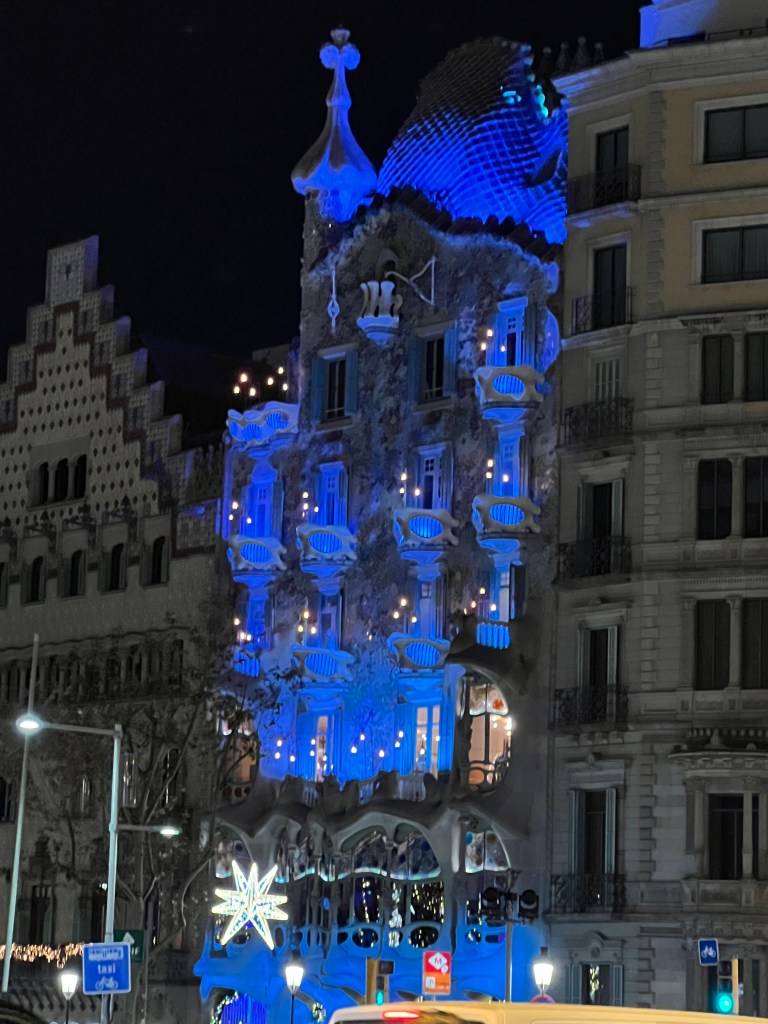
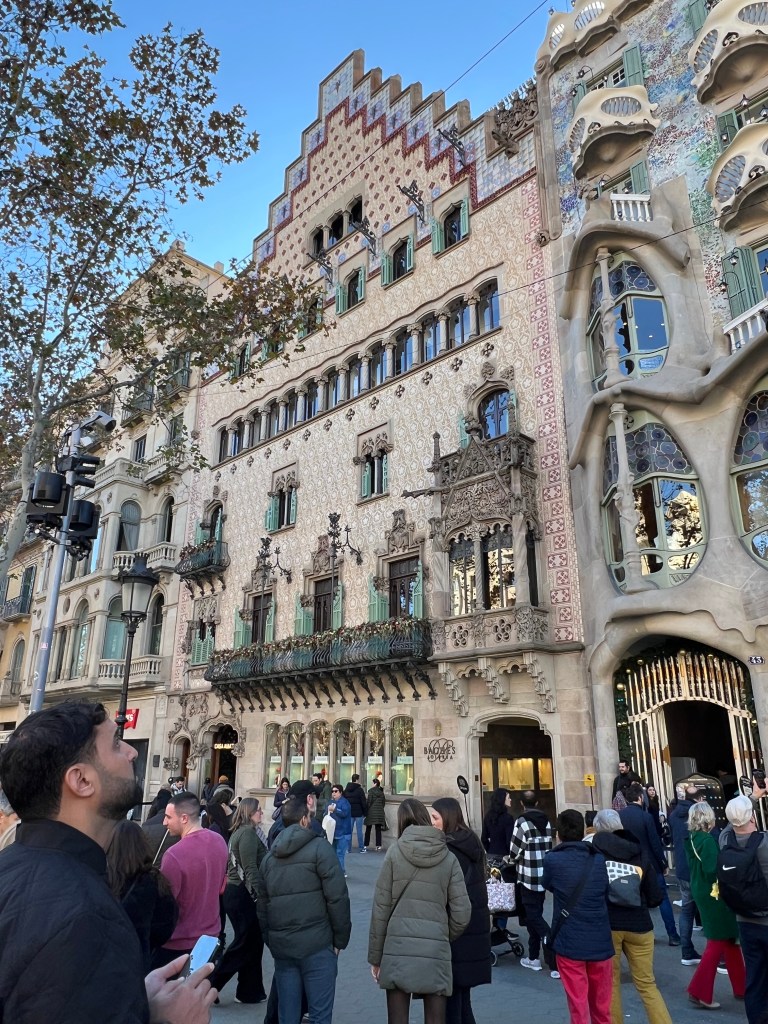
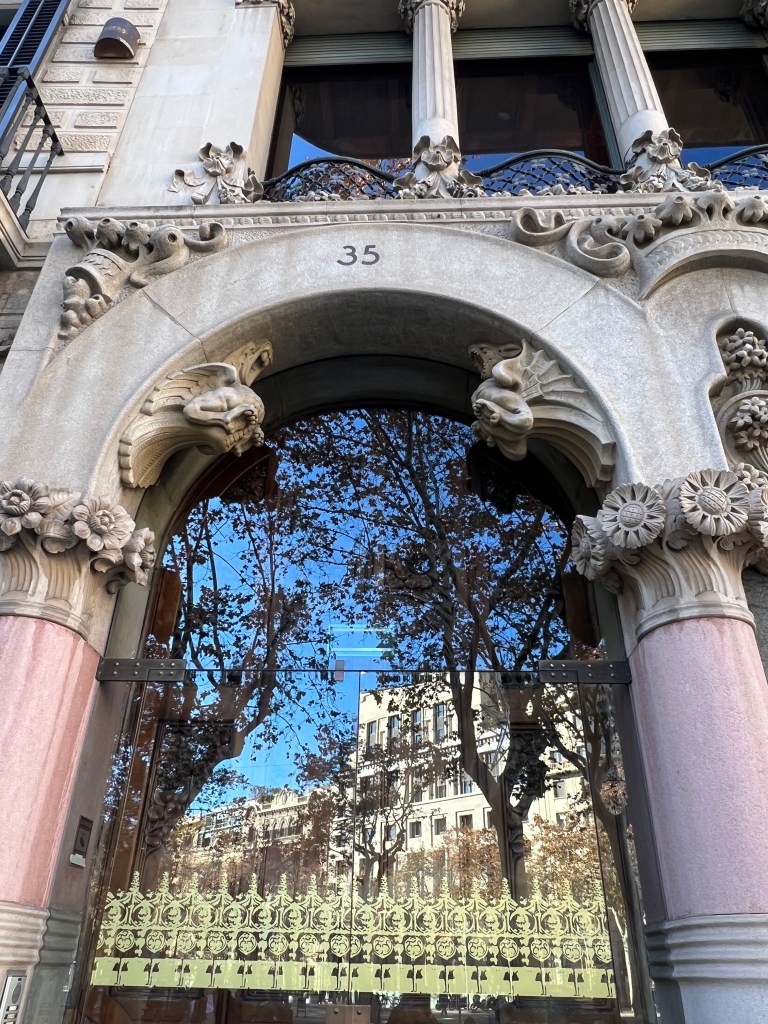
Not far from La Pedrera is the so-called Block of Discord, on Passeig de Gracia, with four adjacent buildings by Barcelona’s most famous modernist architects. We had not purchased tickets ahead and were not able to tour any of the buildings, but we were able to step into the entry courtyard of Casa Amatller. The most fanciful and perhaps well-known of the buildings is Casa Battlo, by Gaudi. The curvilinear facade is fairy-tale like, and at night, the exterior is lighted with various colors.
Park Guell
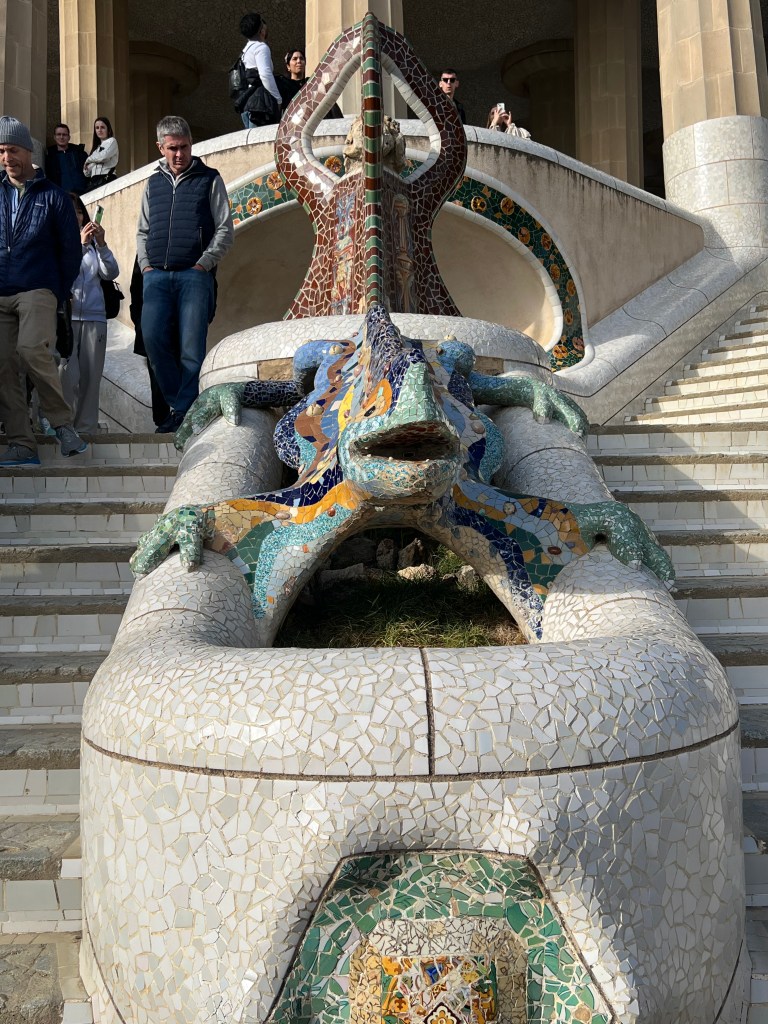
Park Guell is a complex of walking paths, gardens and architectural elements that Gaudi designed as a commission by Eusebio Guell. The site was originally intended to be a subdivision of private homes with common spaces designed to express both political (Catalanism) and religious ideals (Catholicism) of the developer/patron Guell and Gaudi. The development failed and only two homes were built, neither of which was designed by Gaudi. One of the homes, however, built as a display home, was purchased by Gaudi and he lived there from 1906 until he died in 1926. This home is open to the public as the Gaudi House Museum.
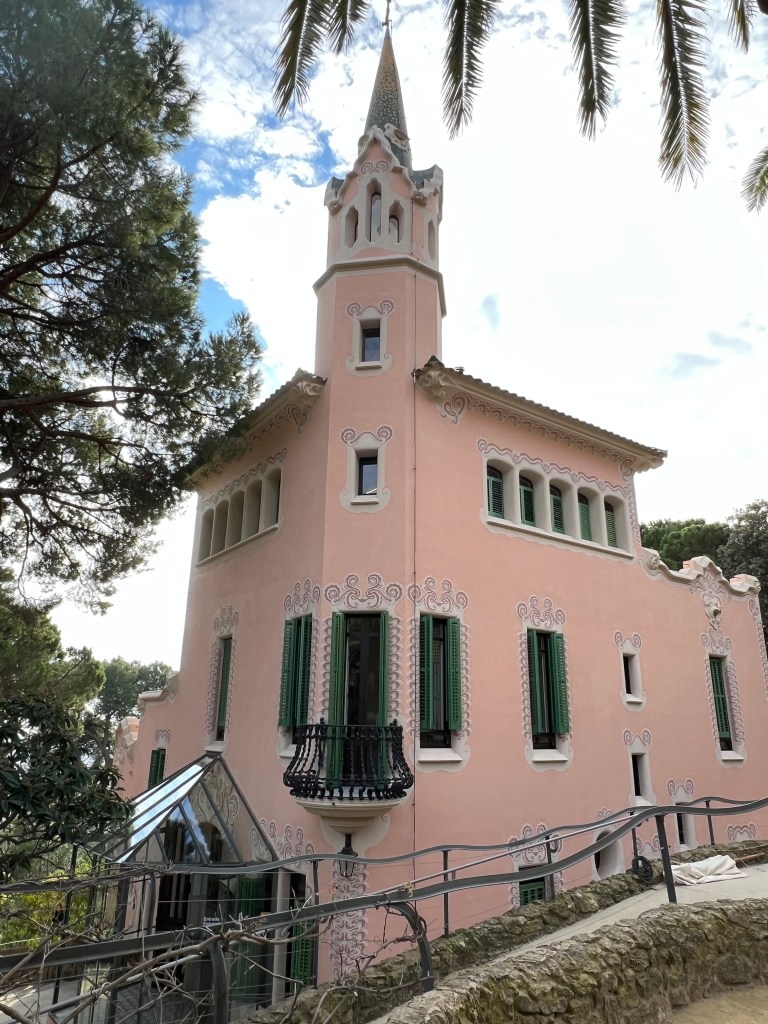
The home is furnished and includes displays of furniture designed by Gaudi. The floors are beautiful mosaic tile, and the visitor views Gaudi’s bedroom and chapel.
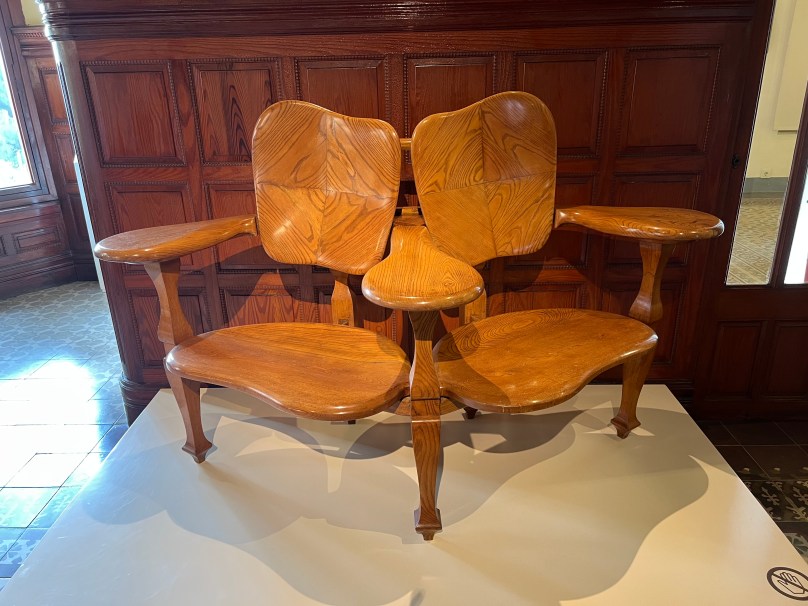
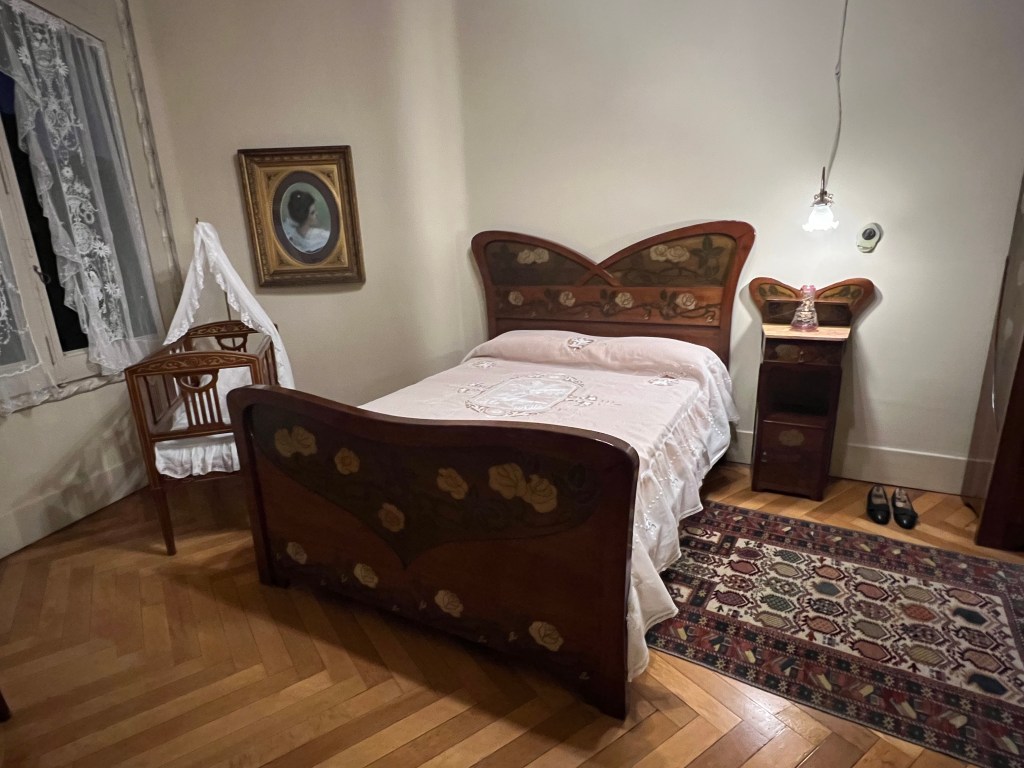
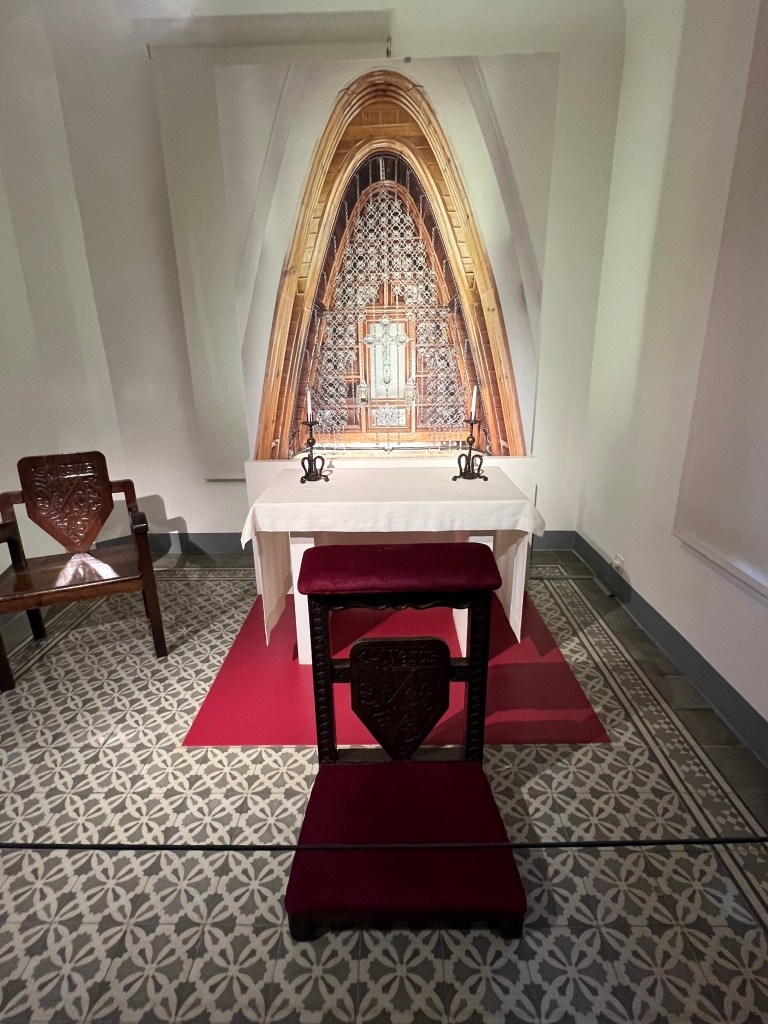
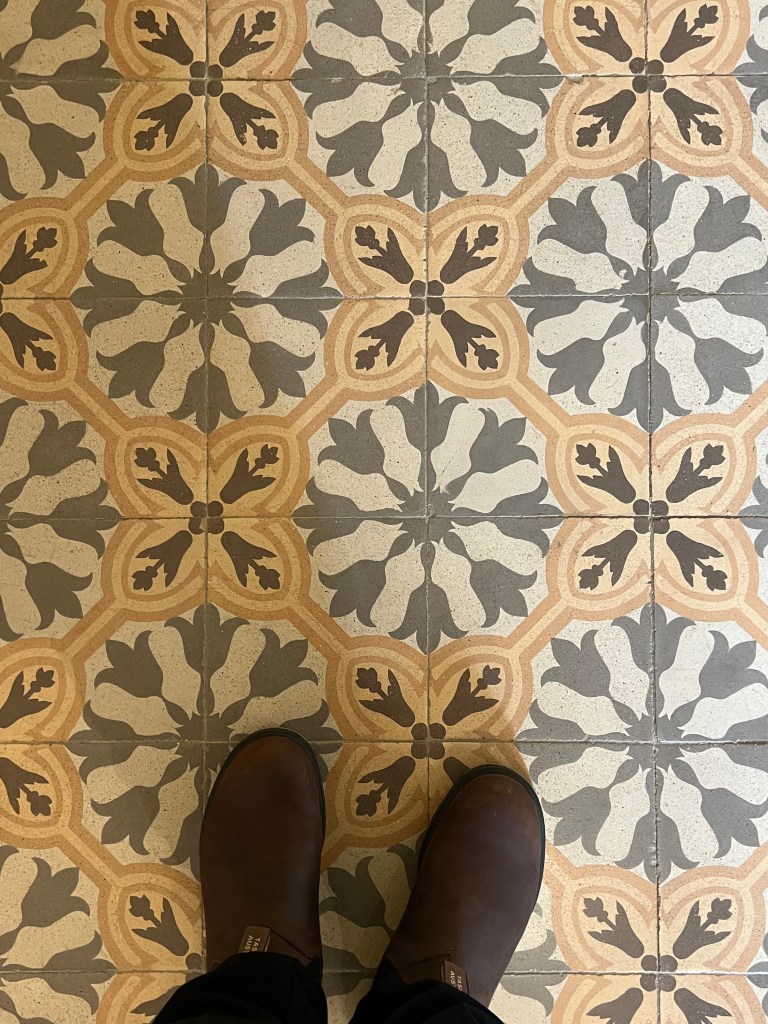
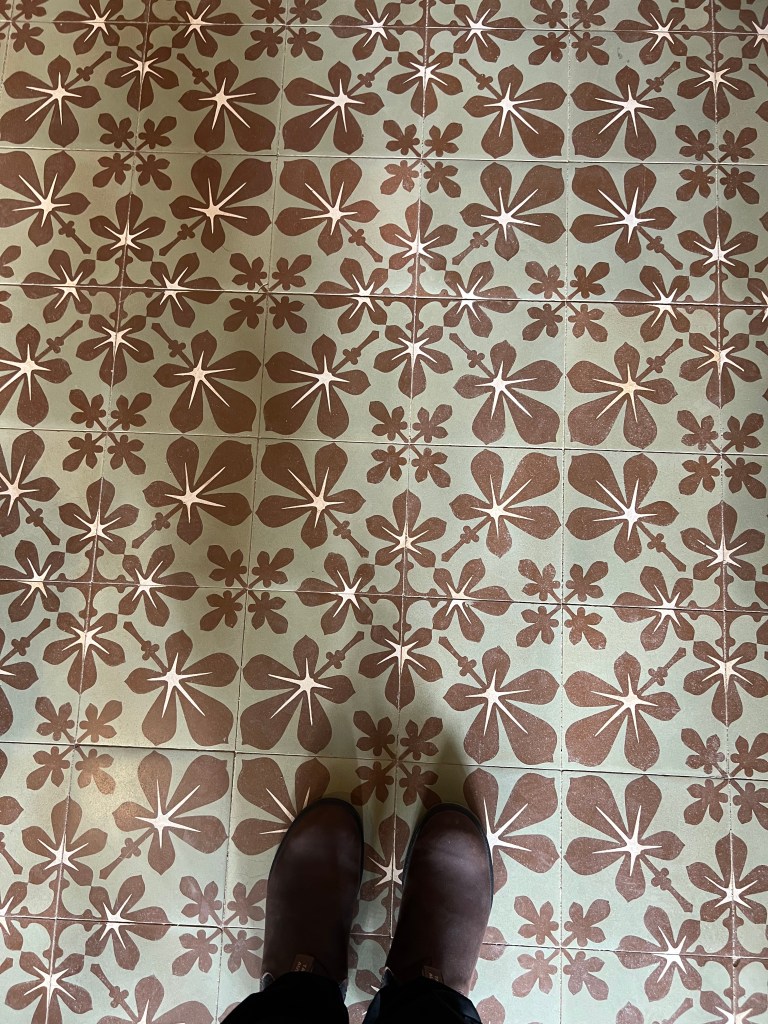
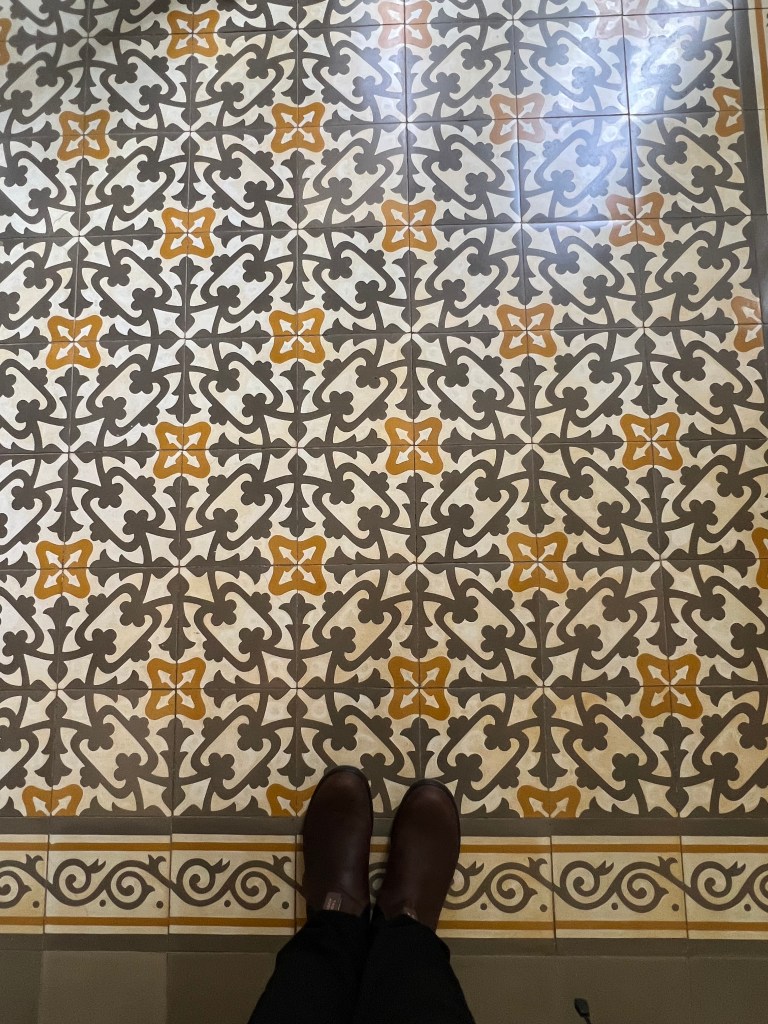
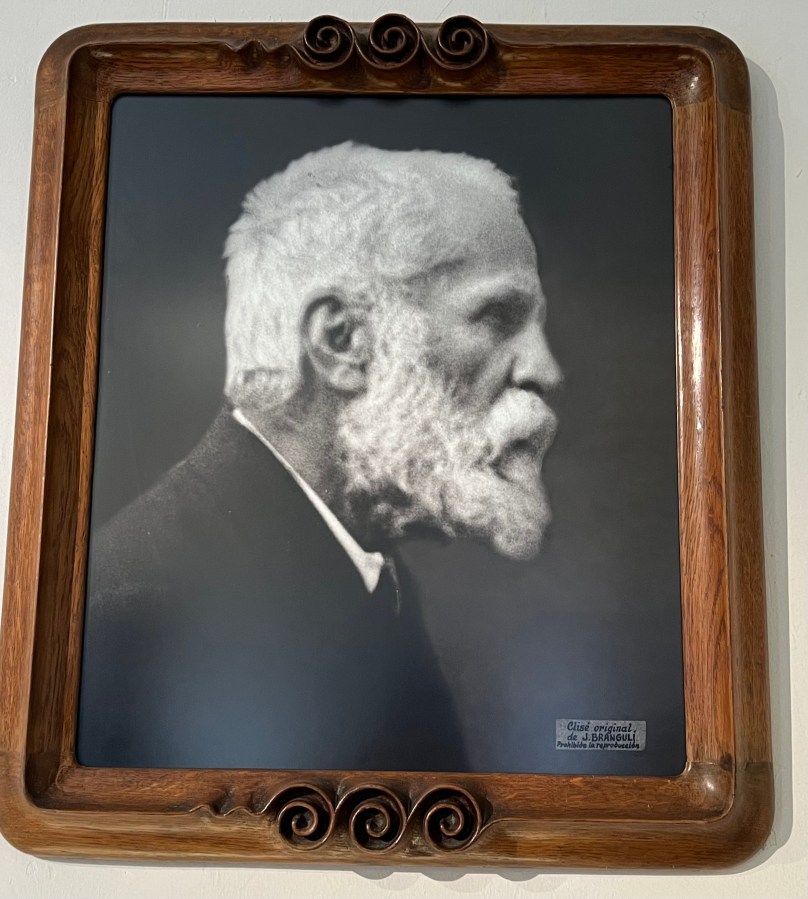
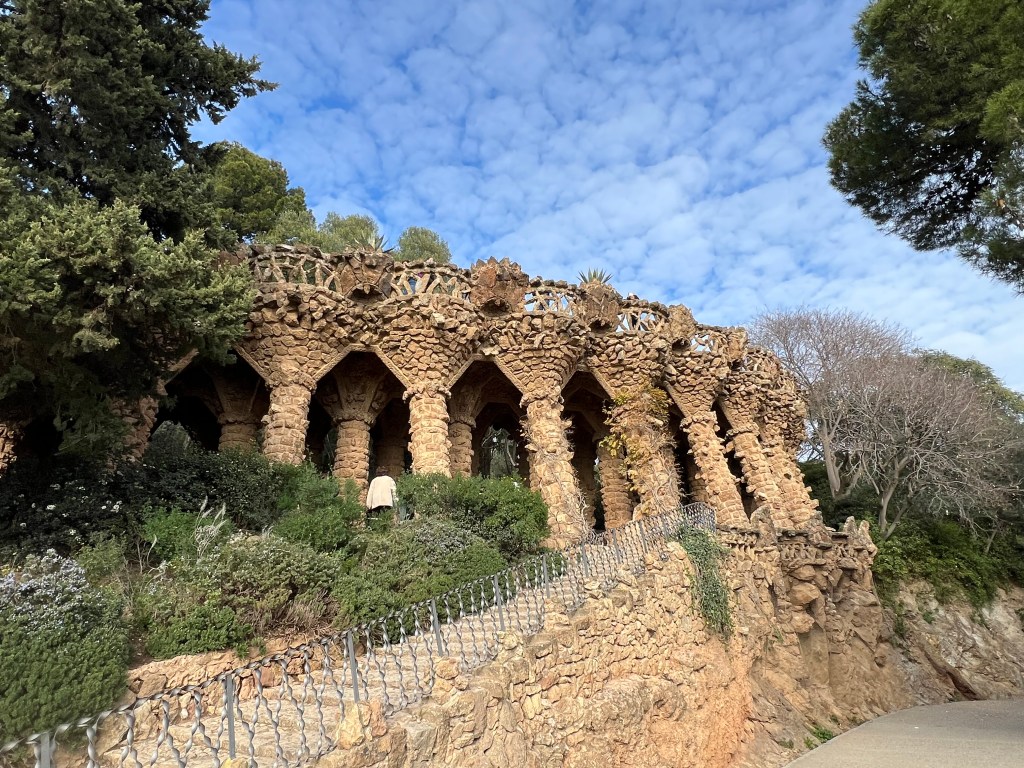
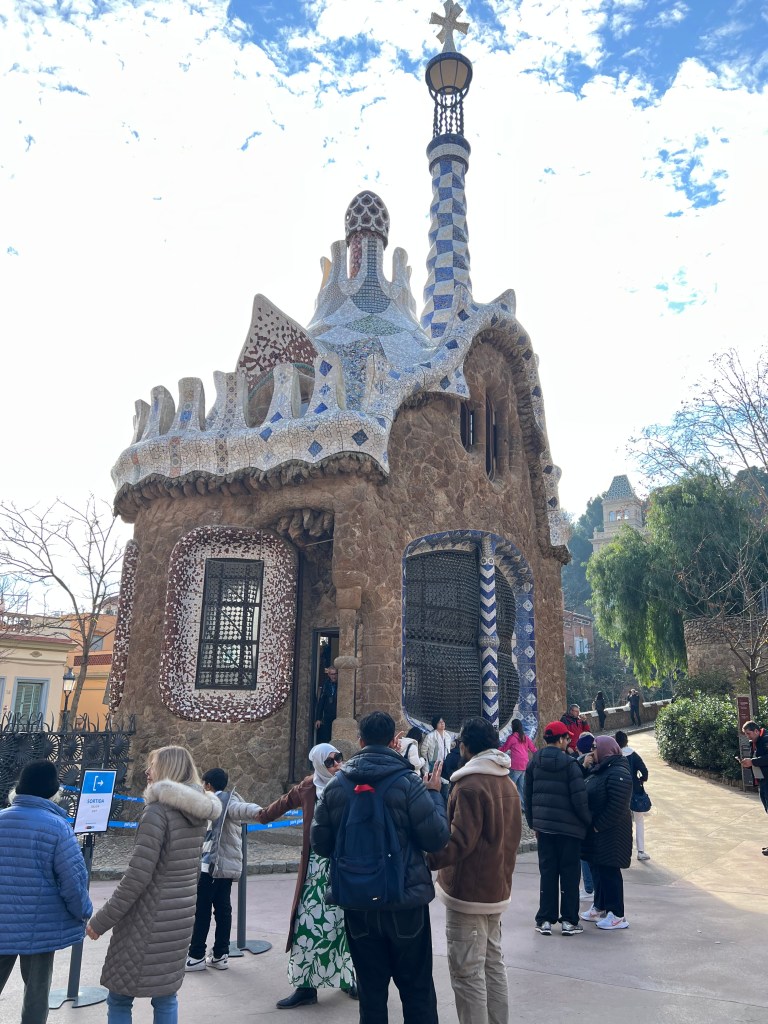
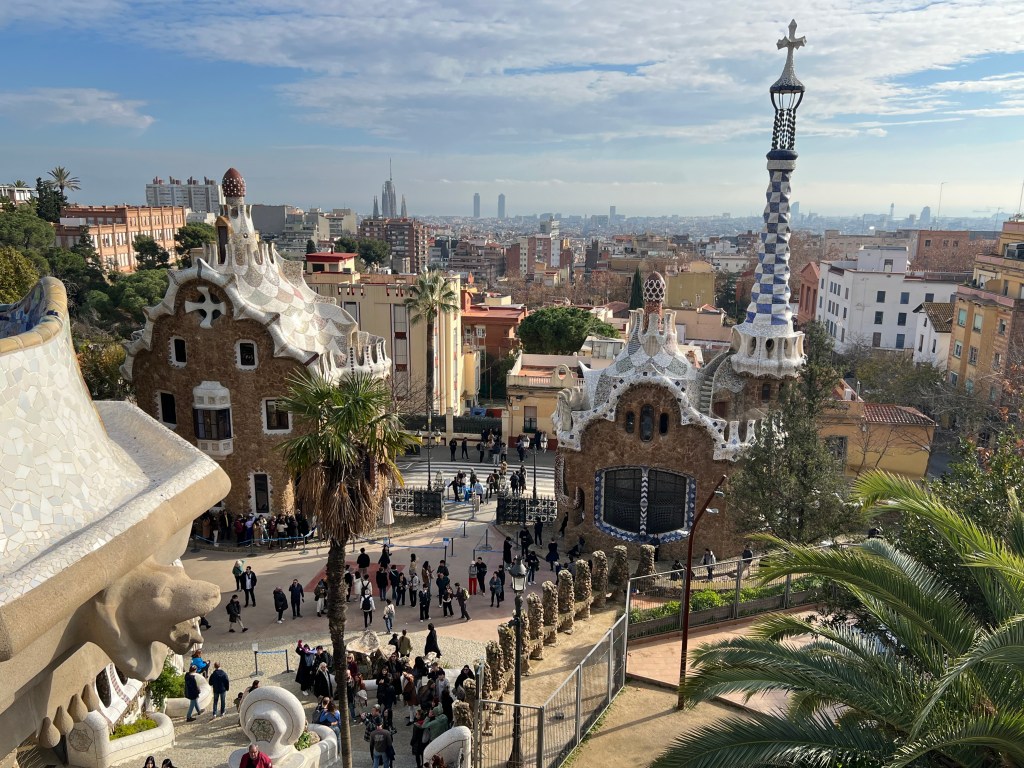
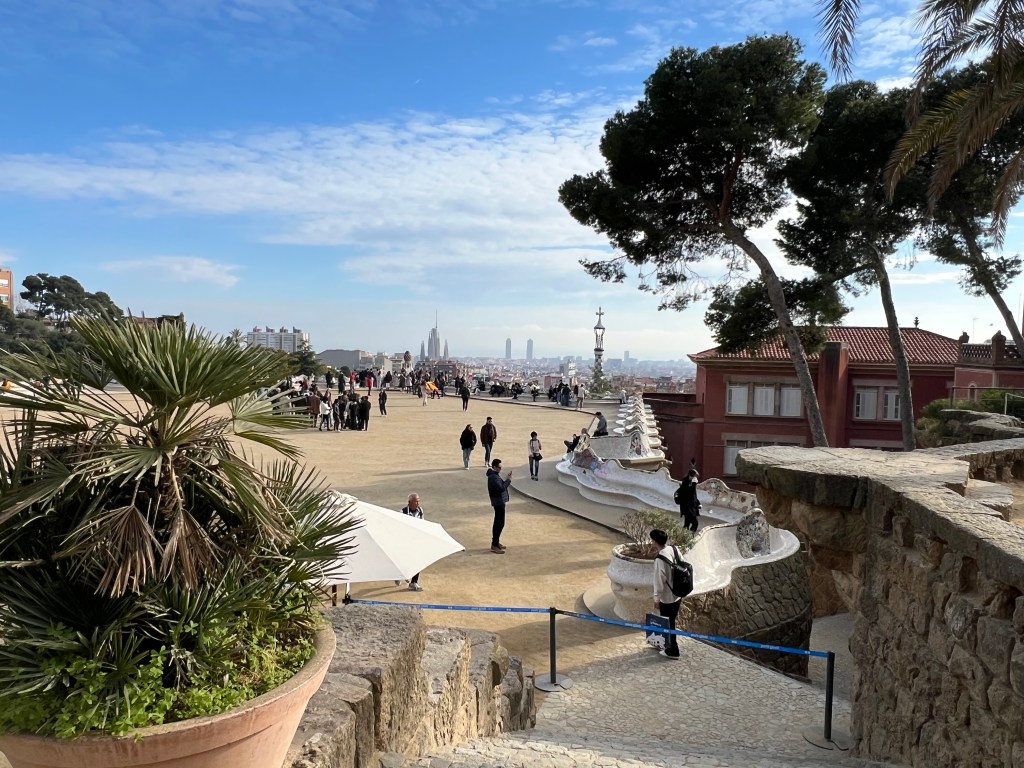
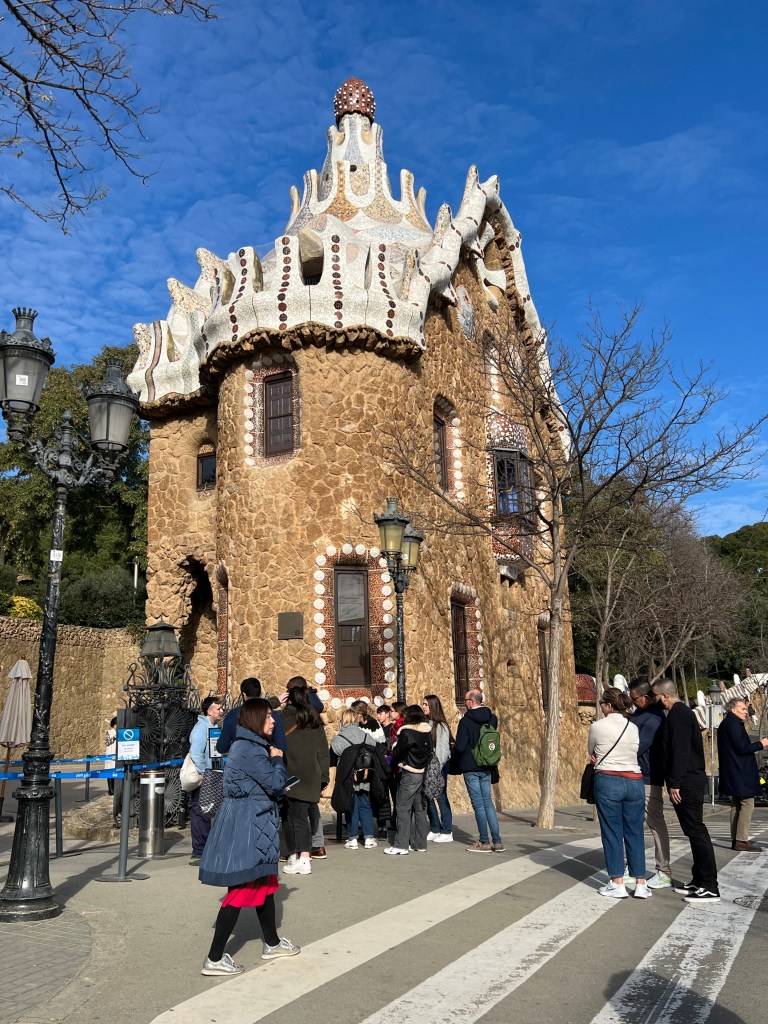
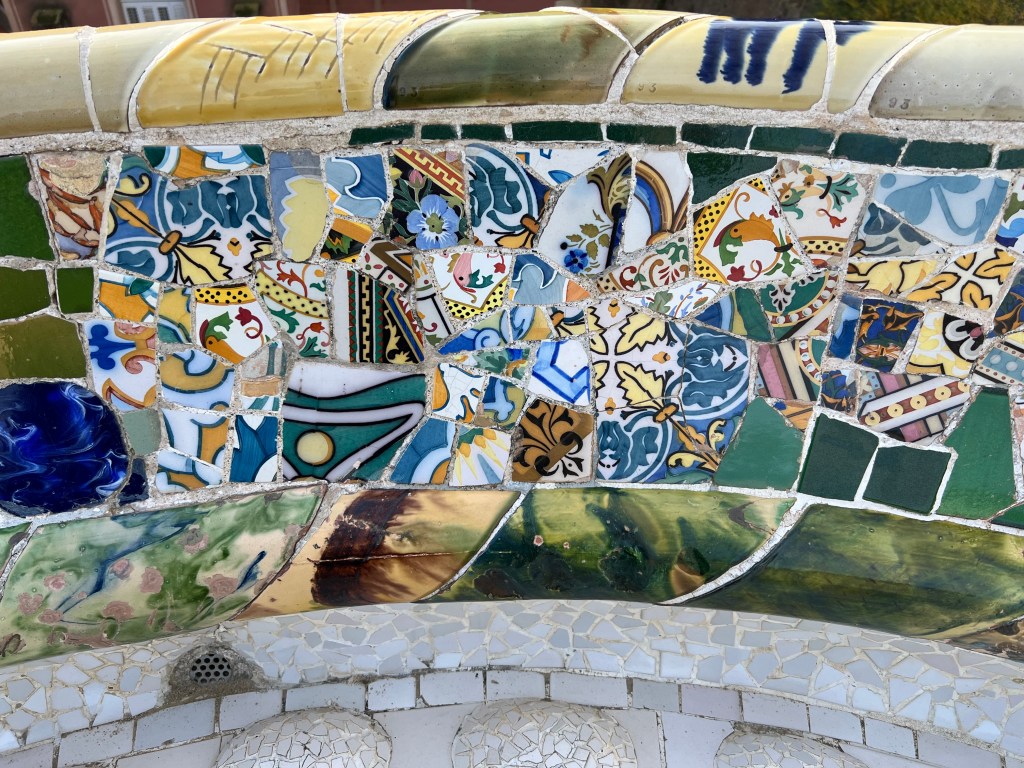
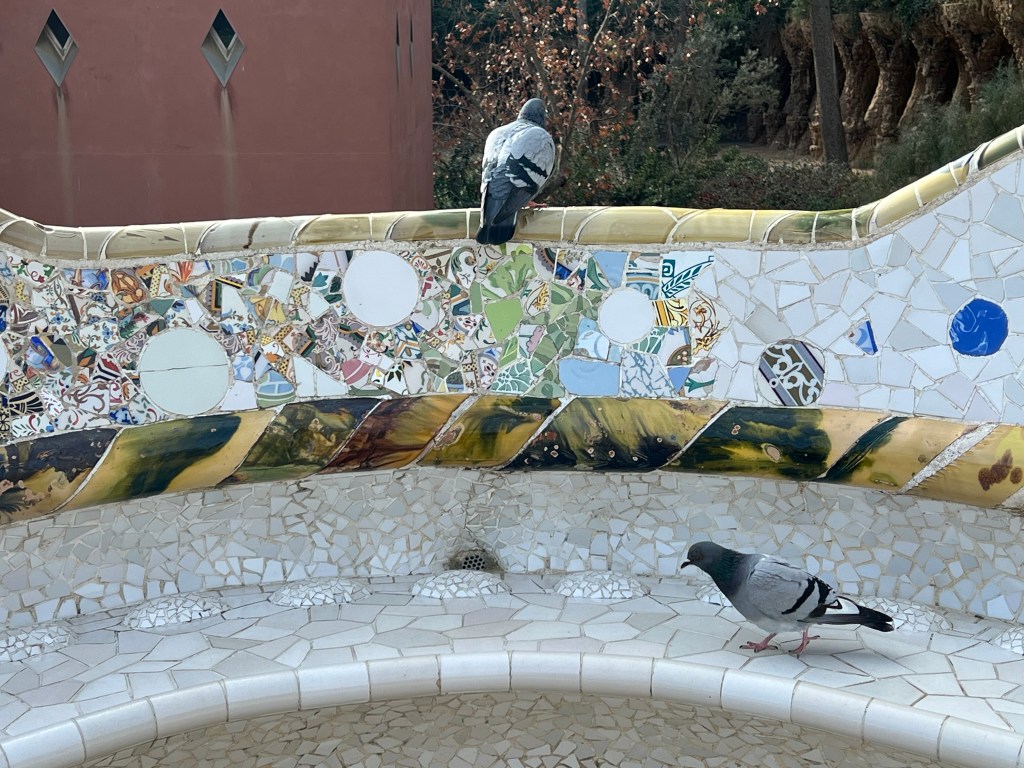
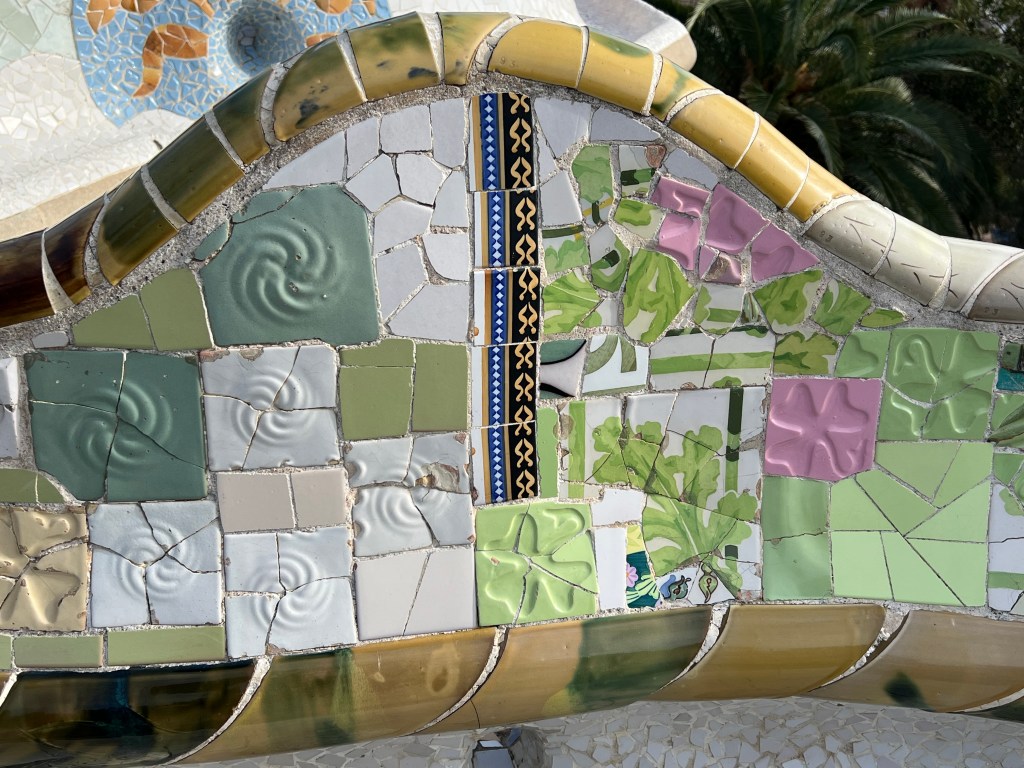
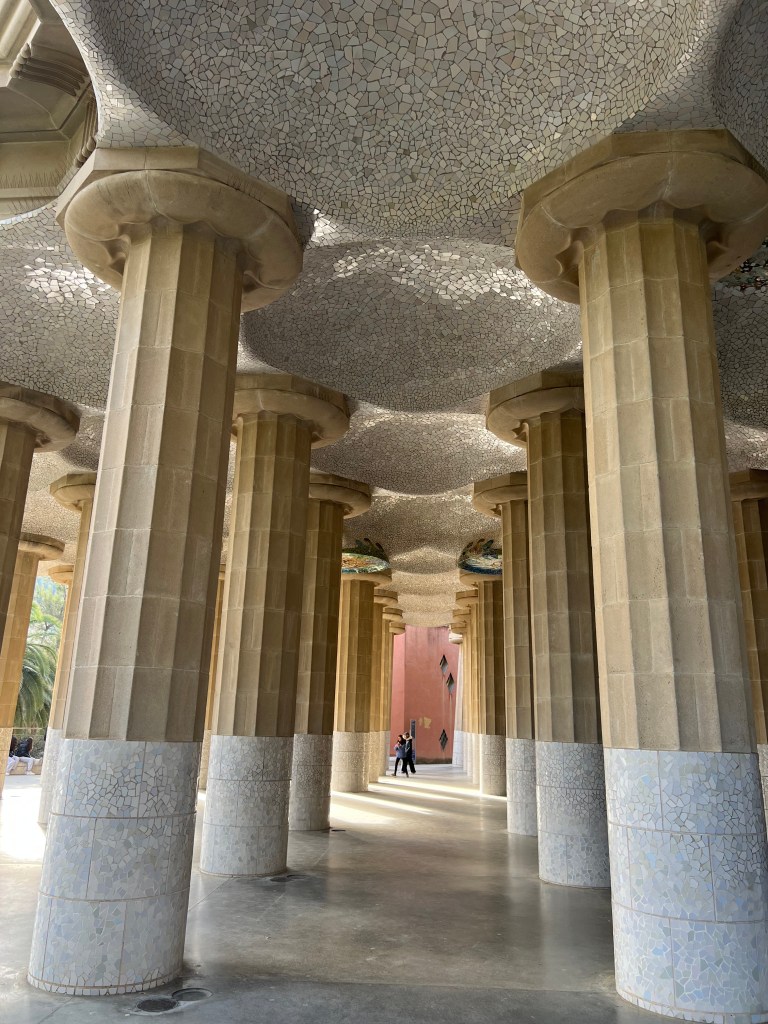
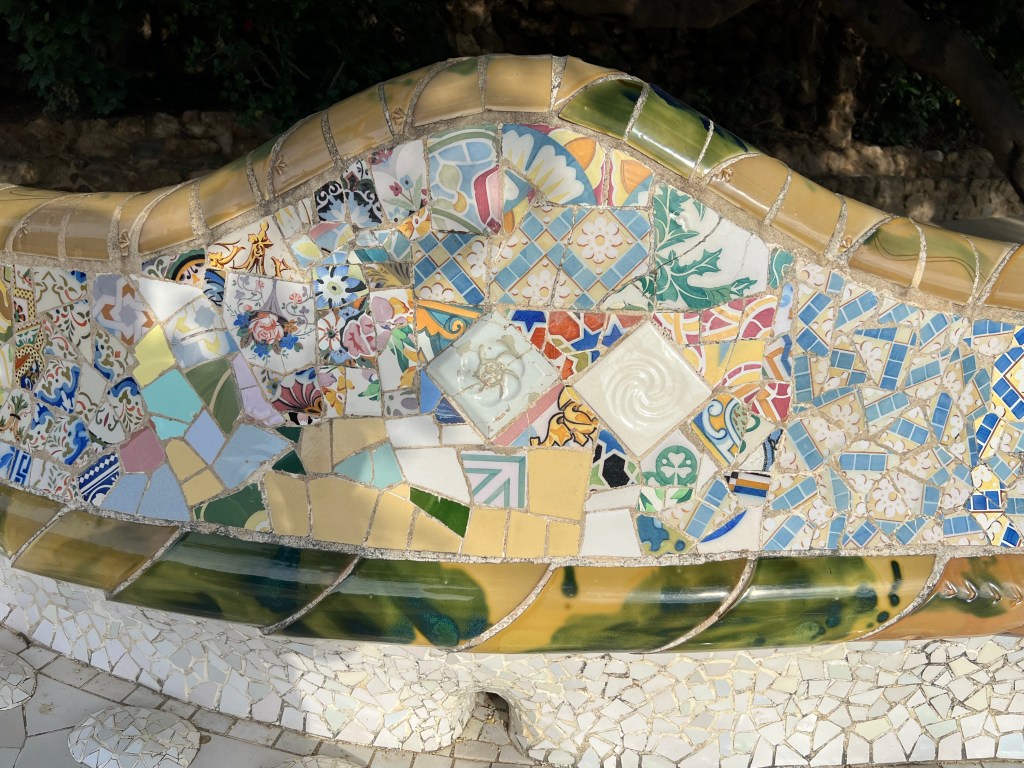
Within the park, which is built on a fairly steep hillside, are unique architectural features like colonnaded footpaths and structures called “viaducts.” There’s also a large terrace with great views of Barcelona. One of my favorite features is the serpentine seating benches covered in broken tiles and ceramic pieces. There are also two charming “gatehouses” that flank the main entrance.
A few dining spots
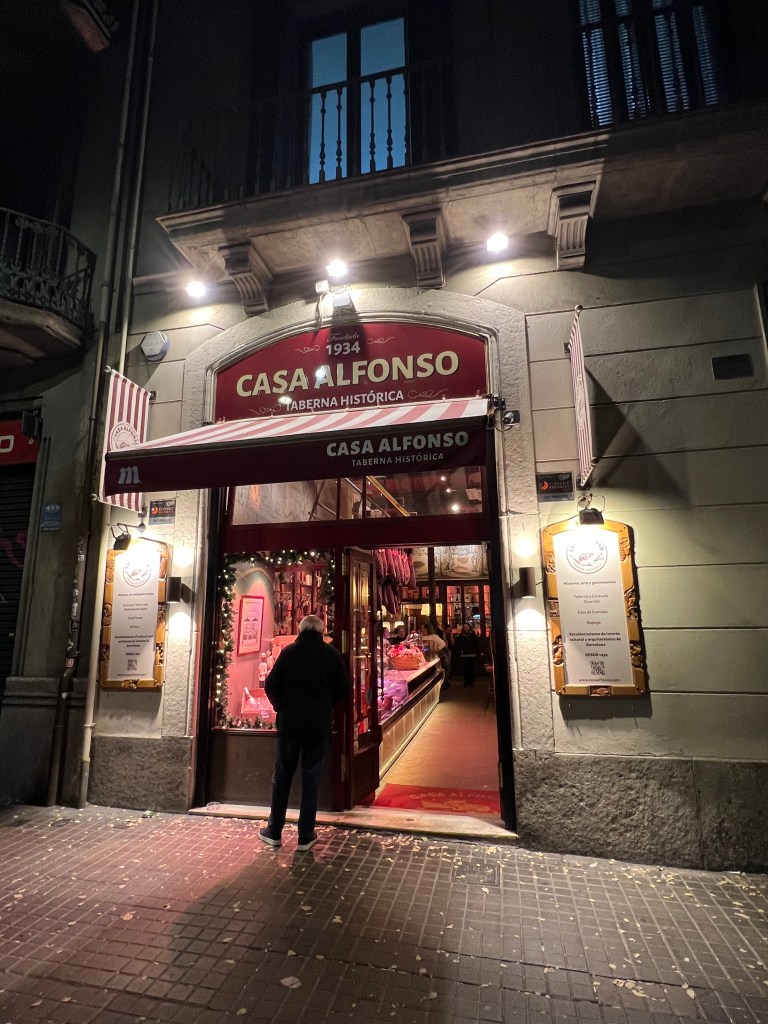
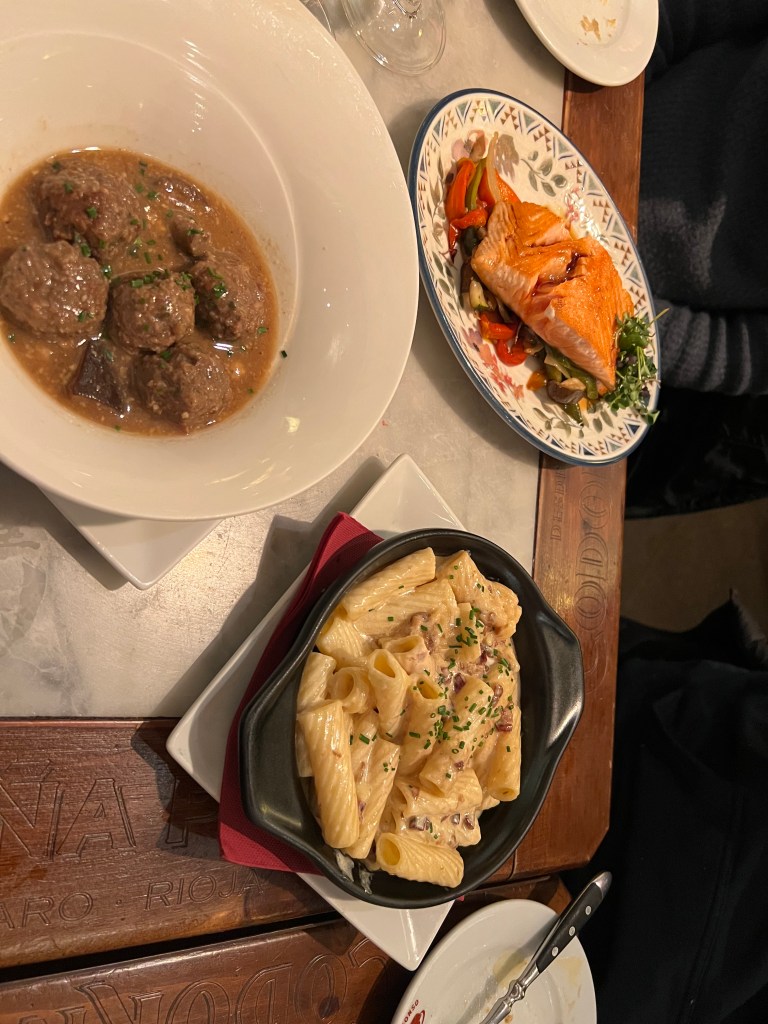
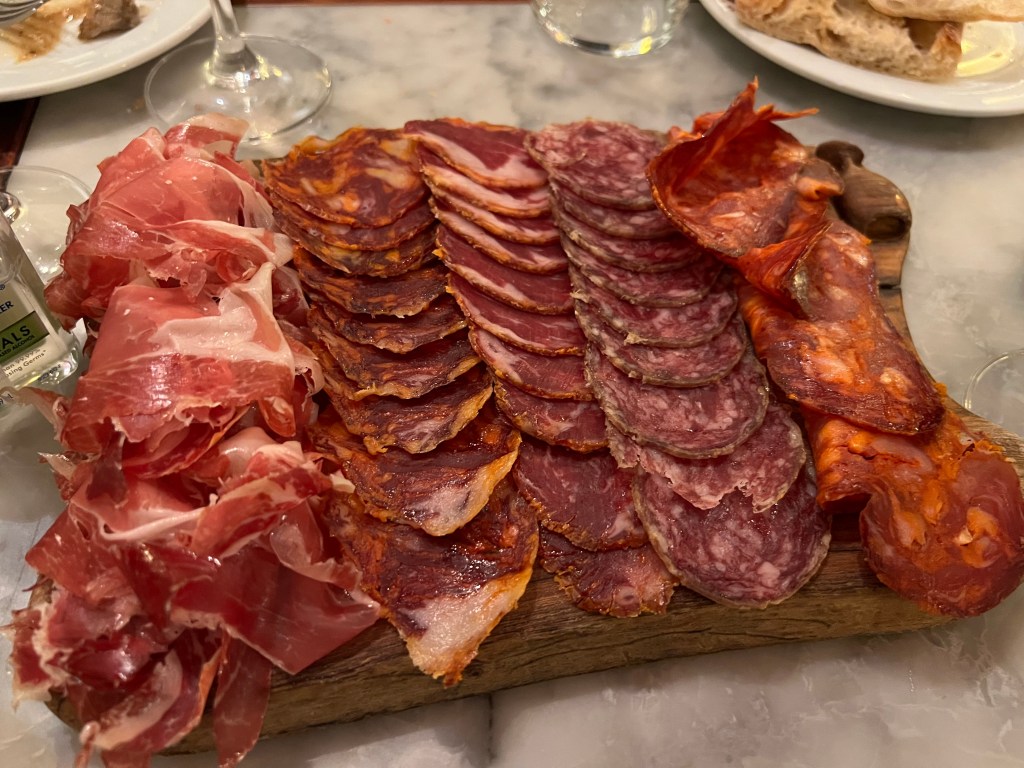
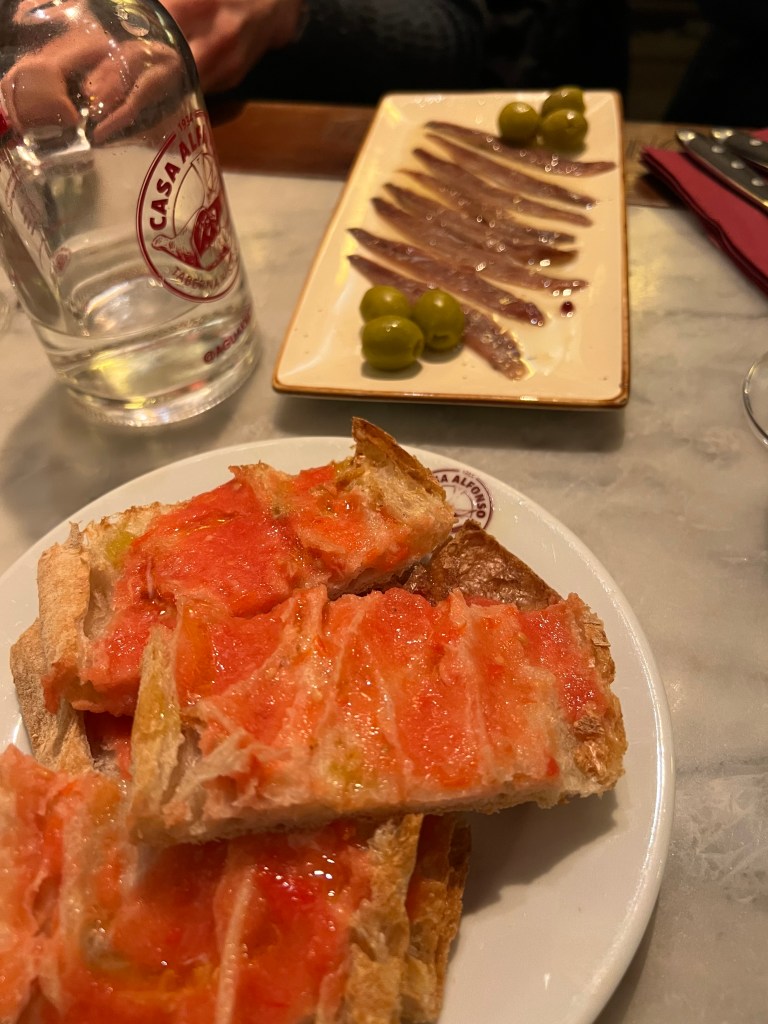
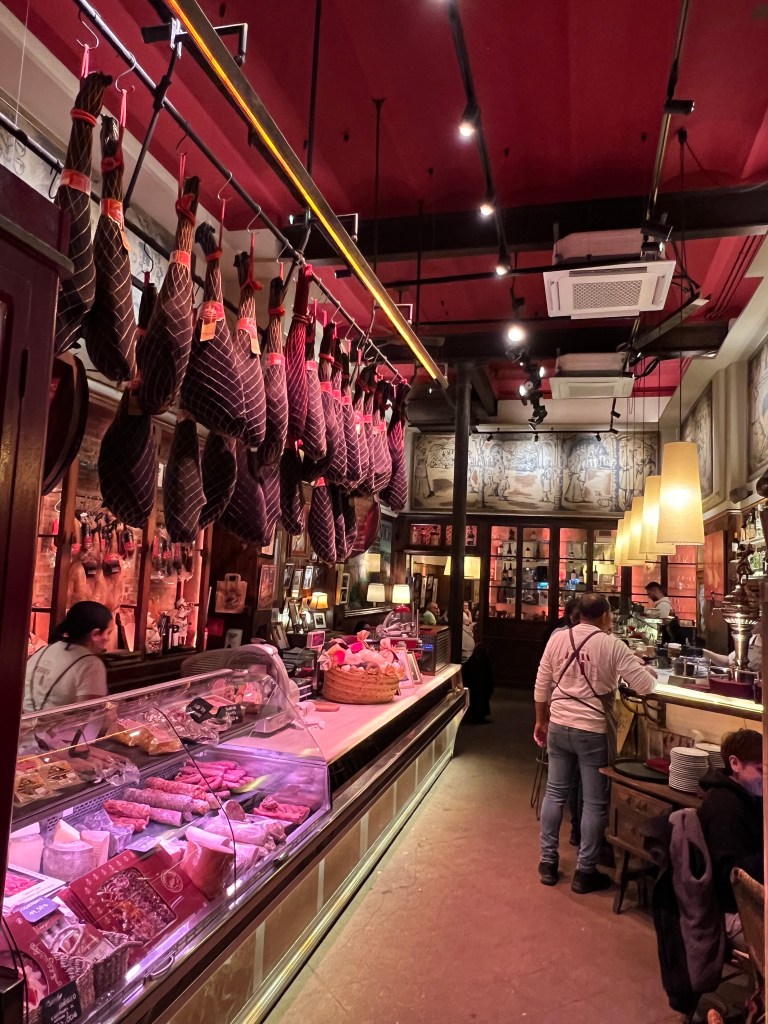
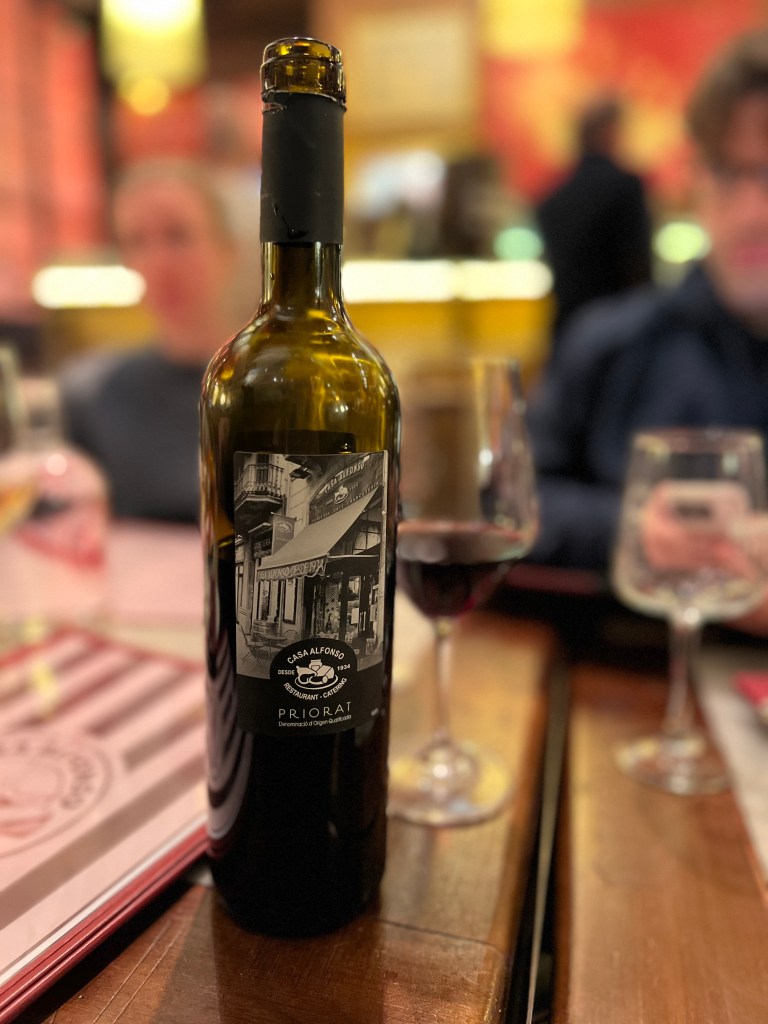
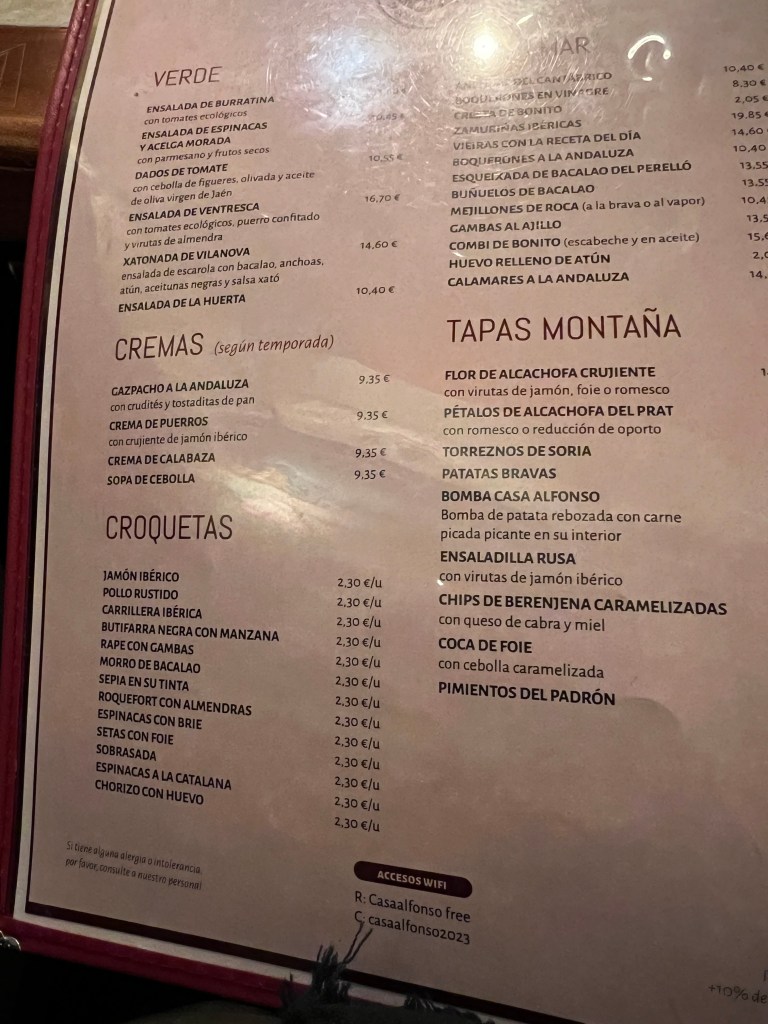
I’m a fairly early-to-bed, early-to-rise person, so the Spanish schedule of eating dinner late (typically after 8:00 pm), doesn’t quite sit well with me. We found that many restaurants don’t open for dinner until at least 7:30 pm. We tried a different restaurant each night, and our favorite was probably Casa Alfonso, opened in 1934, in the Eixample neighborhood, not far from our apartment. I’m not sure if we like it so much because it was our first true tapas experience, or because of the house wine, anticipating the meal during the long wait outside, or our Ecuadorian waiter.
Mercat de la Boqueria
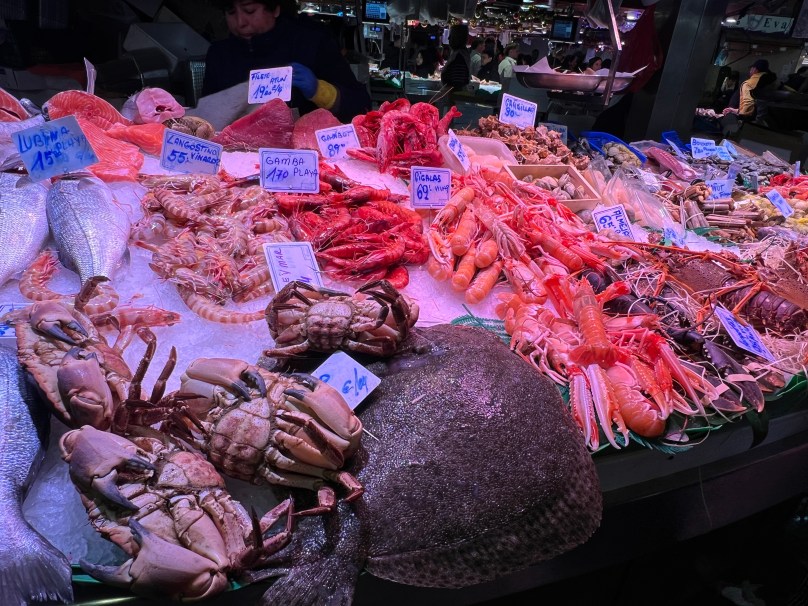
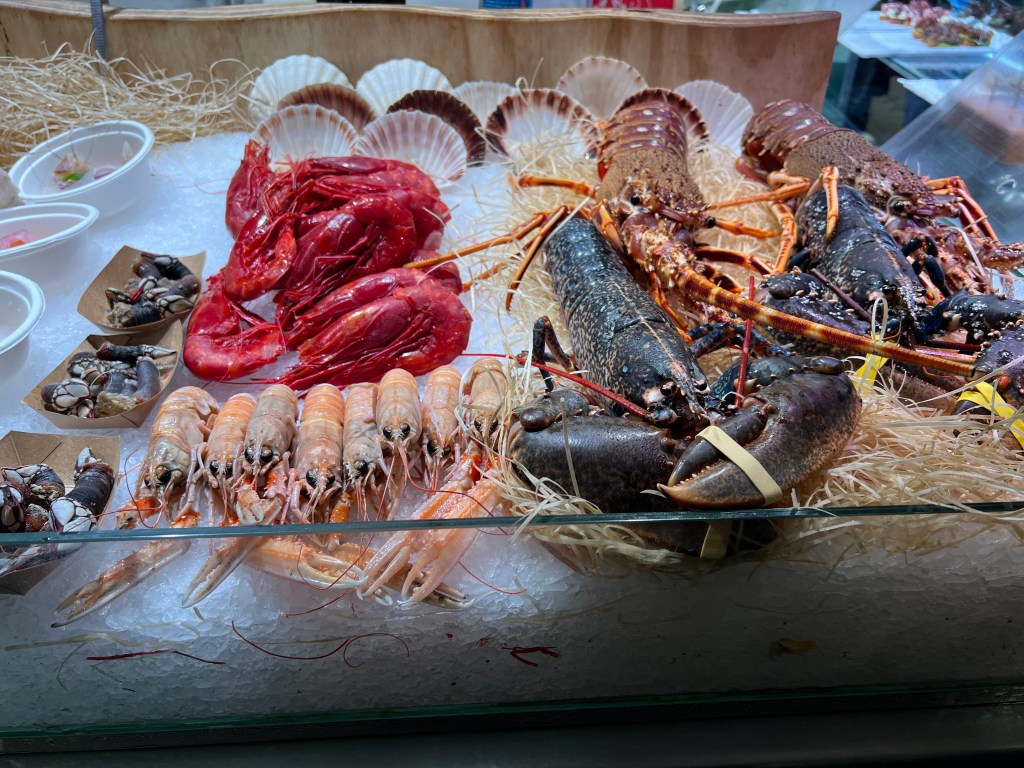
Despite it being overly crowded, I do recommend checking out La Boqueria, which is probably Barcelona’s most famous food market. Even if you don’t buy anything to eat, it’s fun to check out all the stands with fresh seafood (including barnacles and dried and salted cod – here called bacalla — that we first had in Portugal), Iberian ham and cured meats, and olives.
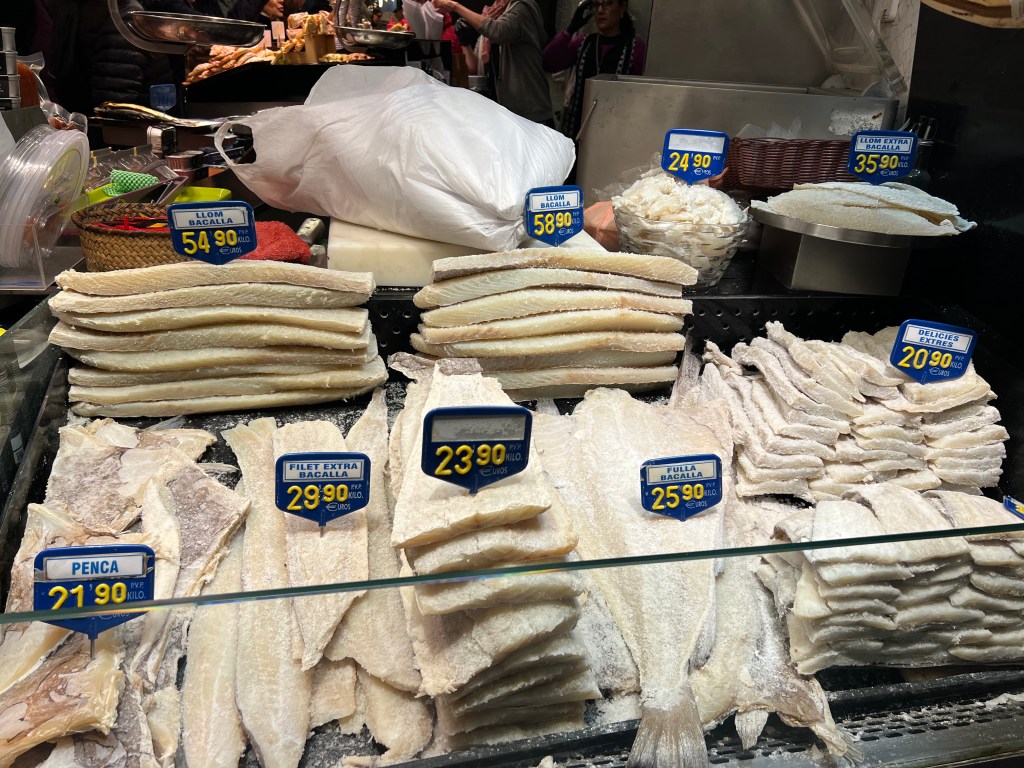
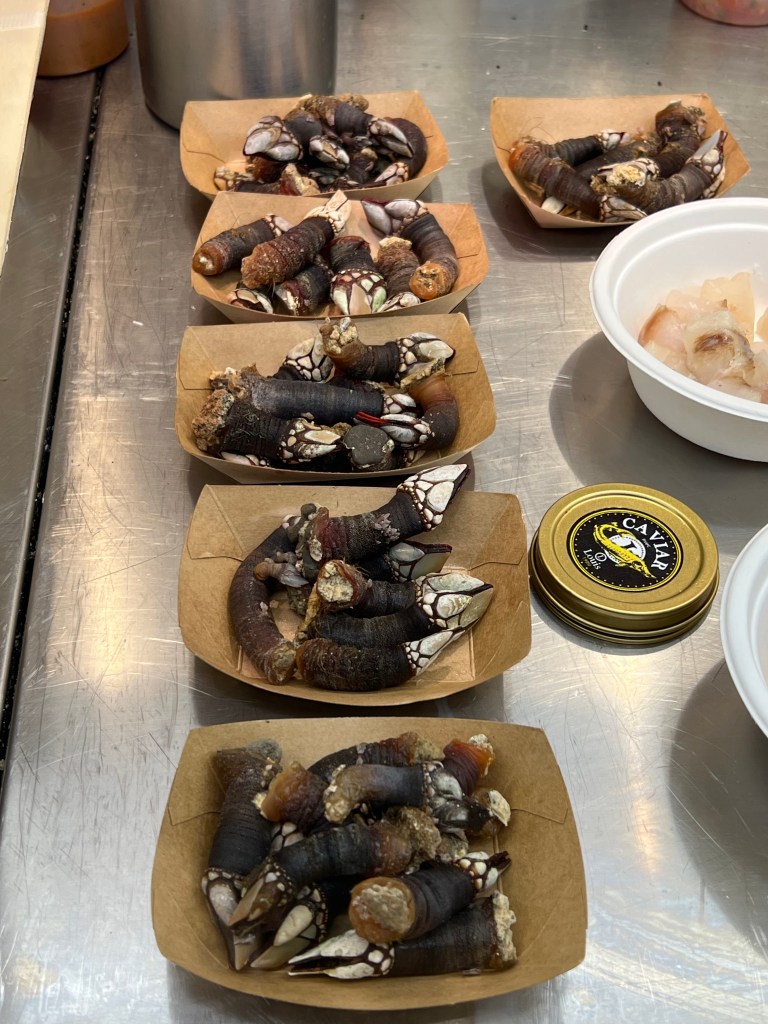
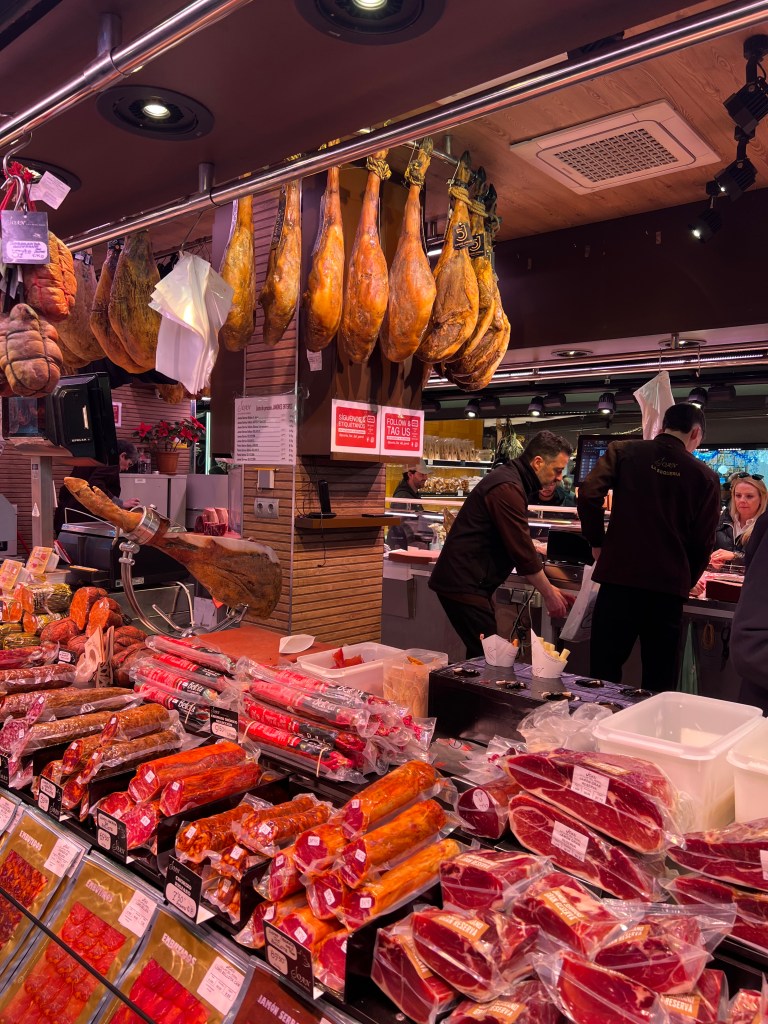
Famous churros at Granja M Viader
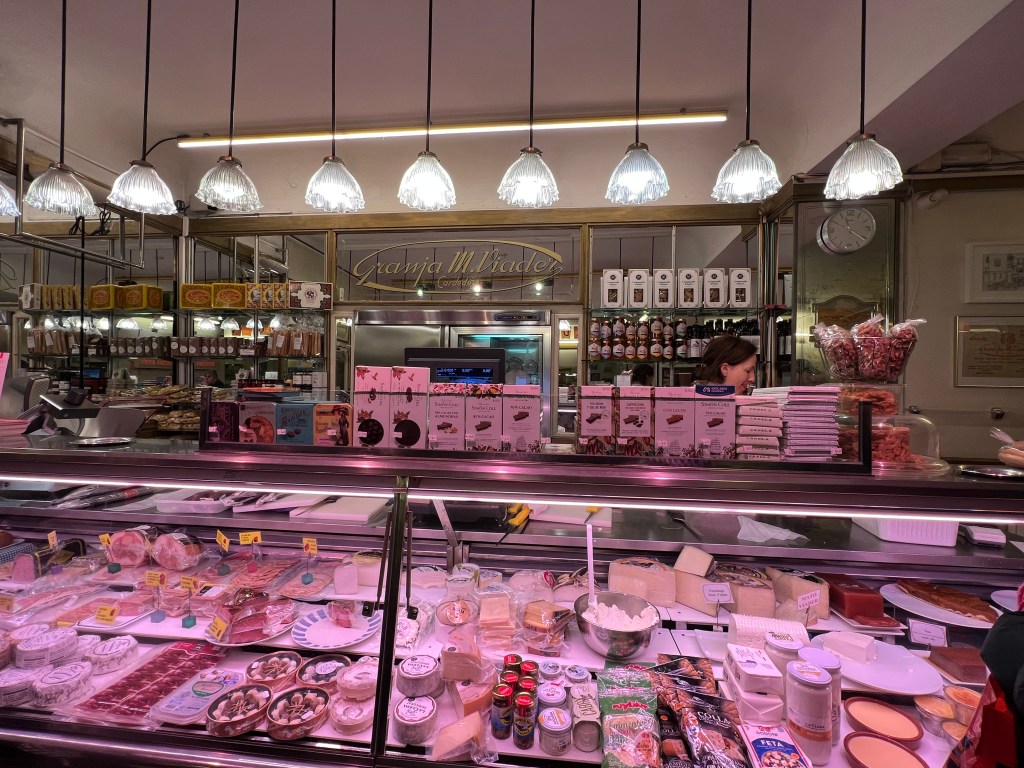
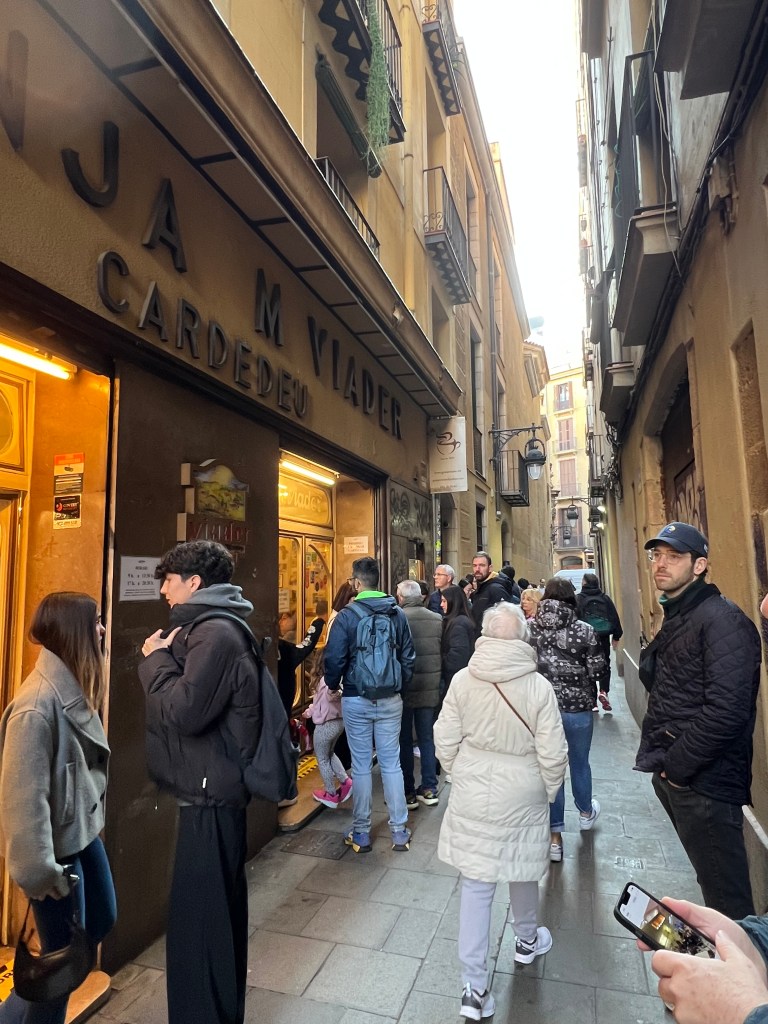
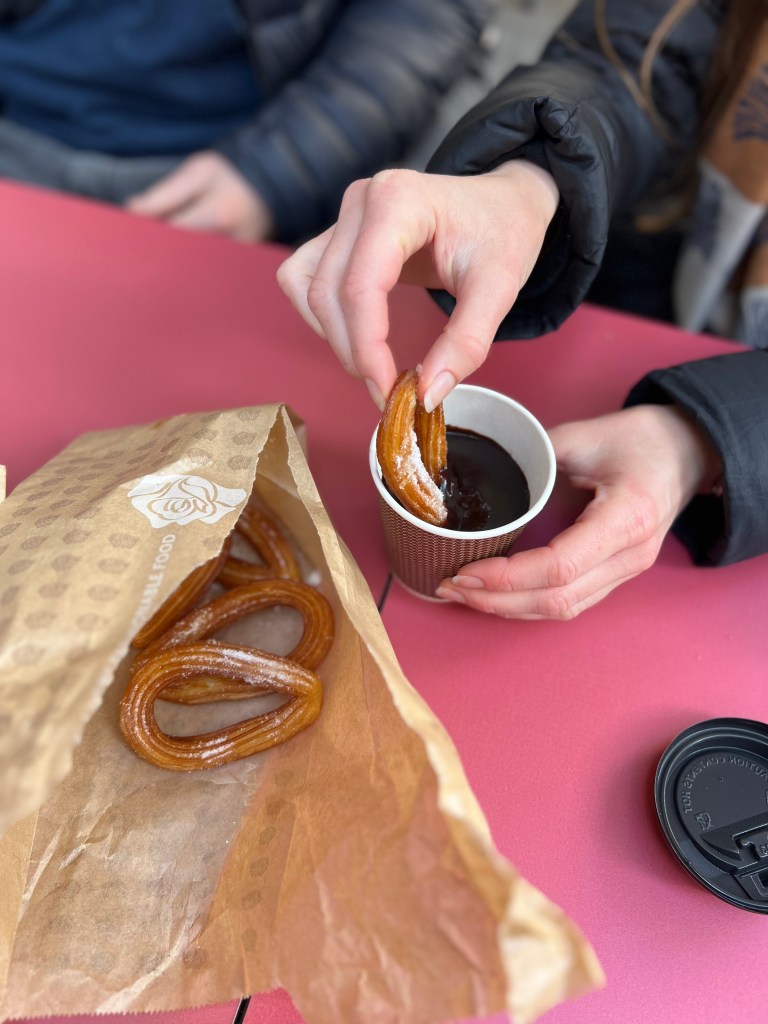
Not far from La Boqueria is what is called a granja — a cafe specializing in dairy products. At the urging of one of our family members, we stopped at the famous Granja M. Viader for hot churros con chocolate. There was a long line to sit inside so we got our treats “to go,” and found a place to sit outside and enjoy. You dip your churro into what is called hot chocolate, but is like a thick chocolate dip — kind of like liquid fudge. What can I say? Hit the spot.
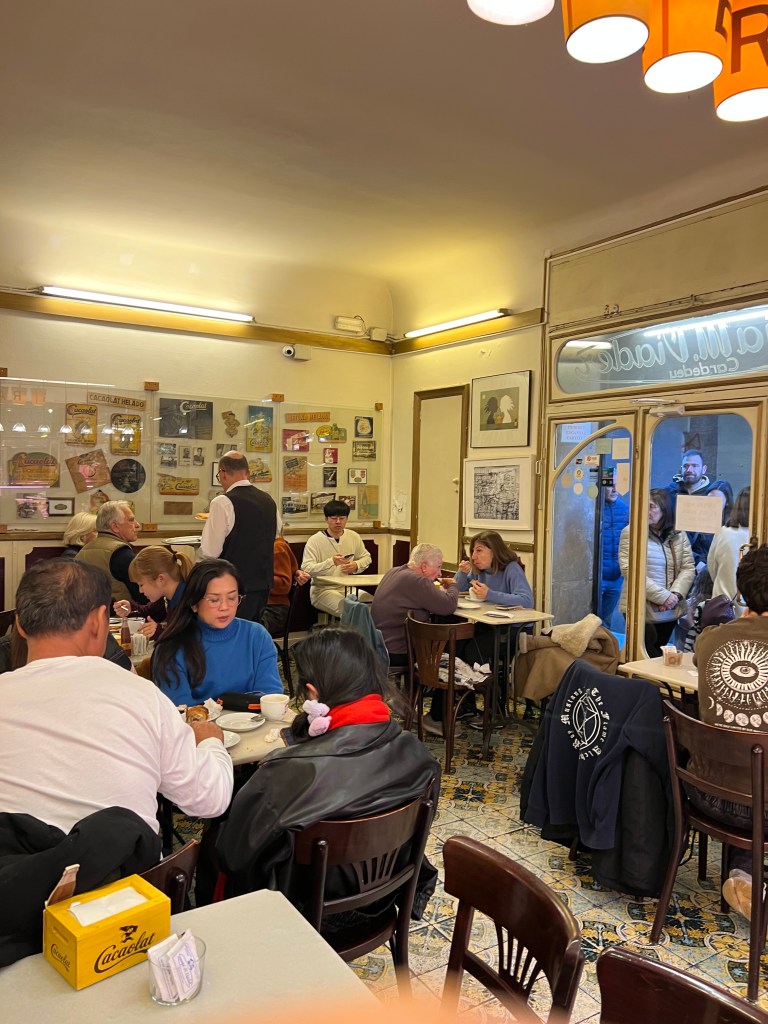
Wandering around the Gothic Quarter
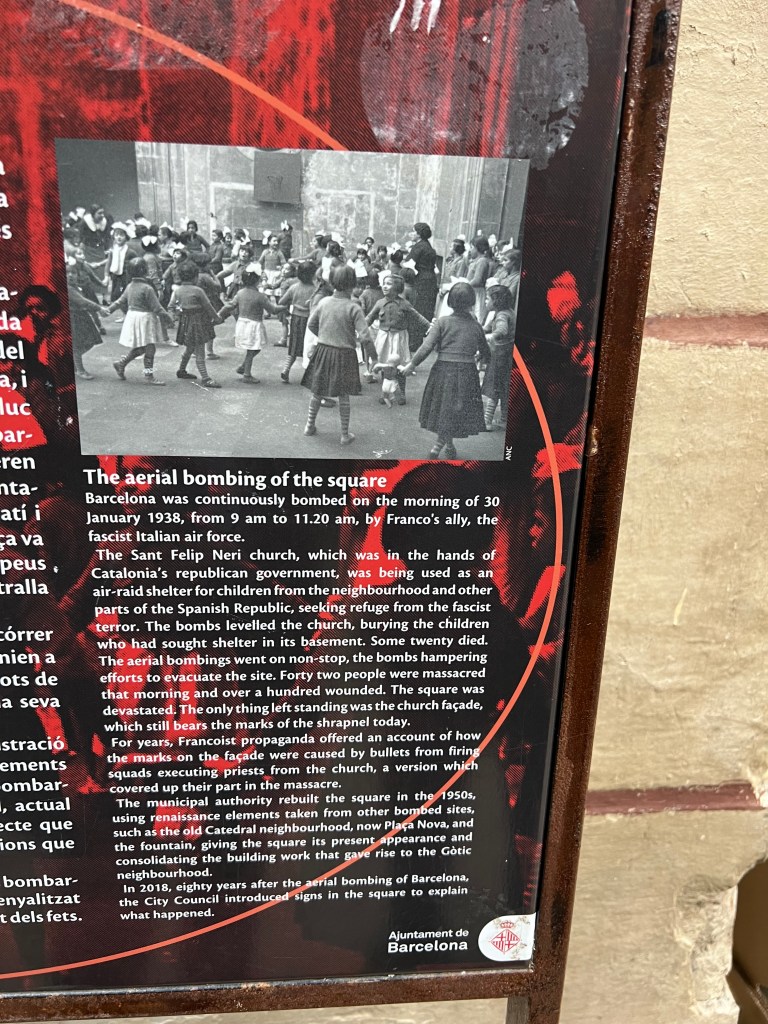
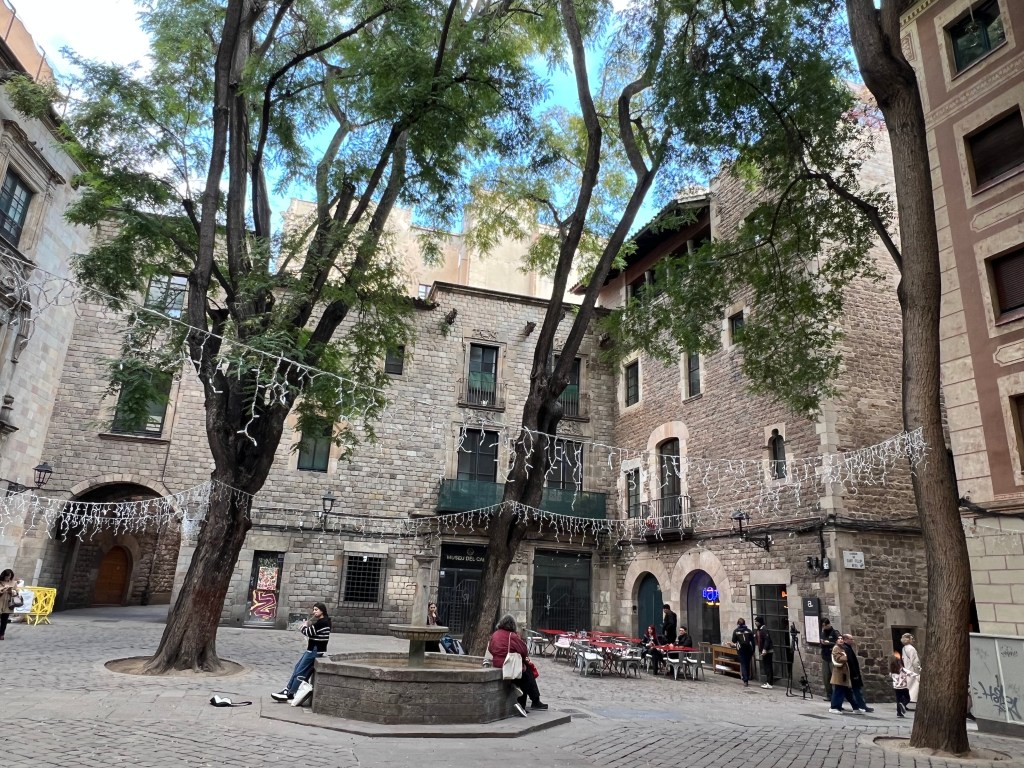
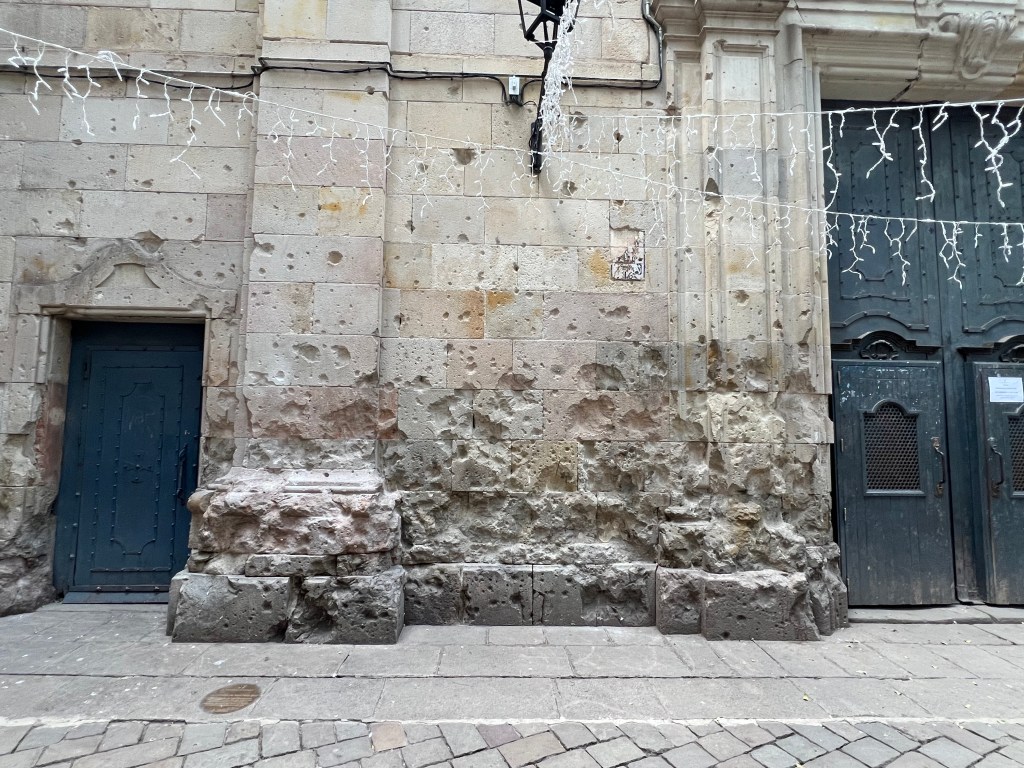
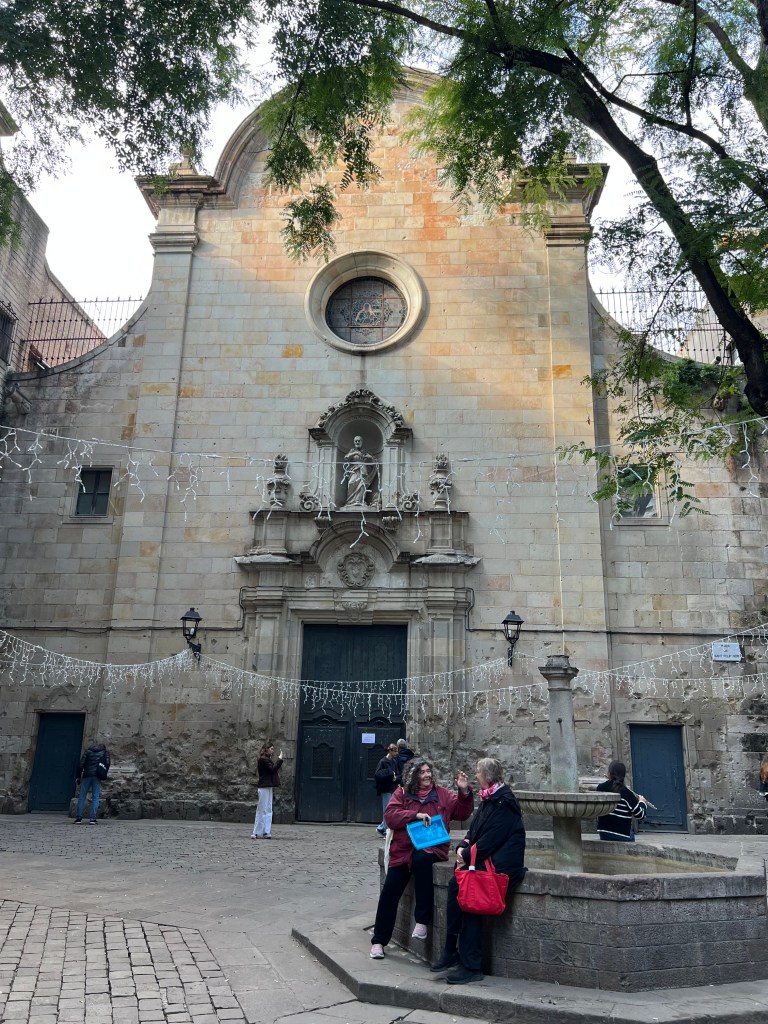
The day my husband and I ended up wandering around the Gothic Quarter — the oldest part of Barcelona — was New Year’s Day, and many sites were closed (like the Cathedral). We stumbled upon one particularly evocative square, with a woman playing a flute, with the somewhat mournful music echoing within the fairly enclosed space surrounded by stone buildings. Turns out, upon reading signage, we discovered that we were looking at the Sant Felip Neri Church, which was held by the Catalonian government and was bombed in January 1938 by Franco’s ally, the fascist Italian air force.The church was serving as a shelter for children and 42 people were killed, including approximately 20 children. The church’s facade shows damage from the bombing.
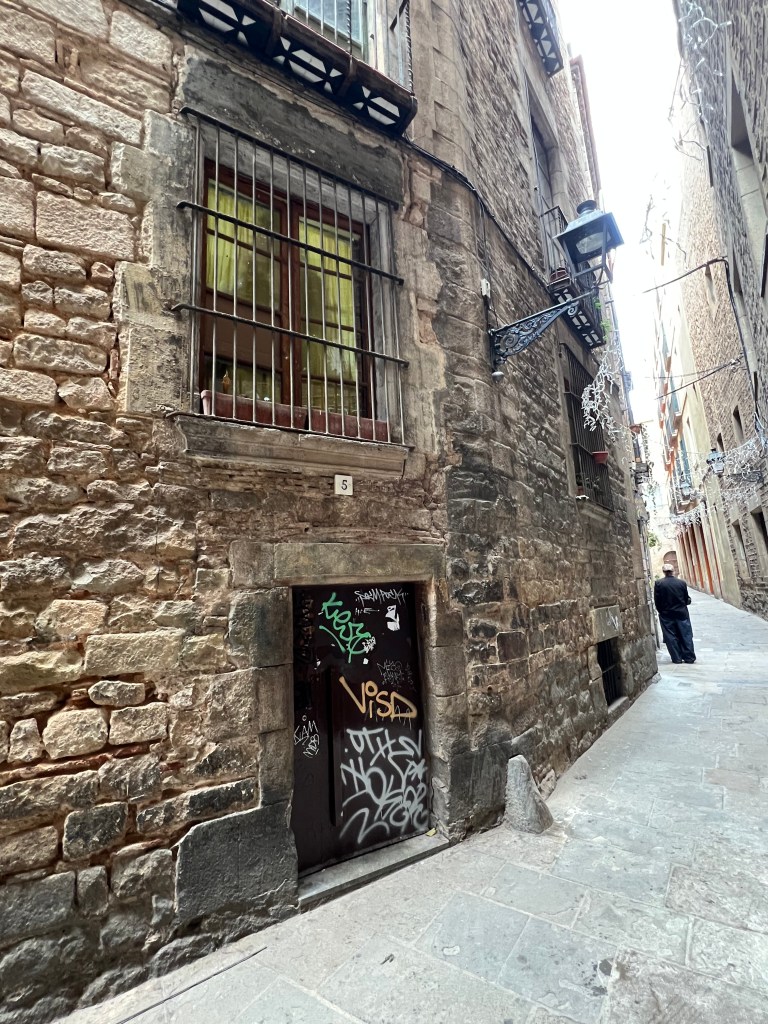
Continuing on, we proceeded through the Jewish quarter and following a walking map, found the site of what is believed to be the oldest synagogue in Barcelona. There was virtually no signage, and no way to enter.
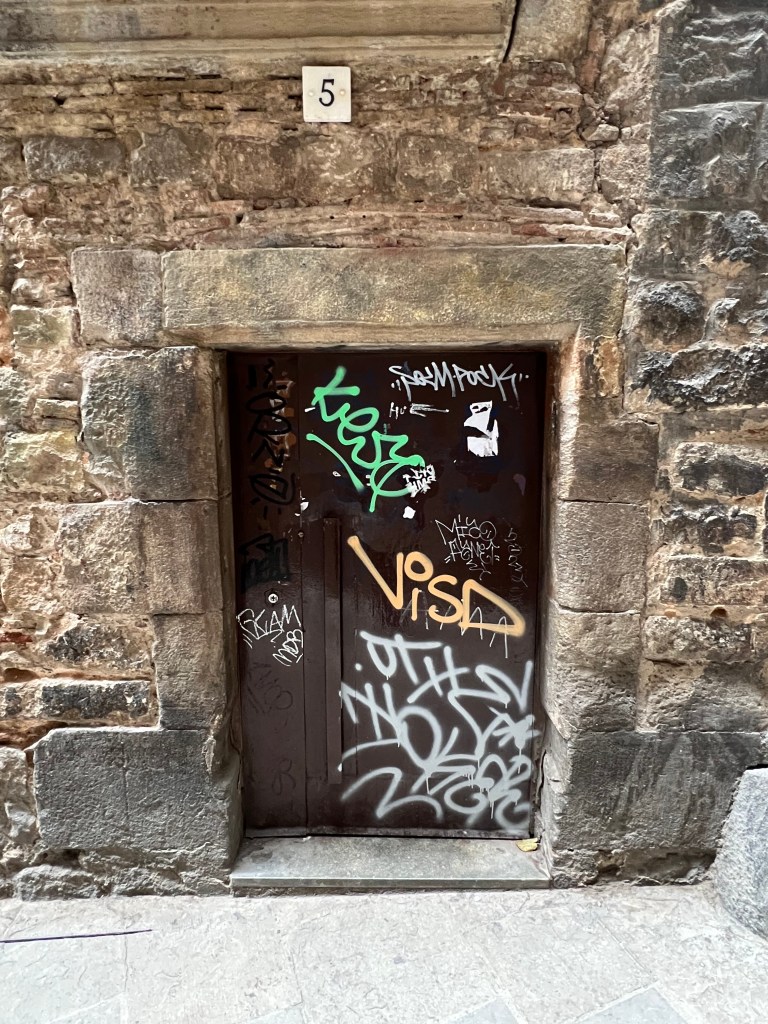
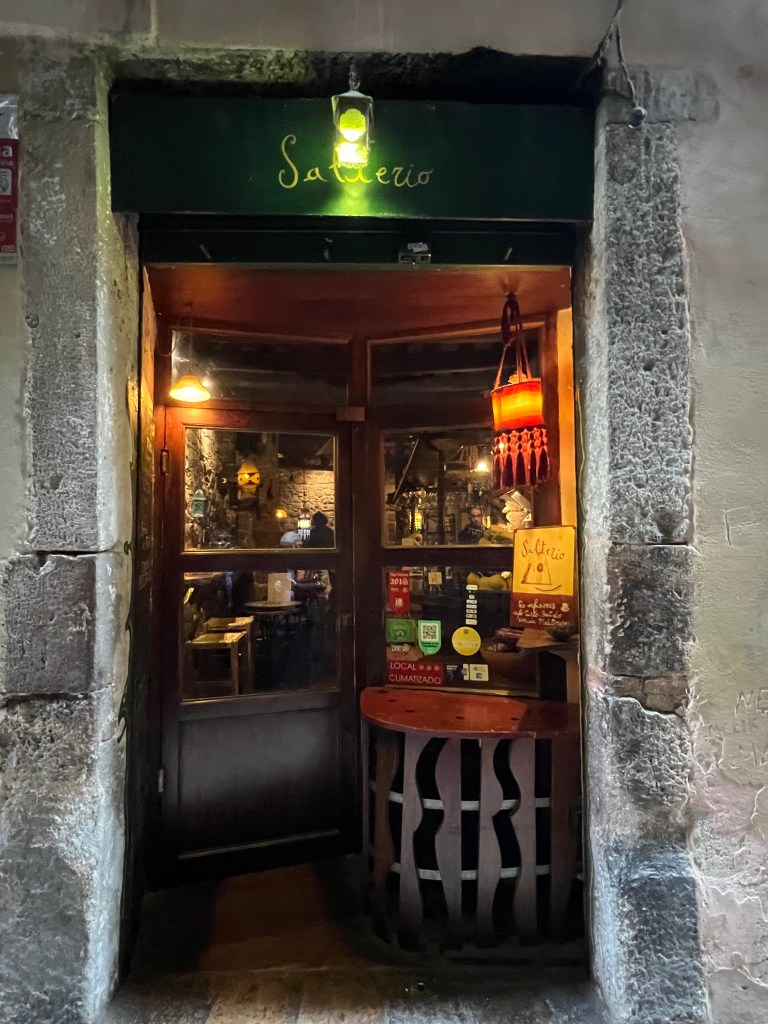
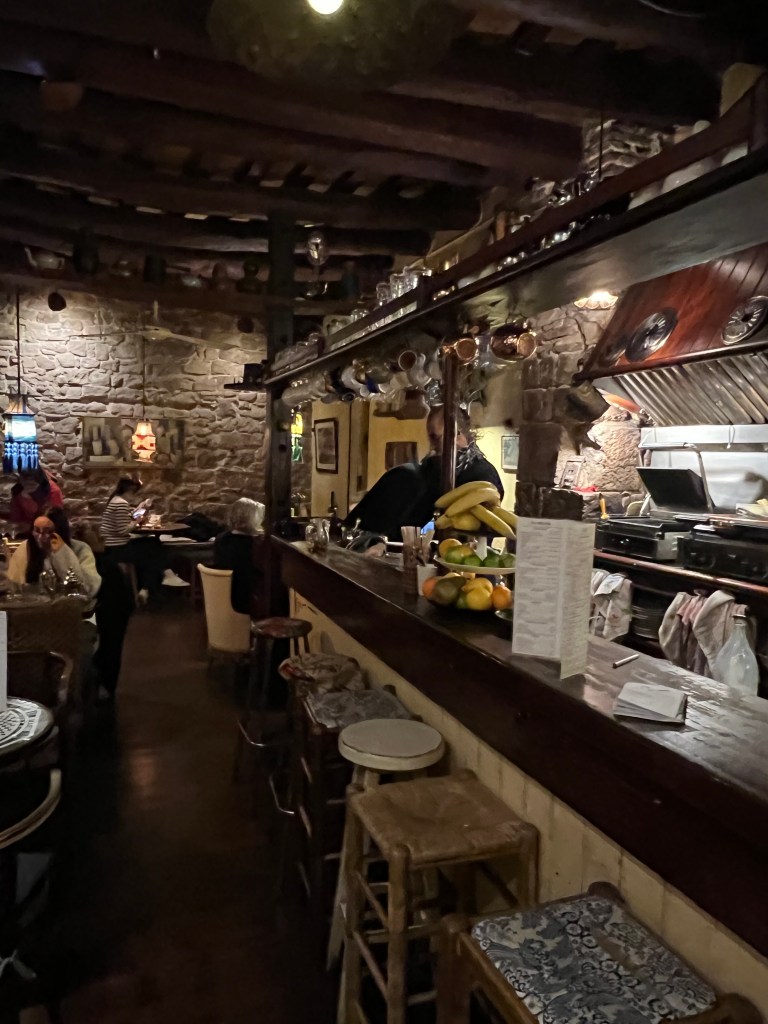
Nearby, we ducked into a small bar to have a glass of wine and a cheese plate. It was exactly what we needed.
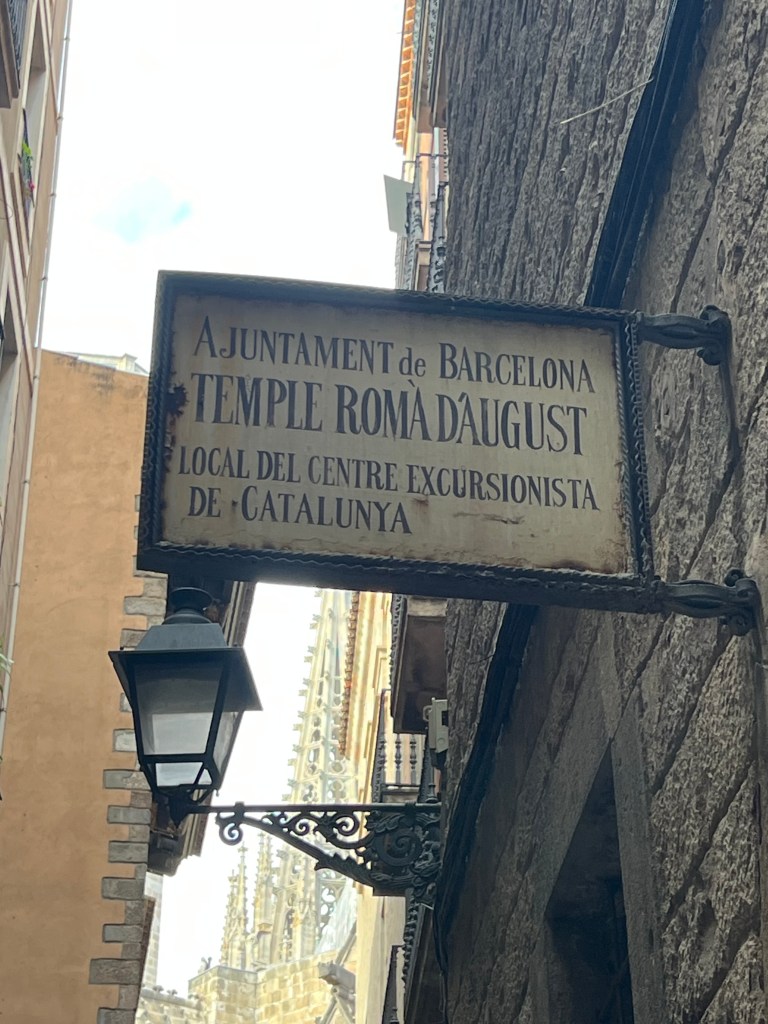
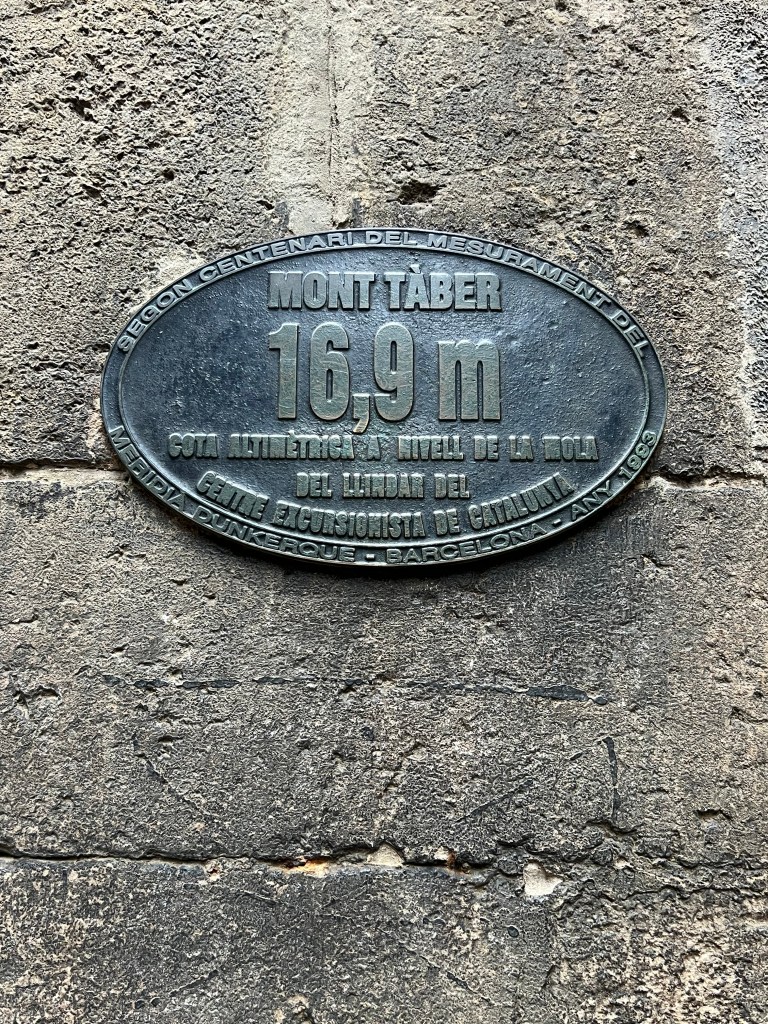
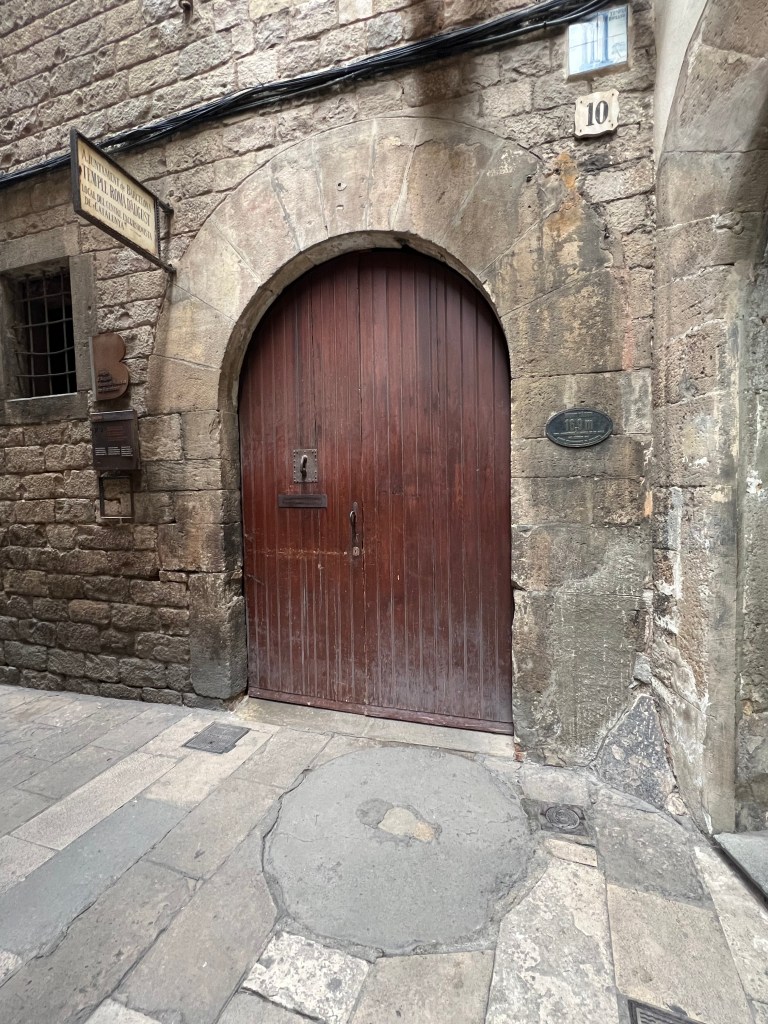
In the Gothic Quarter, we also found the original site of the Roman Temple of Emperor Augustus. Sadly, because of the holiday, we could not enter to see the set of 2,000 year-old Roman columns preserved inside.
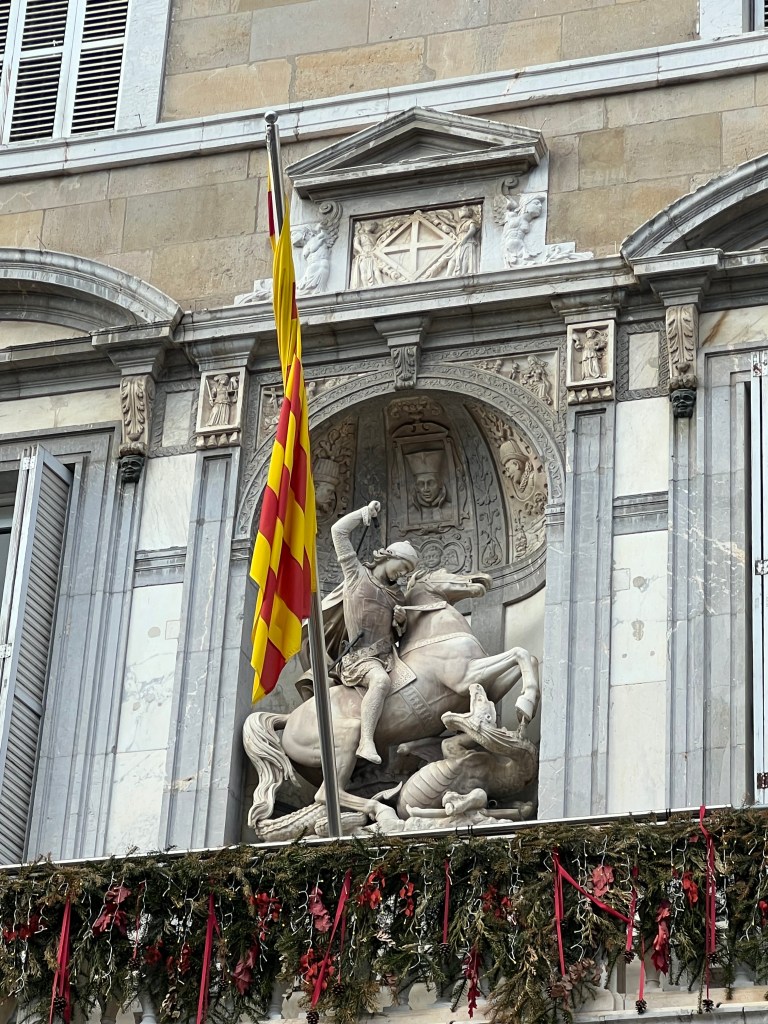
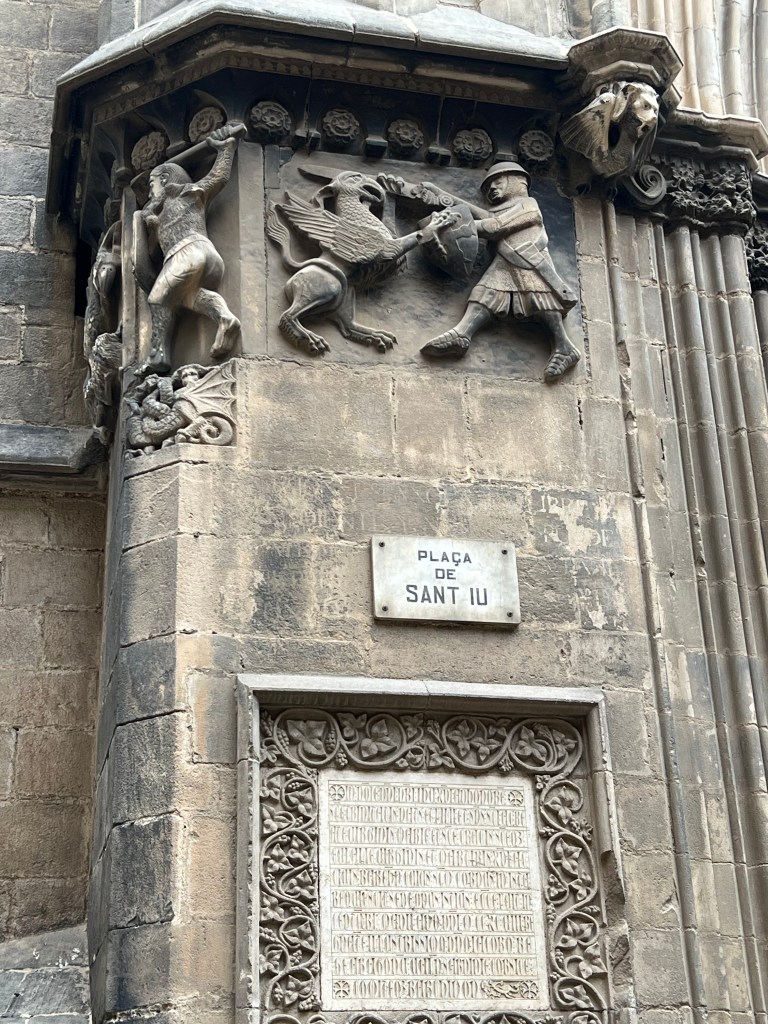
St. George slaying the dragon
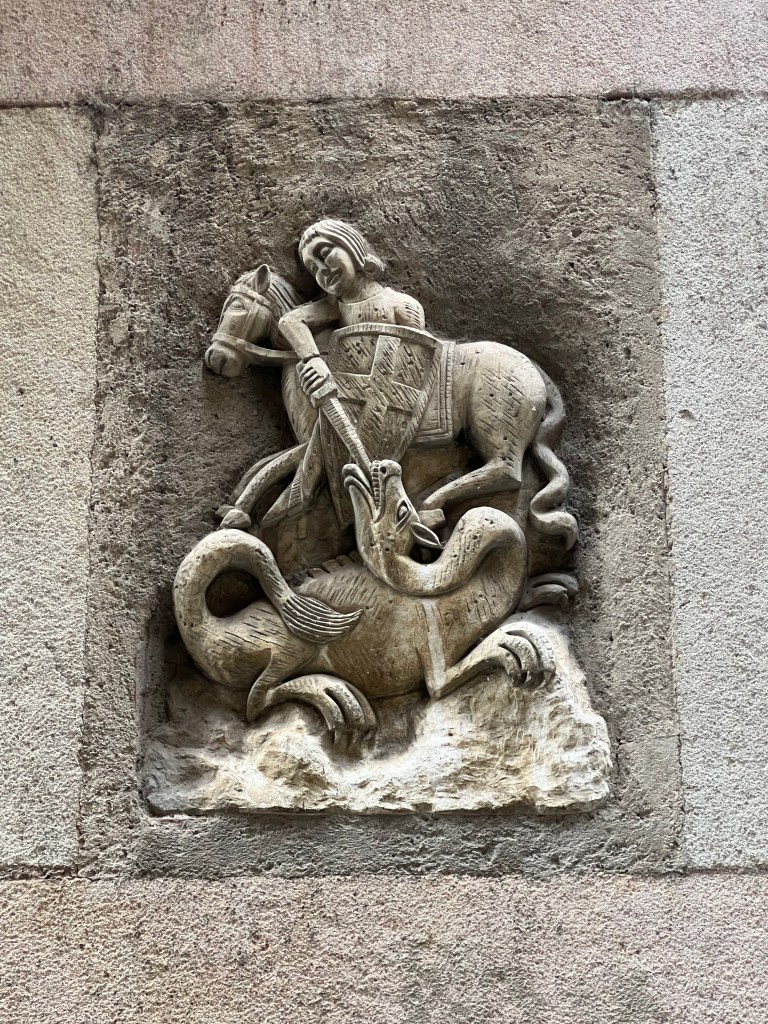
The patron saint of Catalan is Sant Jordi, also known as Saint George. (George is the patron saint of a number of European countries, including England.) There are many depictions of George, typically showing him slaying the dragon, throughout Barcelona. Here are just a few (the flag in the one photo is the official Catalan flag, displayed at the Palau Catalan government headquarters).
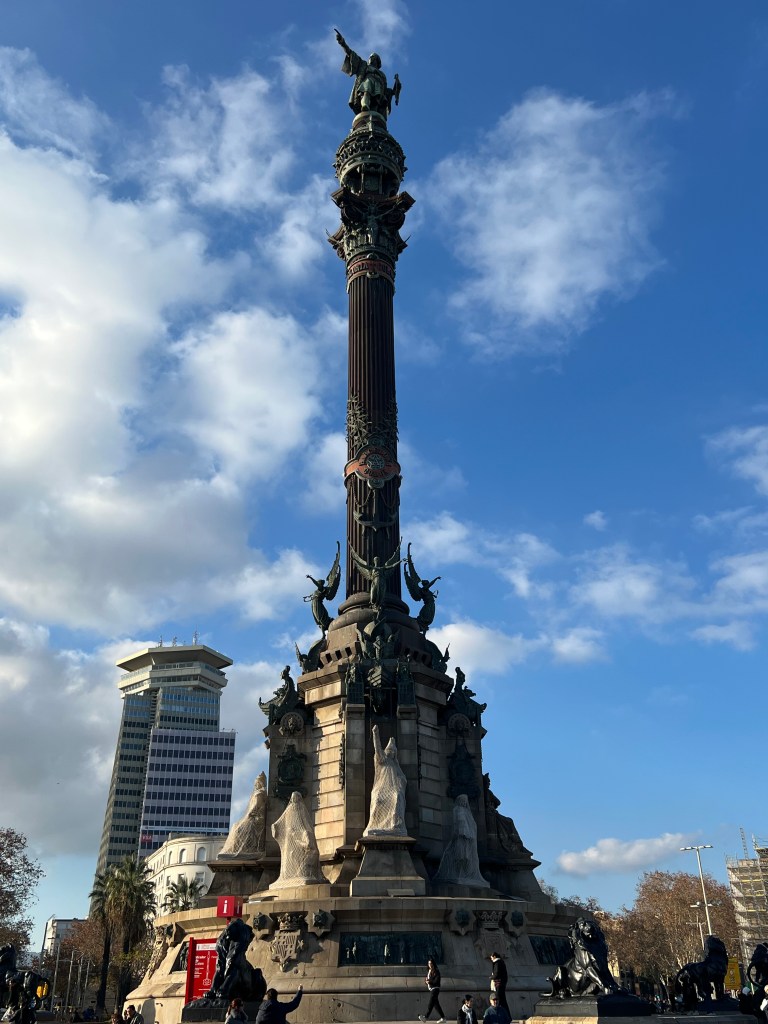
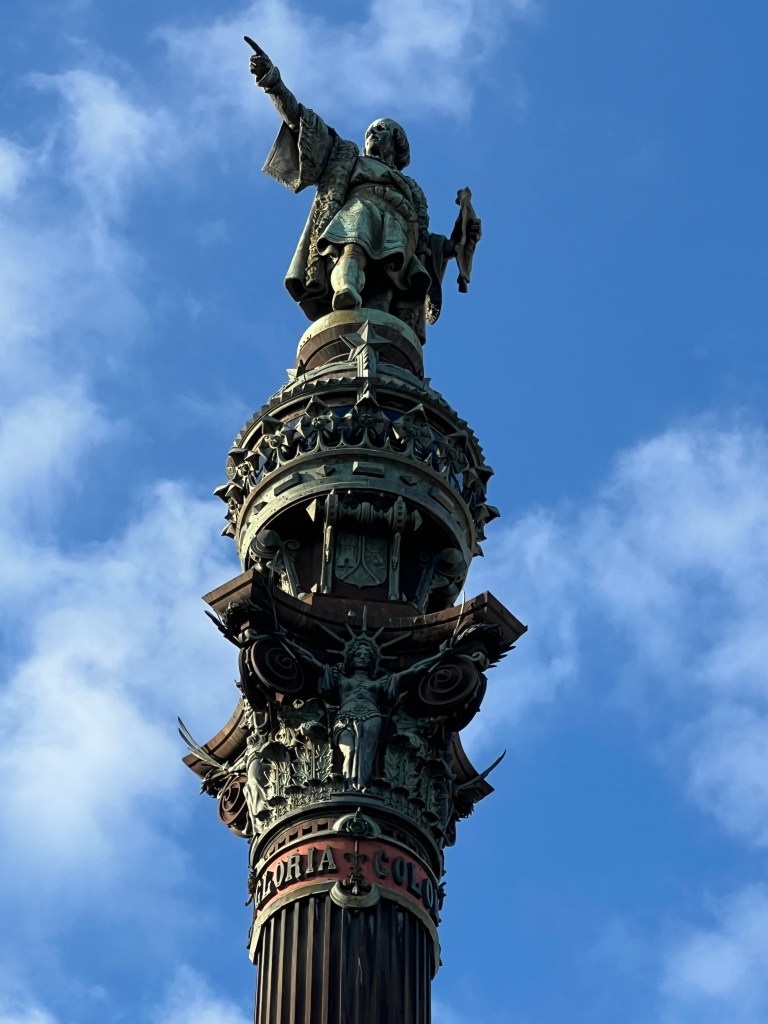
We continued walking down towards the waterfront and the old port, where there’s huge (197 feet tall) statue of Christopher Columbus, erected in 1888. Although Columbus was born in Italy, he returned to Spain after his first voyage to America to report to Queen Isabella and King Ferdinand V in Barcelona.
Some other random photos to share:
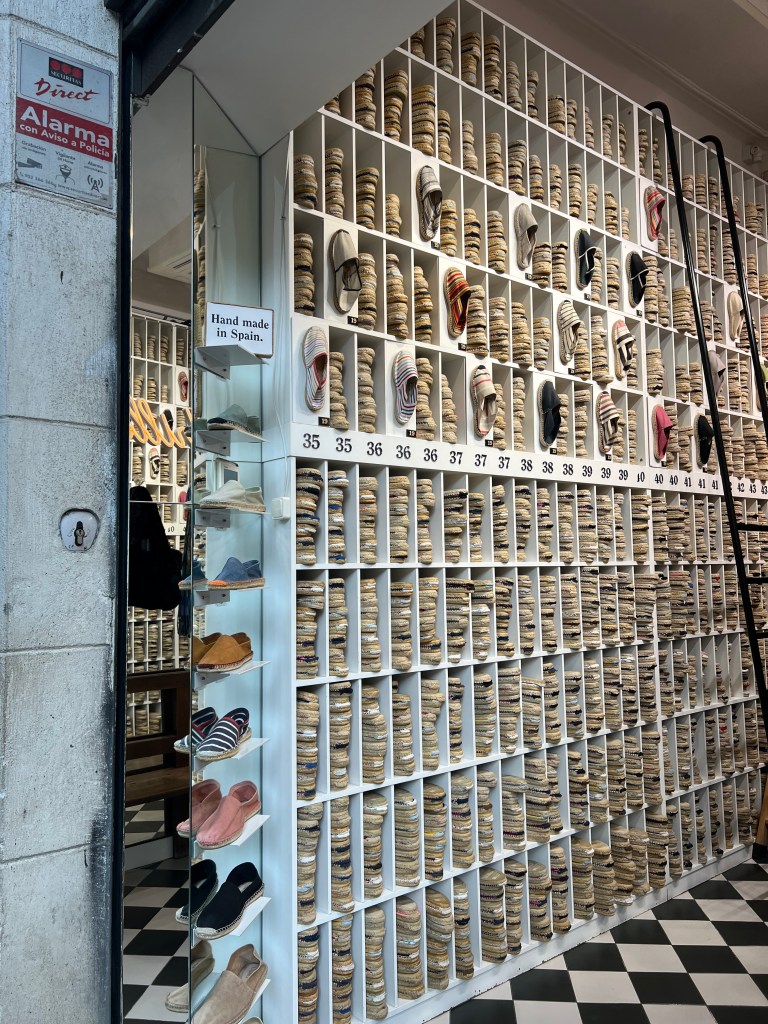
An espadrille store:
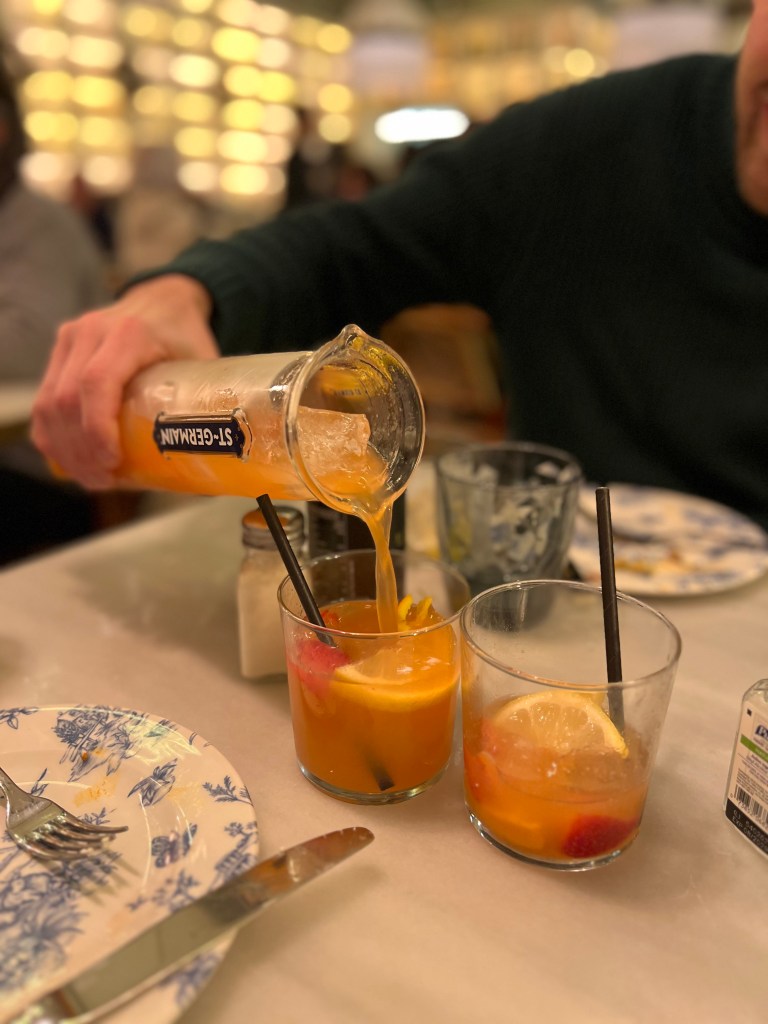
Must have sangria! I preferred the “white,” shown here:
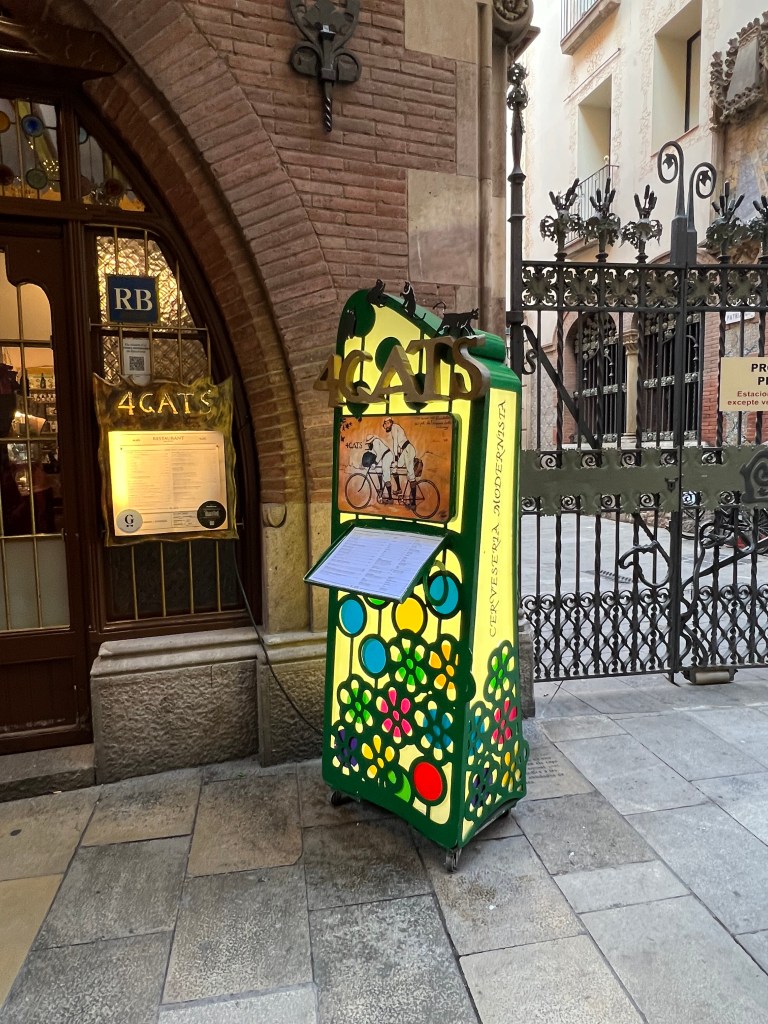
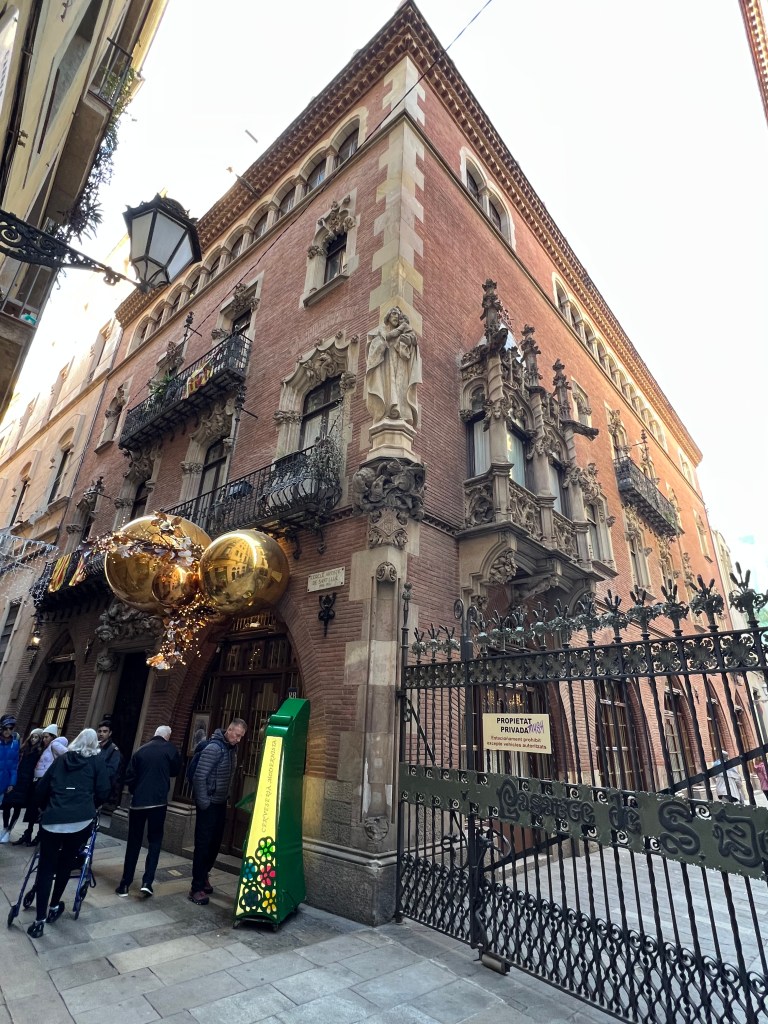
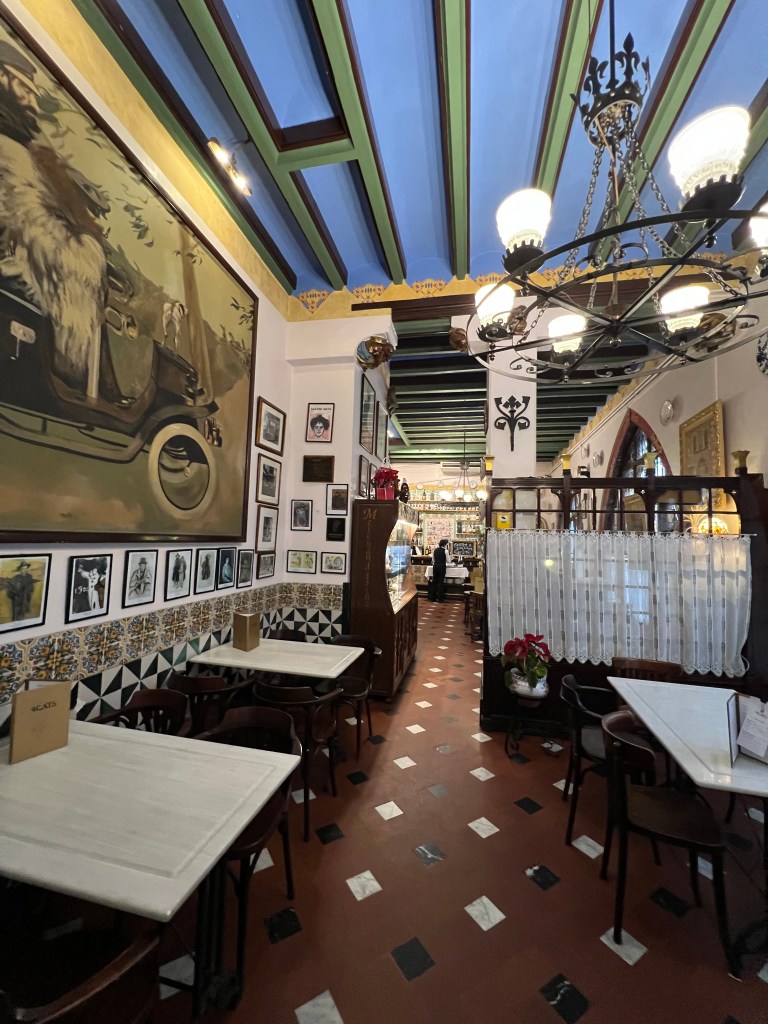
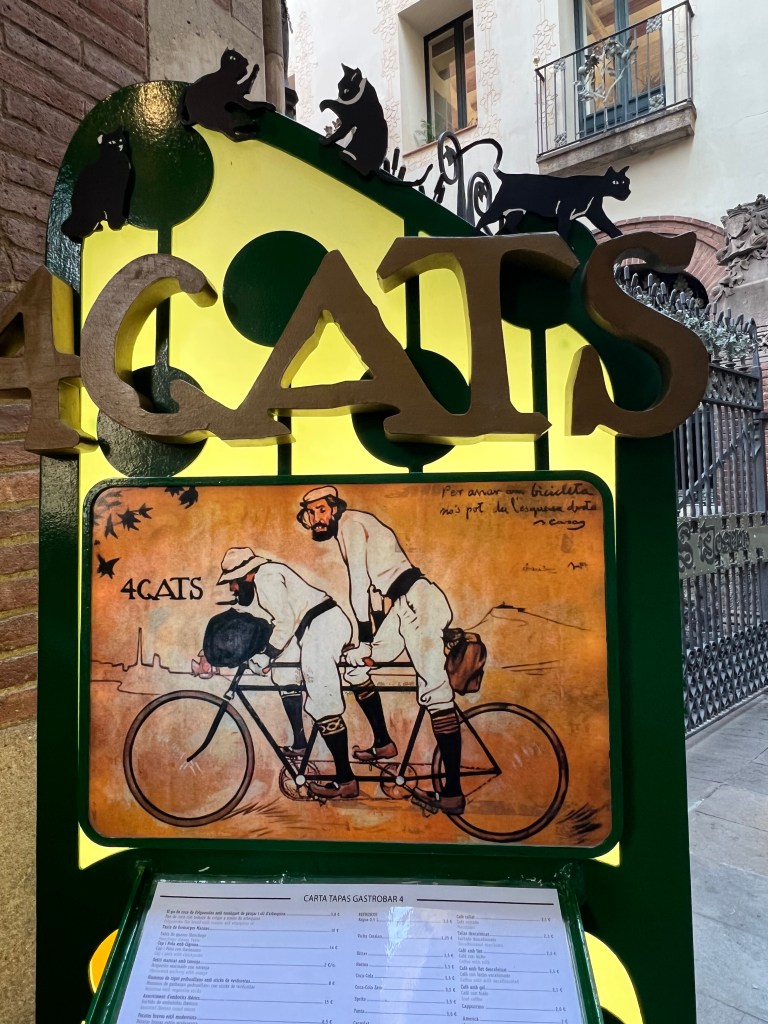
Pictures of Els Quatre Gats, said to be a favorite of Picasso in the early 20th century (we did not dine here):
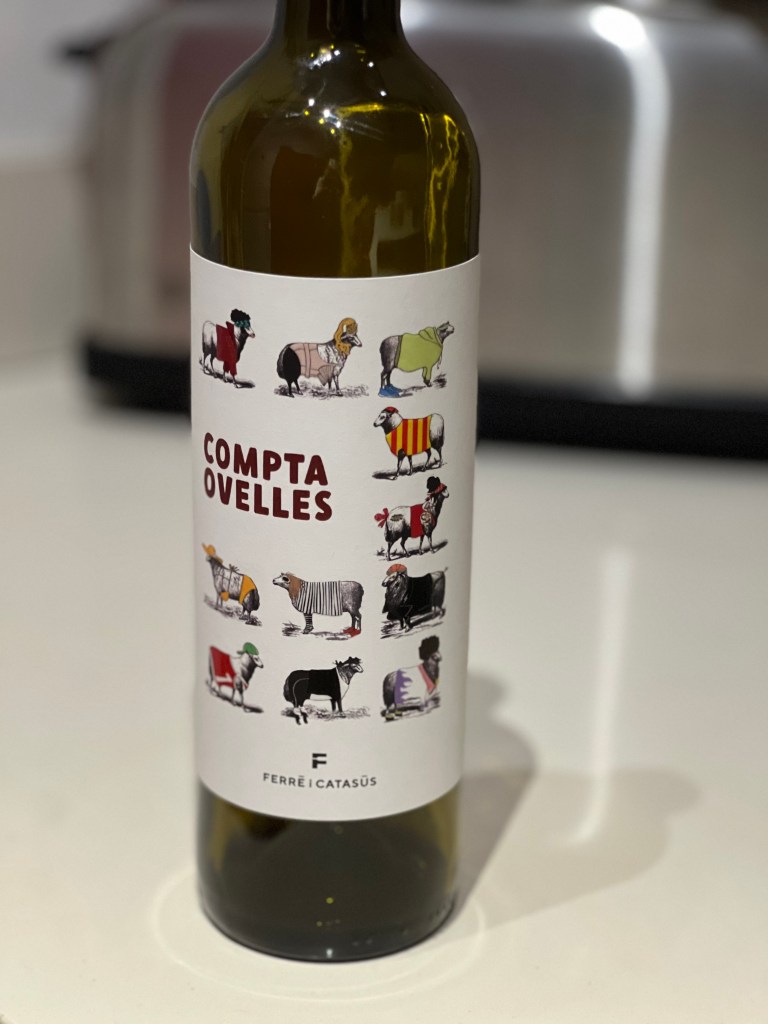
Why not choose a wine because of its label? (This one might just put you to sleep.)
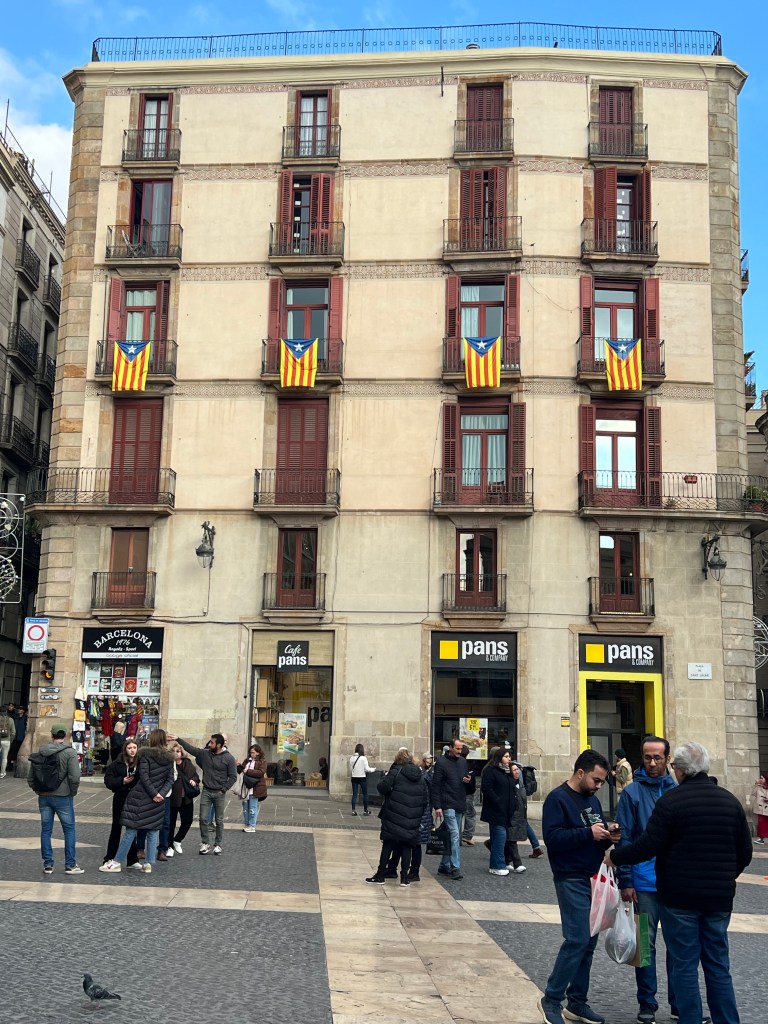
Catalan flags are seen throughout Barcelona:
We enjoyed our short time in Barcelona and didn’t get to see many other interesting sites, like the Joan Miro or Picasso museums. Maybe next time! Please comment if you’ve been to Barcelona with additional recommendations.


I was intrigued by the fact that La Sagrada Familia’s construction began in the 1880s and is still ongoing, a testament to Antoni Gaudi’s visionary design. I recall visiting the basilica a few years ago and being amazed by the stunning stained glass and the soaring space inside, which is indeed a must-see experience. For those planning to visit, I found the official visitor app to be a helpful resource, and the website https://sagradafamilia.org/en/the-booklets is a great place to start learning about the basilica’s design and history.
LikeLike