
by Sandra Hutchinson
Every few years I make it a point to visit the Shelburne Museum, in Shelburne, Vermont. Spread over 45 acres on the eastern side of Lake Champlain, several miles south of Burlington, the museum primarily houses the eclectic collection of its founder, Electra Havemeyer Webb (1888-1960). The property is close to Shelburne Farms, the estate and large farm developed by the Webb family.
Ms. Webb grew up in a wealthy New York family whose home was filled with European and Asian art and she married a man who was a grandson of both William Henry Vanderbilt and James Watson Webb. Yet as a young woman, instead of accumulating Impressionist paintings like her parents, she began collecting everyday American objects like weathervanes, hooked rugs, quilts and textiles, country furniture and pottery, and “cigar store figures.” She also purchased historic structures from around New England and New York and had them moved to a site in Shelburne, where she created a village-like setting that would house her large collection of antiques and what we now call “folk art.” Click here for some background from the museum’s web site.
There is a lot to take in on the grounds, and on my most recent visit, I focused on several of my favorite buildings and collections. I was visiting the museum with a friend who makes quilts, so we headed first to the textiles exhibit, in the Hat and Fragrance Gallery.
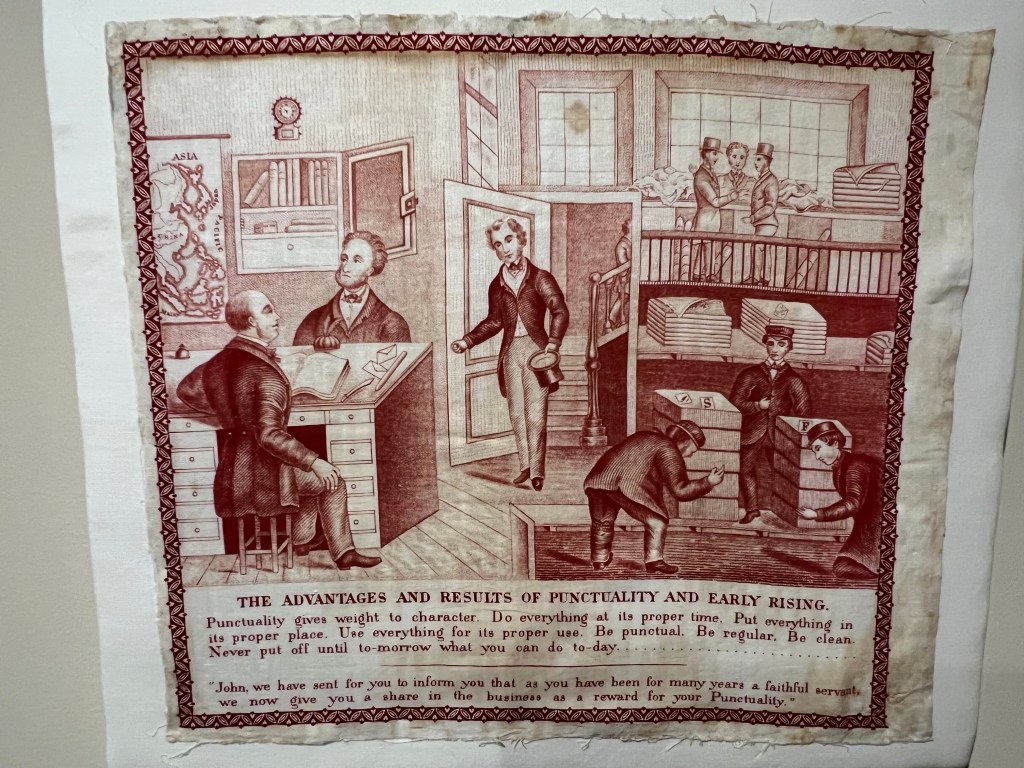
There’s a delightful exhibit on display until the closure of the museum for the fall on October 22. Called “Right Under Your Nose,” it’s a display of children’s printed handkerchiefs. These little pieces of cloth taught children lessons and reinforced cultural standards. They were still being printed until fairly recently (see the Sesame Street example). Here are some photos, below:
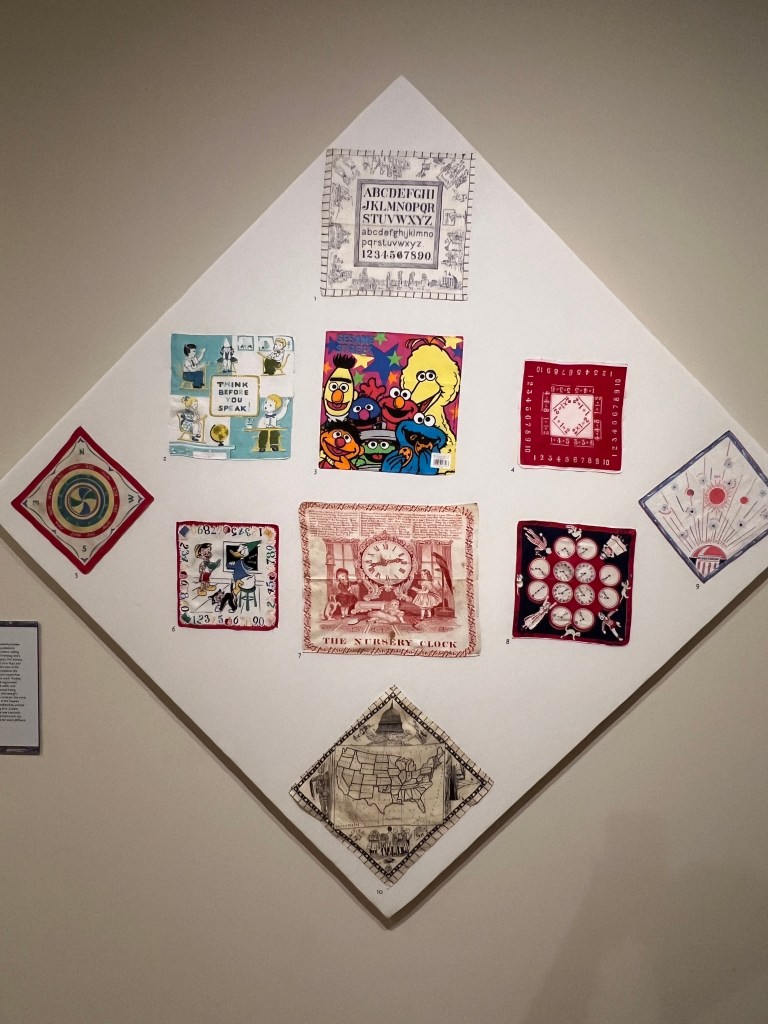
I particularly liked this handkerchief that depicts the Belgian cartoon character, Tintin, and his dog Snowy, in an underwater adventure.

And of course, there were important lessons to be learned, below.
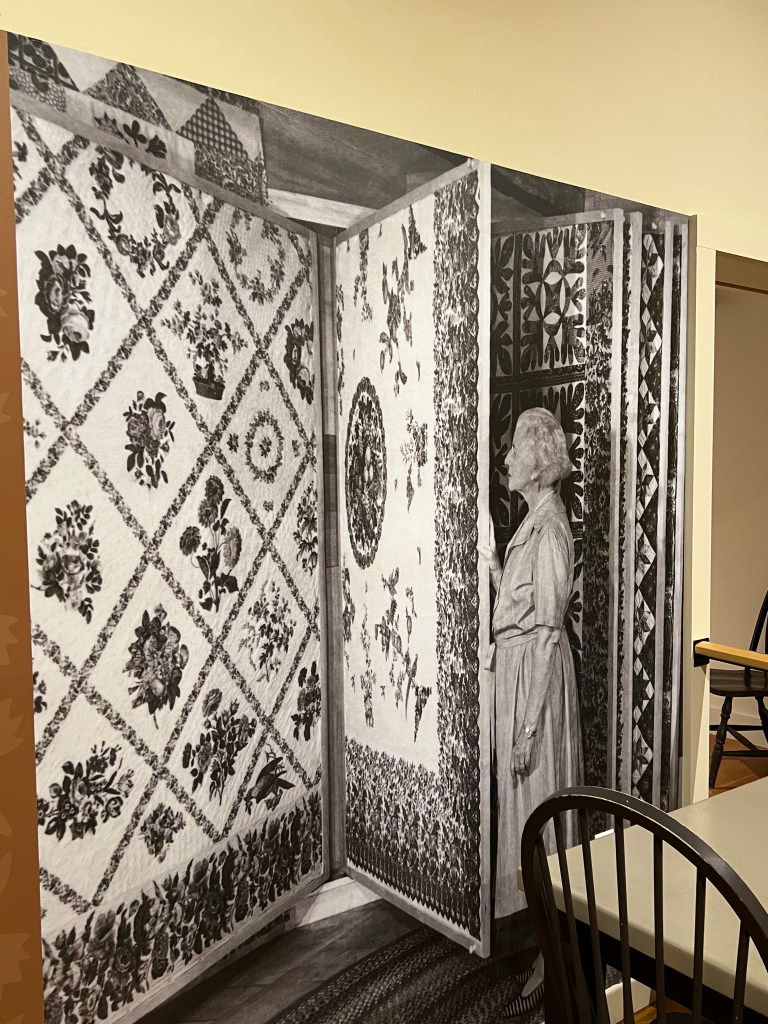
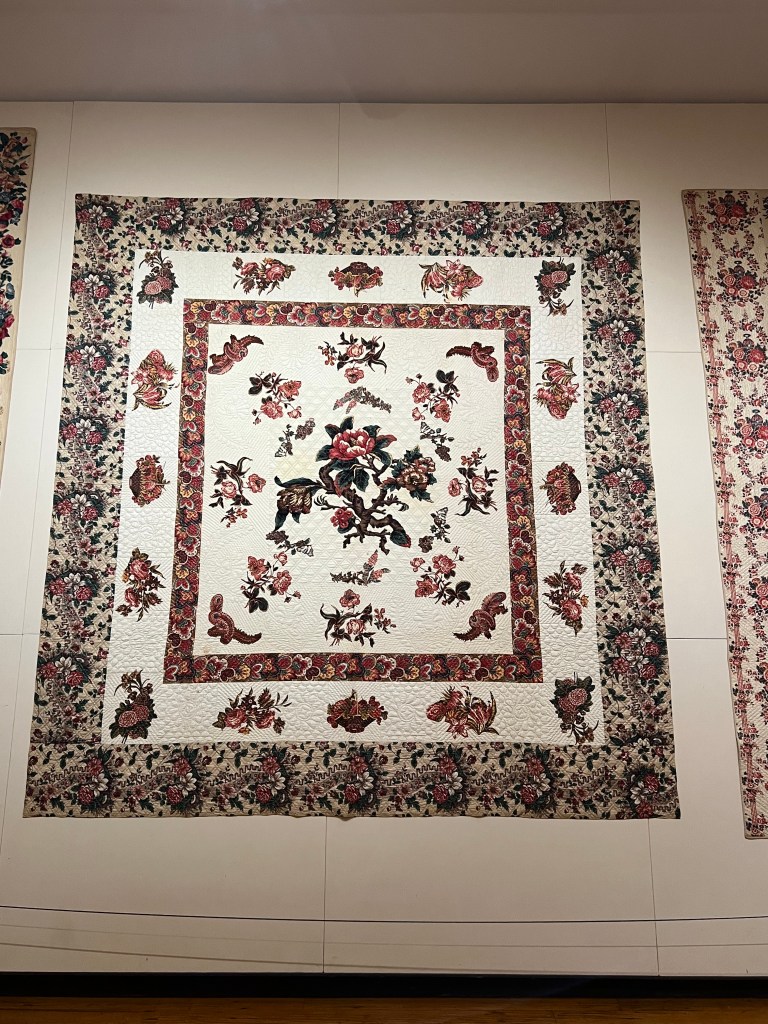
I had promised my friend a smorgasbord of American quilts and was disappointed to find that the museum has changed the number of quilts on view and the way it displays them. Instead of being able to view many quilts hung within a series of movable panels (like a huge book), there are now just several quilts on view. The photo below shows Electra Havemeyer Webb looking at quilts as they were previously displayed.

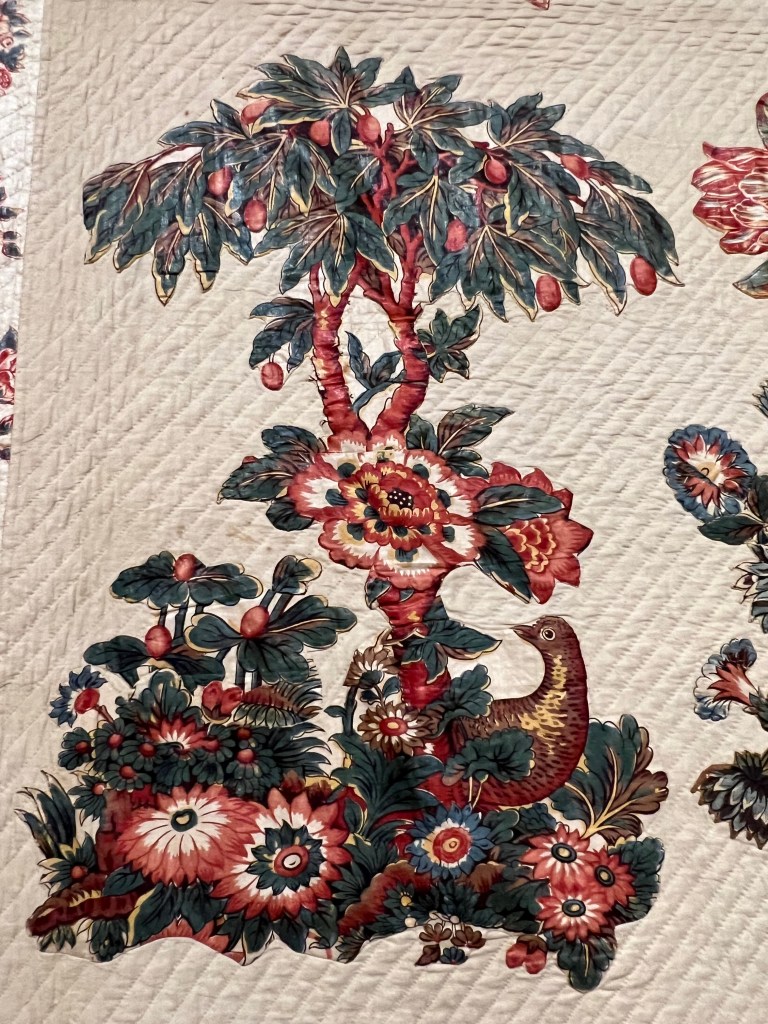
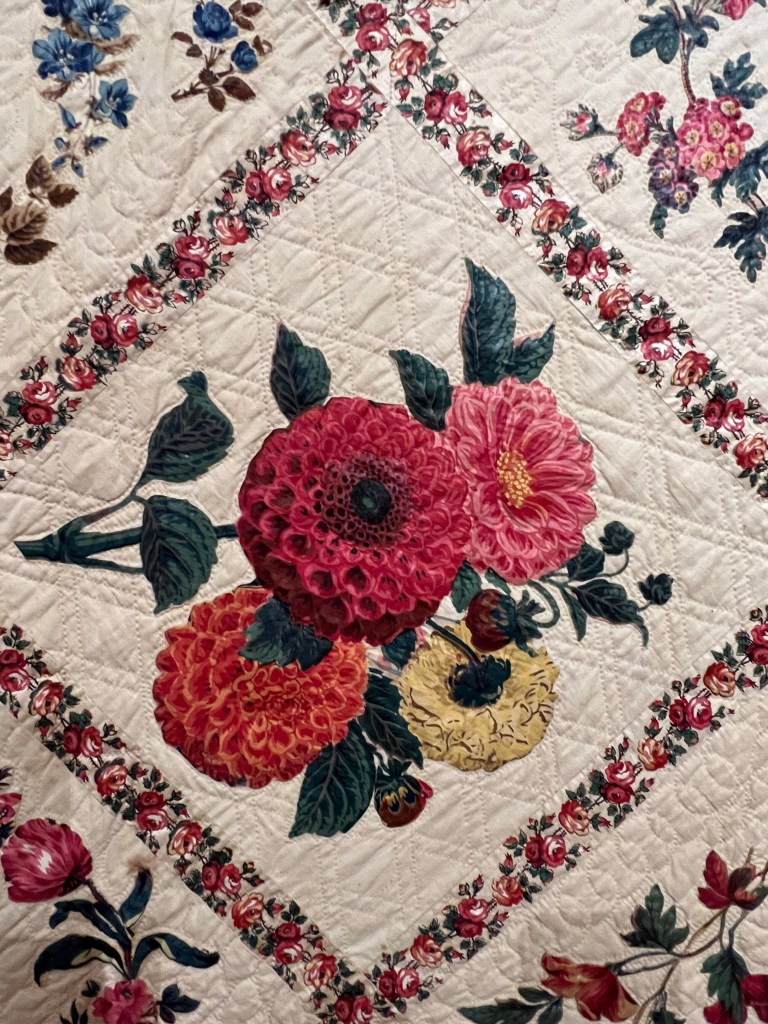
These three bedcovers are known as “broderie purse” quilts, basically meaning “Persian embroidery.” The technique became popular in the US during the mid-19th century when consumers could purchase colorful, patterned cottons. Images of flora and fauna were cut from printed fabrics and appliquéd to the quilt top.
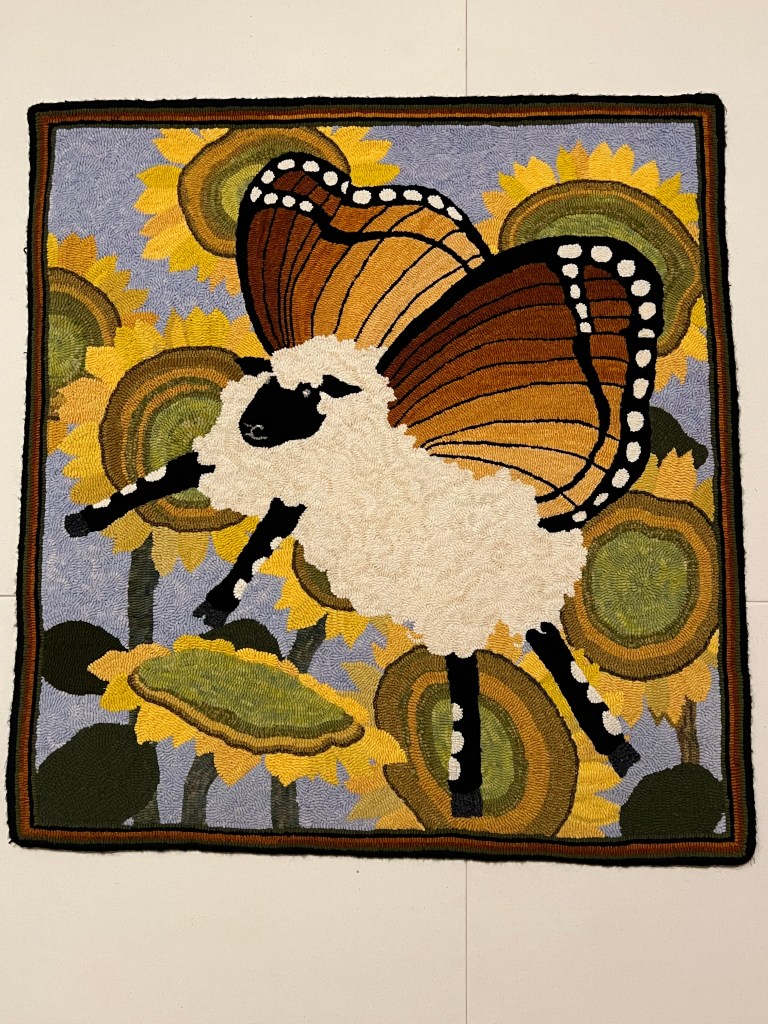
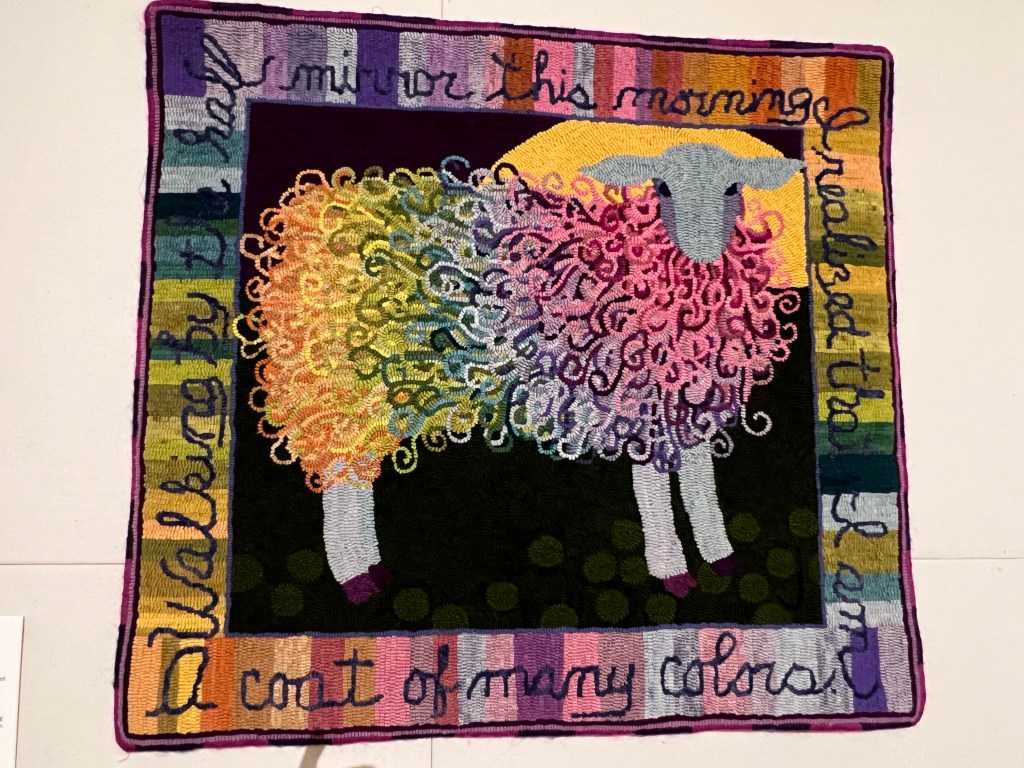
In a room adjacent to the quilts is a selection of American hooked rugs. The fanciful rugs shown below were designed and hooked in wool by the late Vermont artist Patty Yoder.
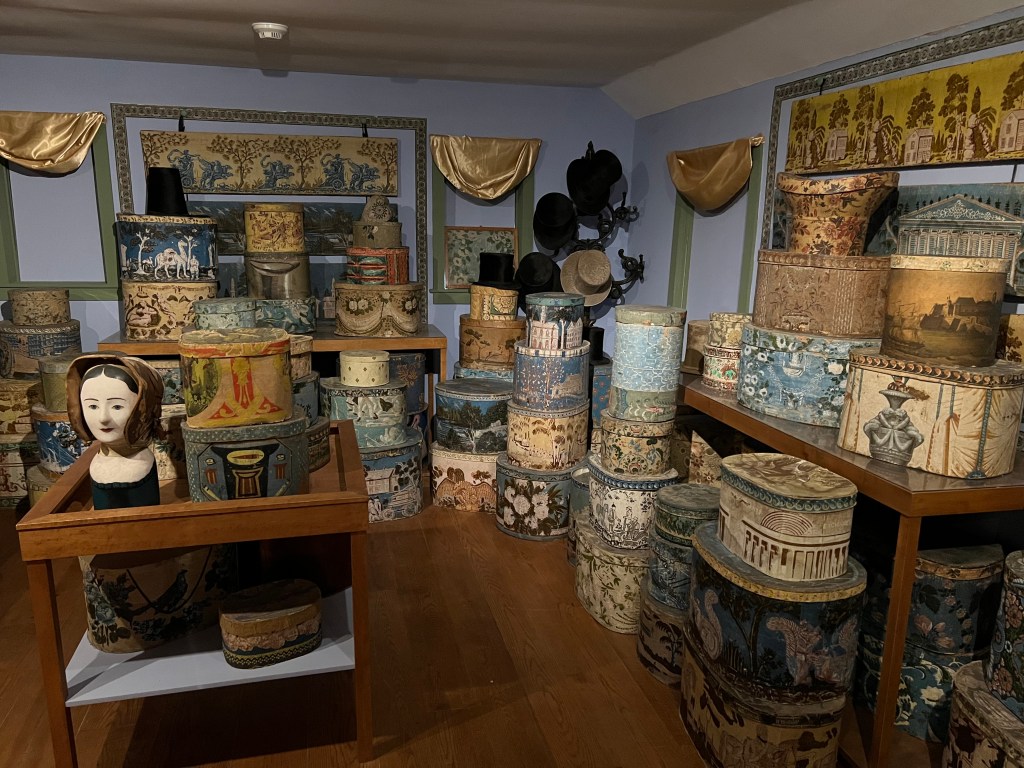
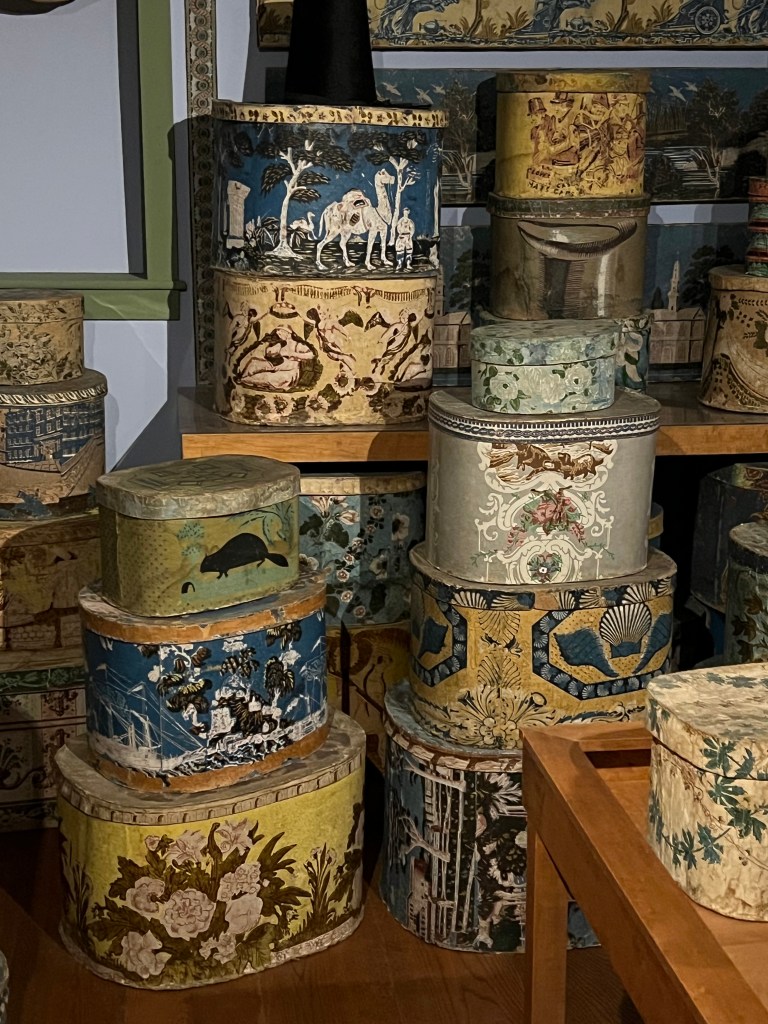
Also in the the Hat and Fragrance Building is a large display of bandboxes, collected by Mrs. Webb. These functioned as both lightweight luggage and stackable storage containers. Made of pasteboard or bentwood, they were covered in decorative printed papers. They were especially popular from 1825 to 1850 in America because of the increasing travel made possible by new modes of transportation (eg., steam locomotives).
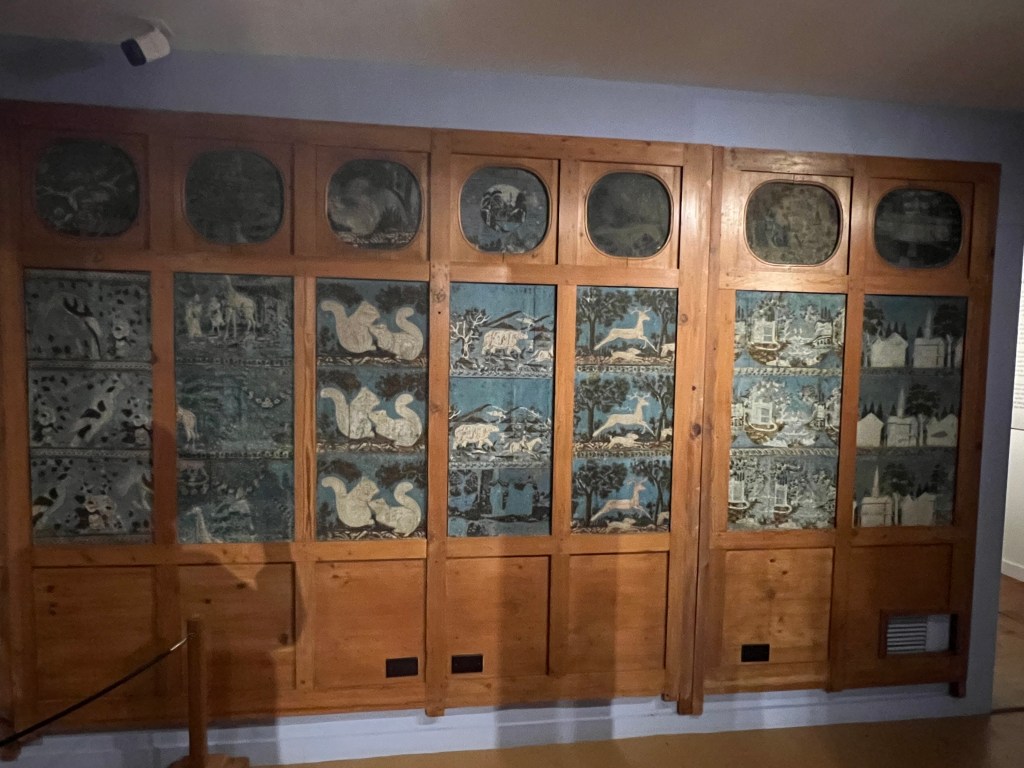
Mrs. Webb even had the walls of a bedroom at her Westbury, Long Island home lined with paneling made with unfurled bandbox panels and detached lid tops. Some of the panels are on display in this exhibit.
In an adjoining room the visitor finds a collection of glass-encased dioramas of miniature scenes created by Helen Bruce (b. 1880), upon commission by Mrs. Webb.
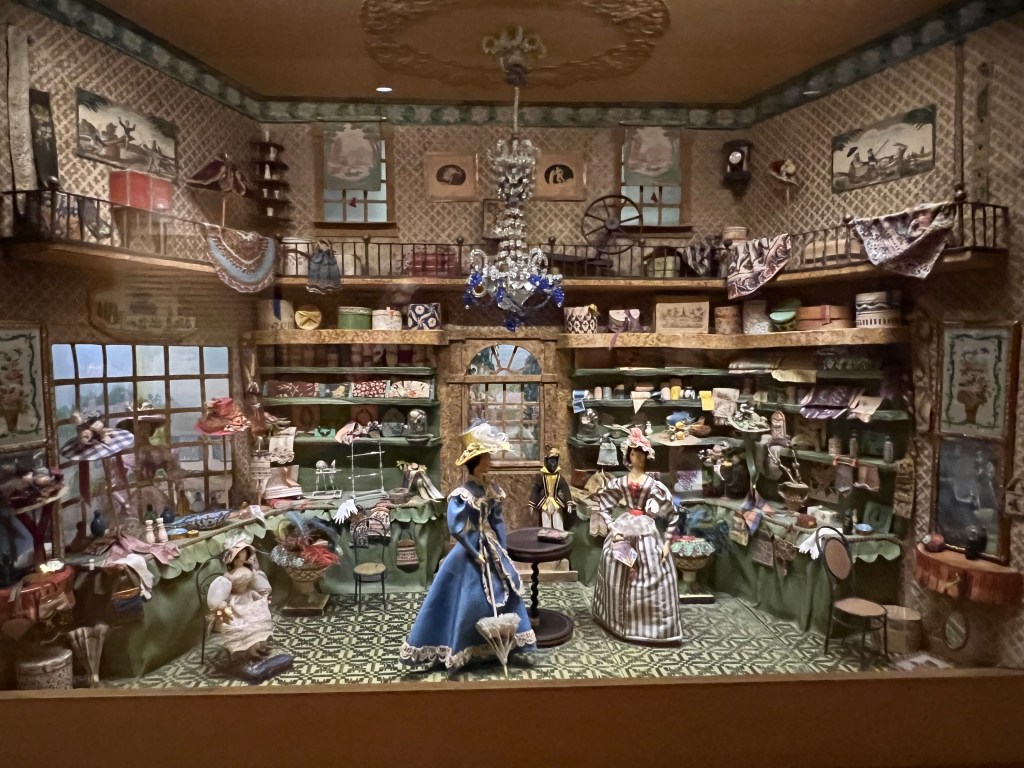
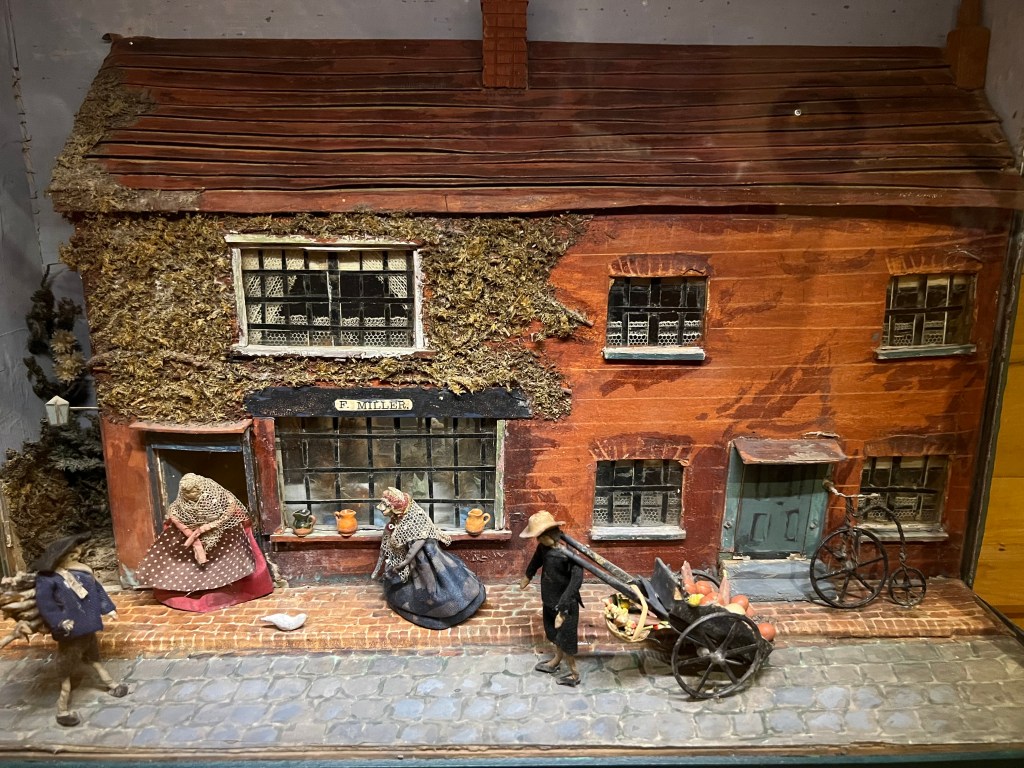
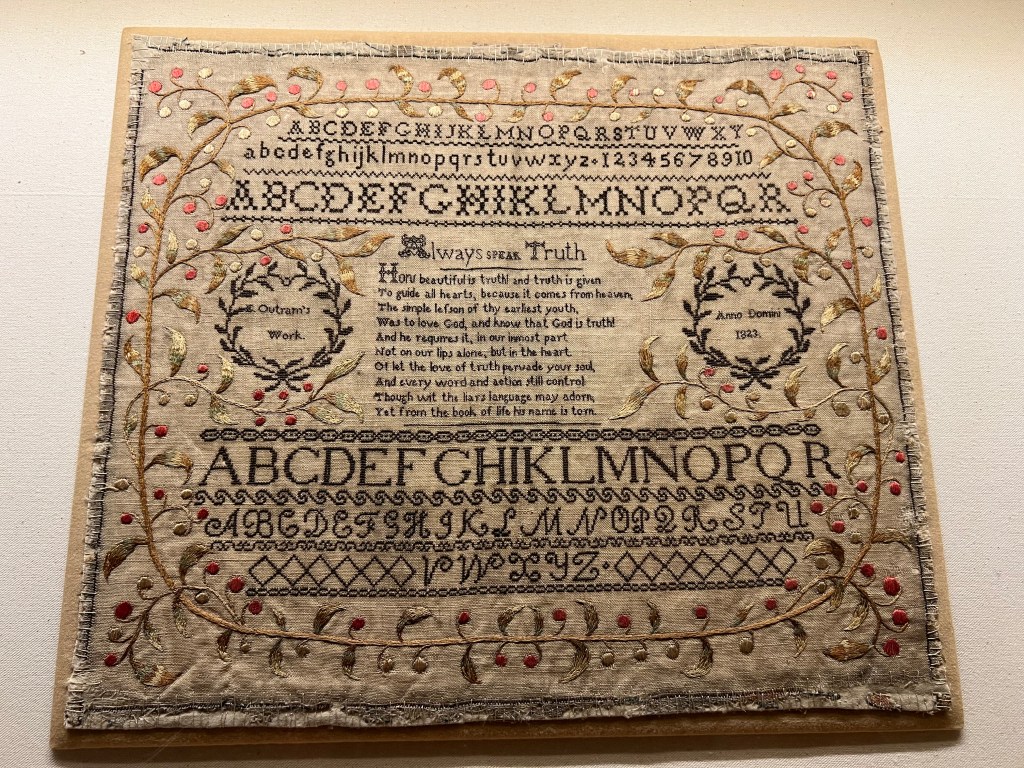
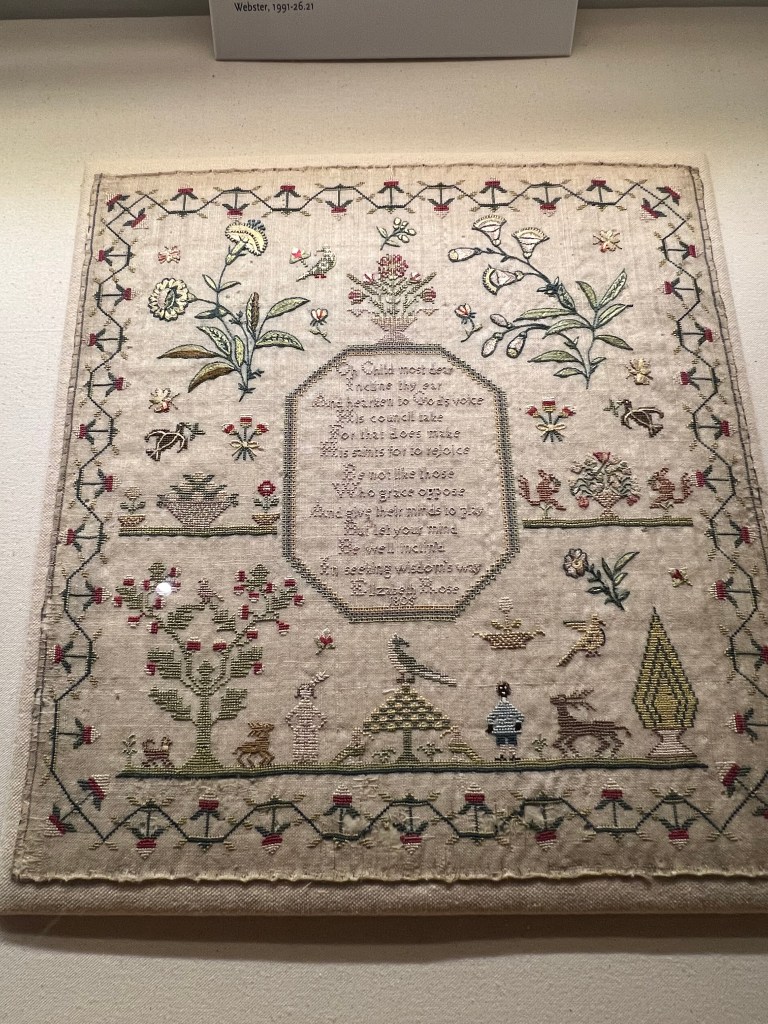
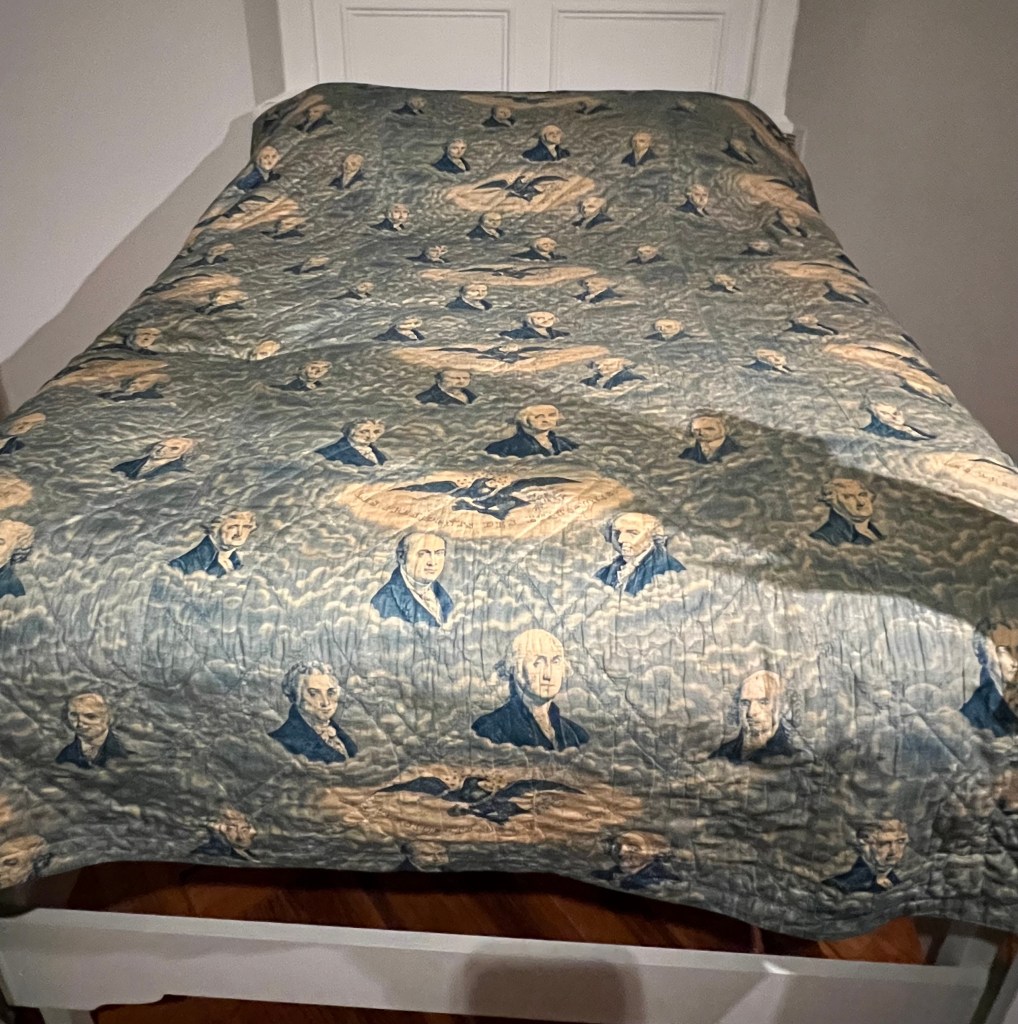
There are yet more textiles on display in this building, including American samplers and even a quilt depicting America’s Founding Fathers.
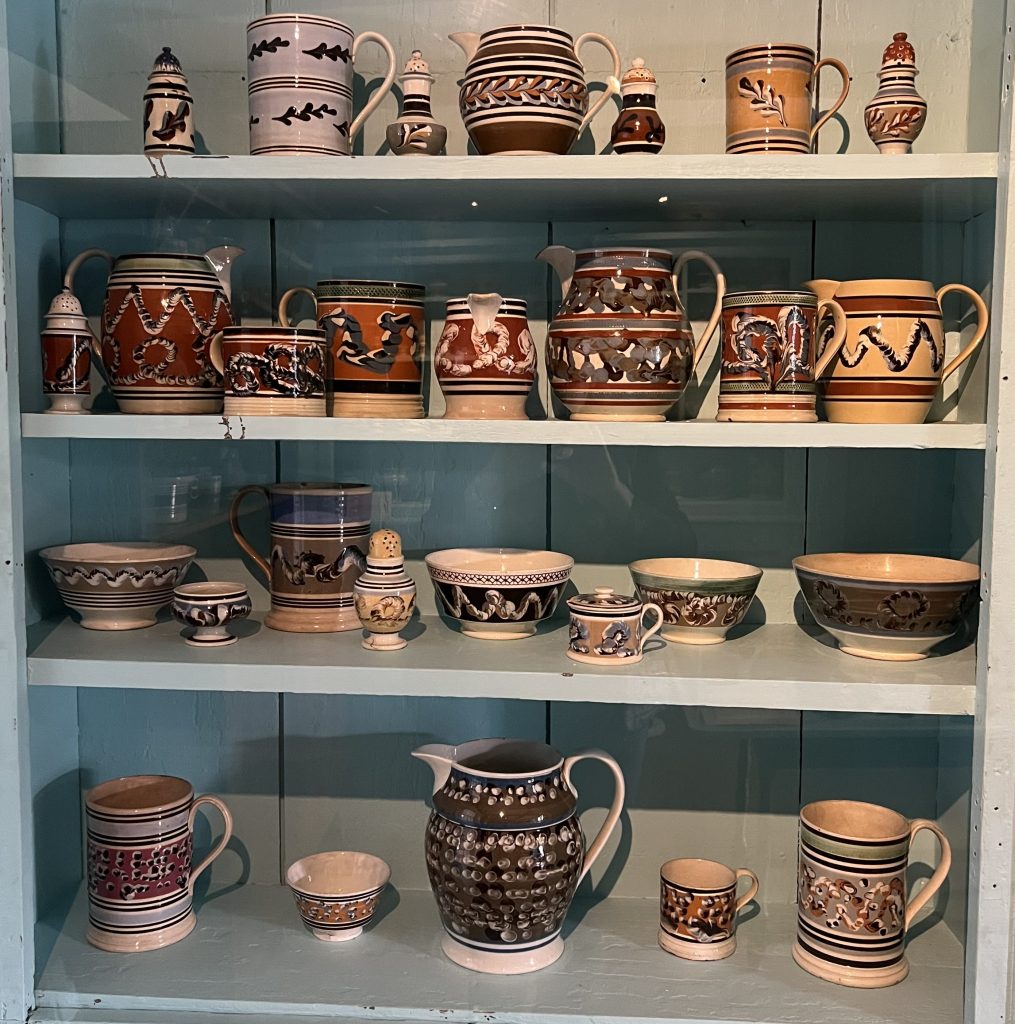
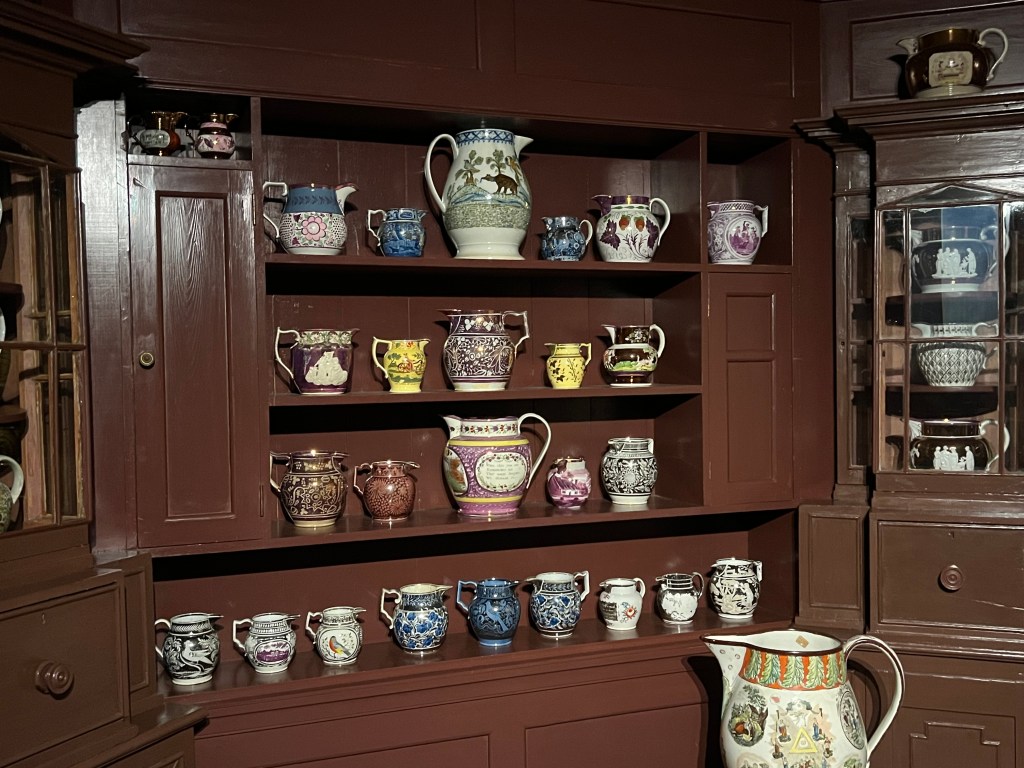
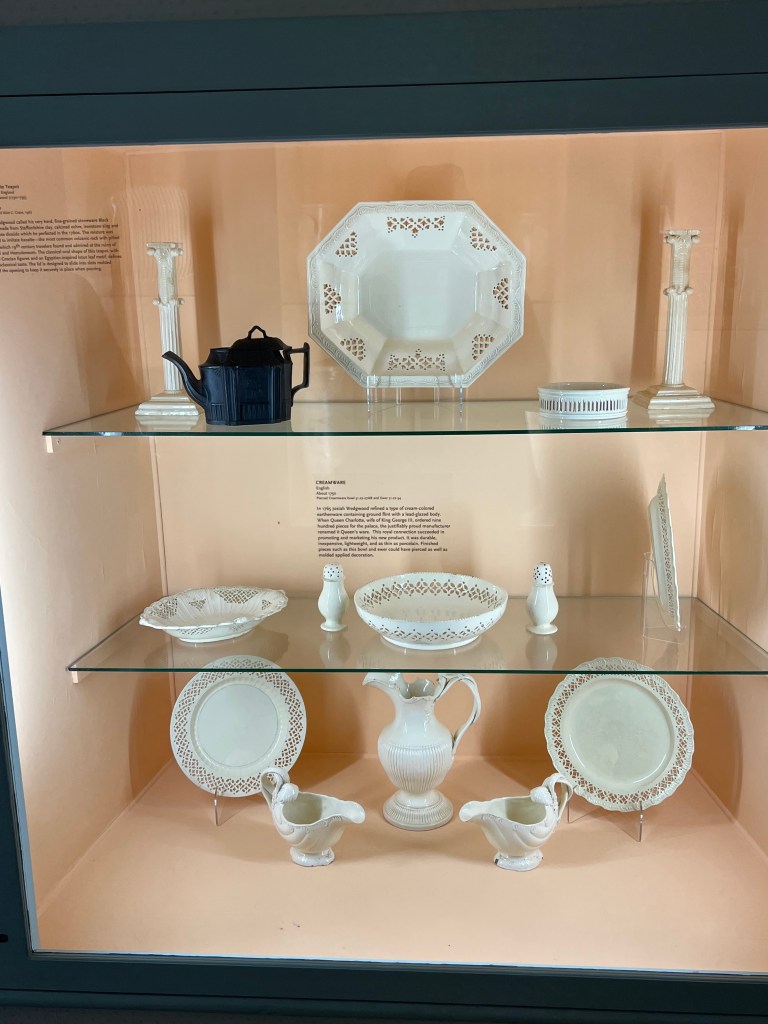
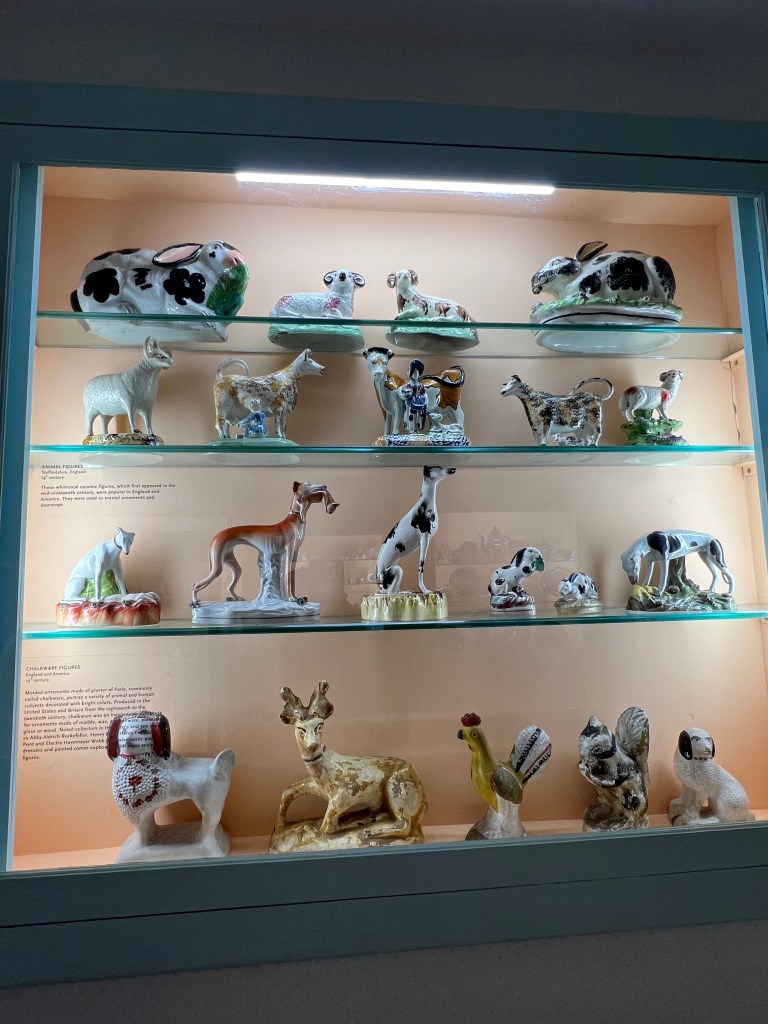
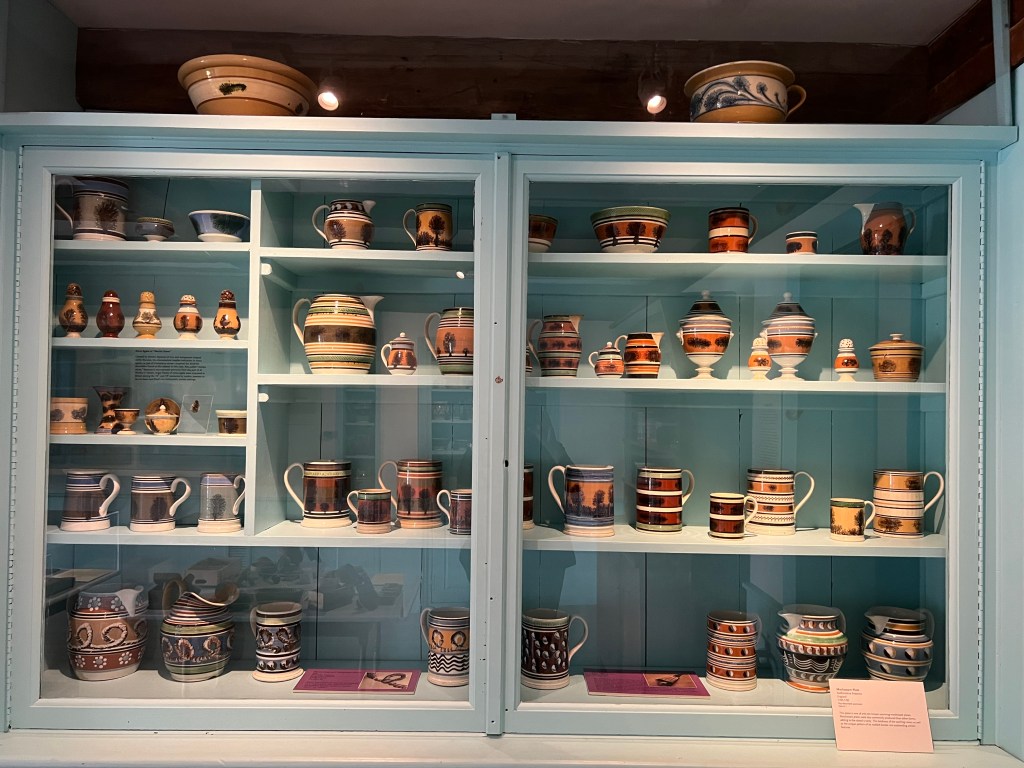
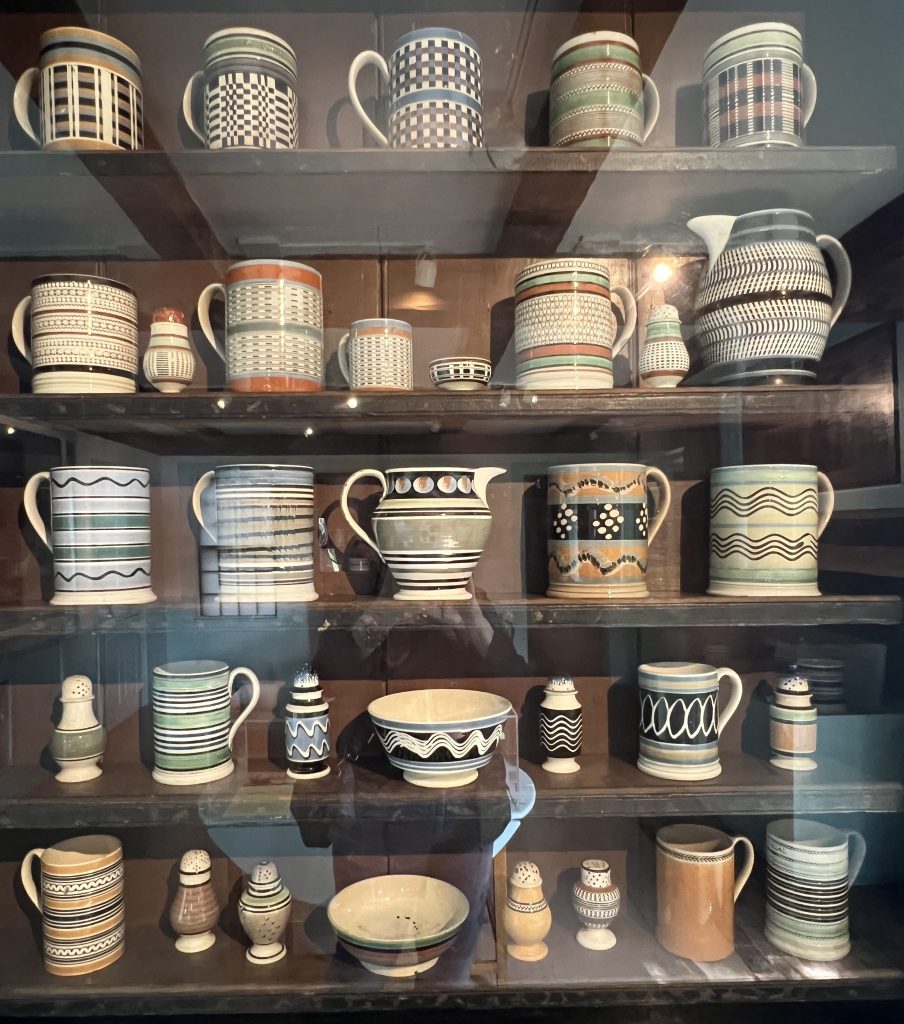
As a collector of certain types of American and British ceramics, I am always happy to visit the building called the “Variety Unit.” From English Staffordshire to a fabulous collection of 19th century Mochaware, there are some wonderful things to see within.
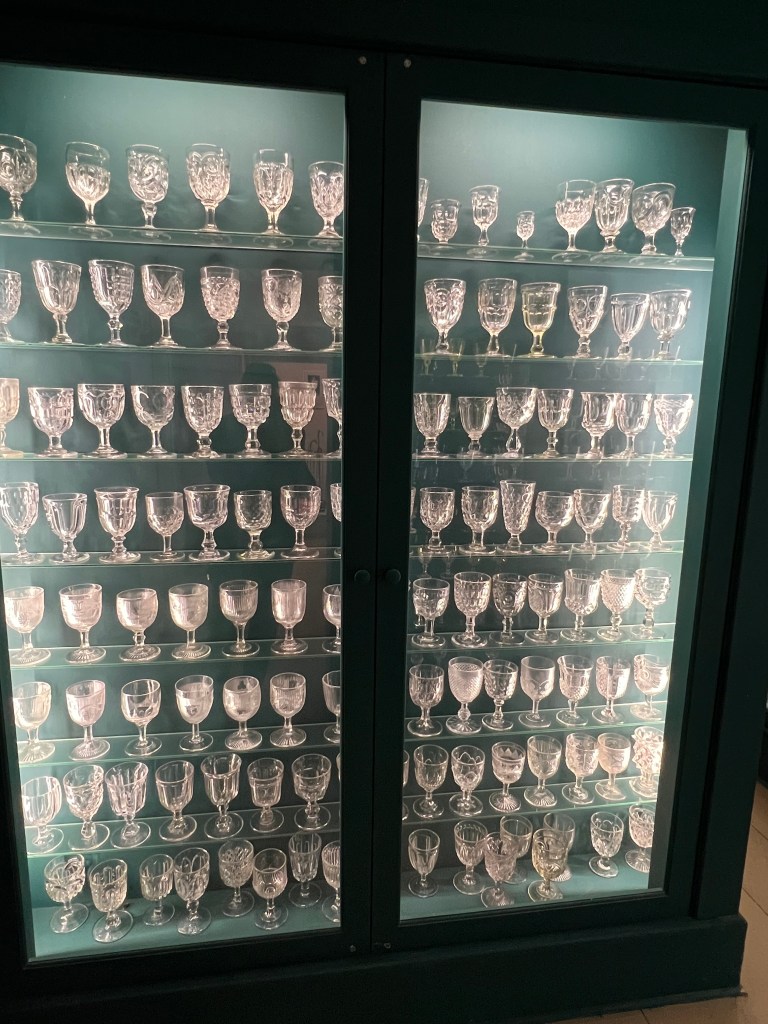
Here’s a display of American pressed glass goblets.
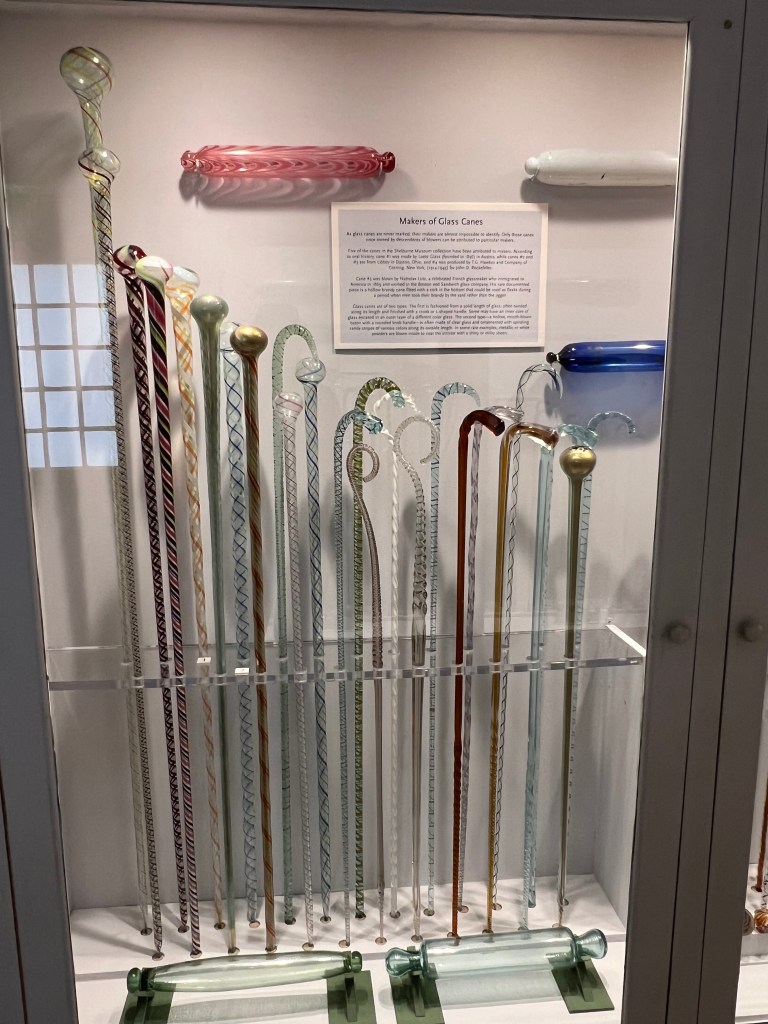
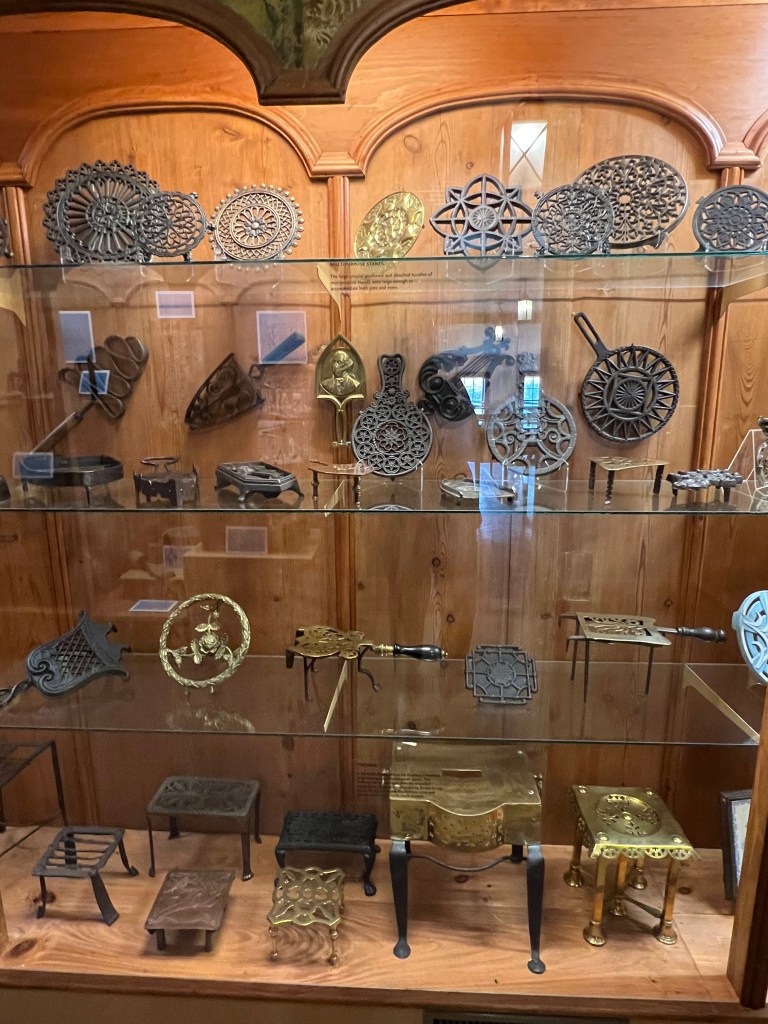
And glass canes……and trivets!
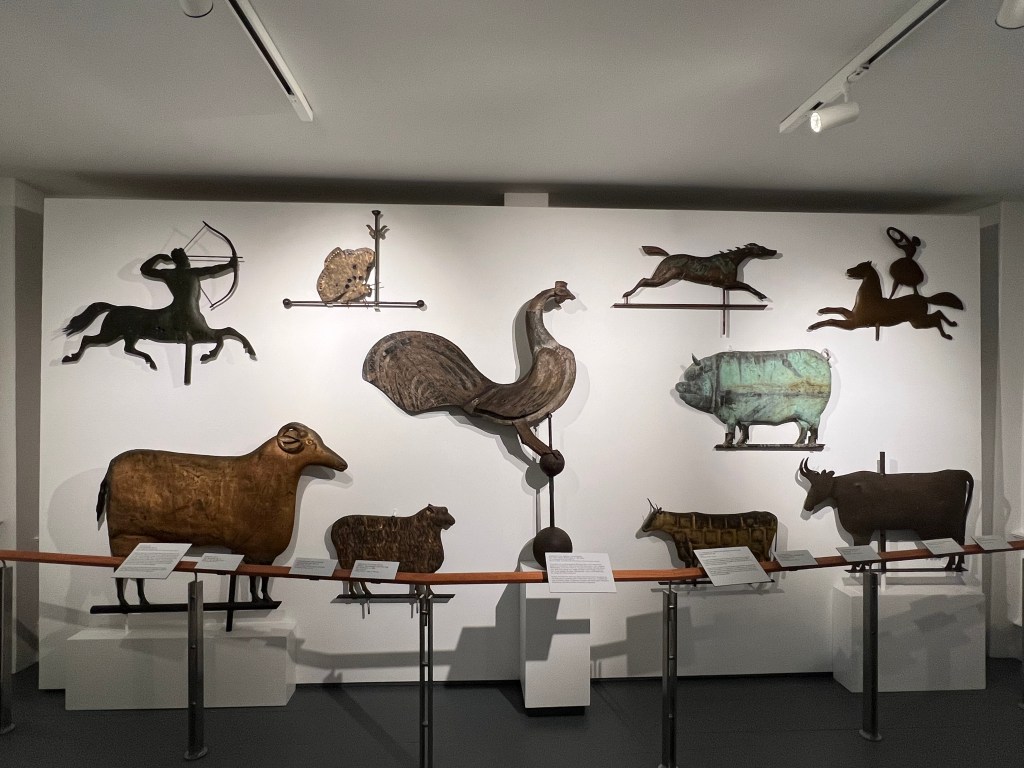
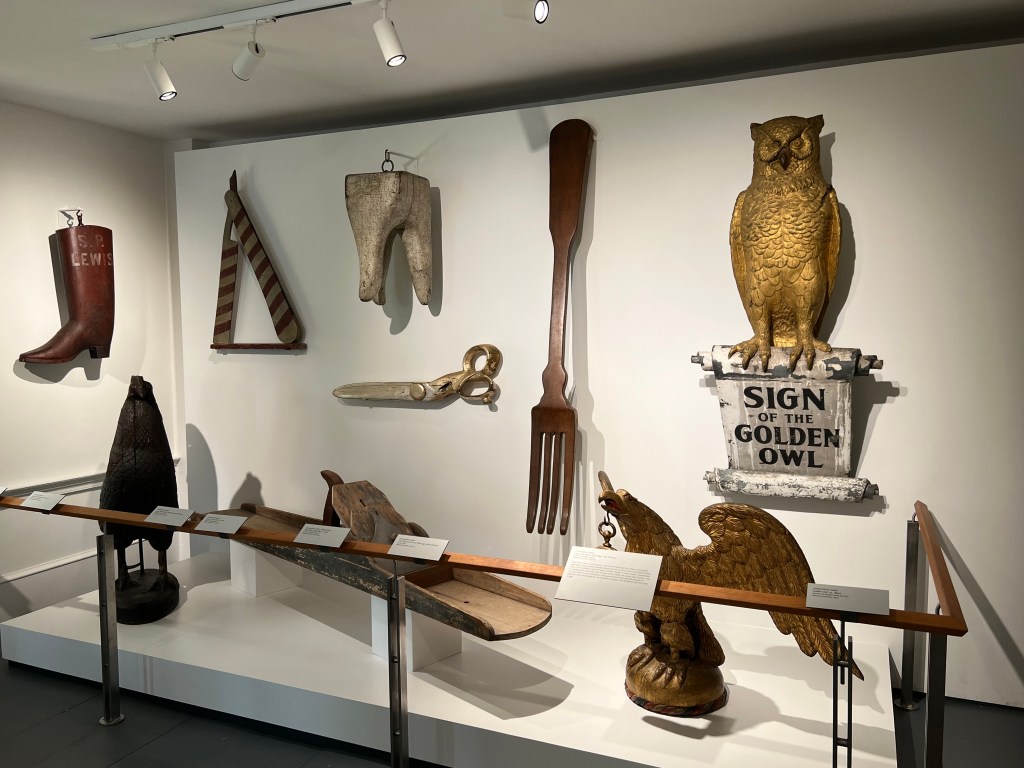
Heading into the 1783 Stagecoach Inn, the visitor sees some of the best folk art in the museum’s collection. The collection includes cigar store figures, weathervanes, trade signs and ship carvings. The museum literature points out that Mrs. Webb was one of the first collectors of American folk art, and she bought her first folk art sculpture in 1908, a “cigar store figure,” when she was just 19 years old.
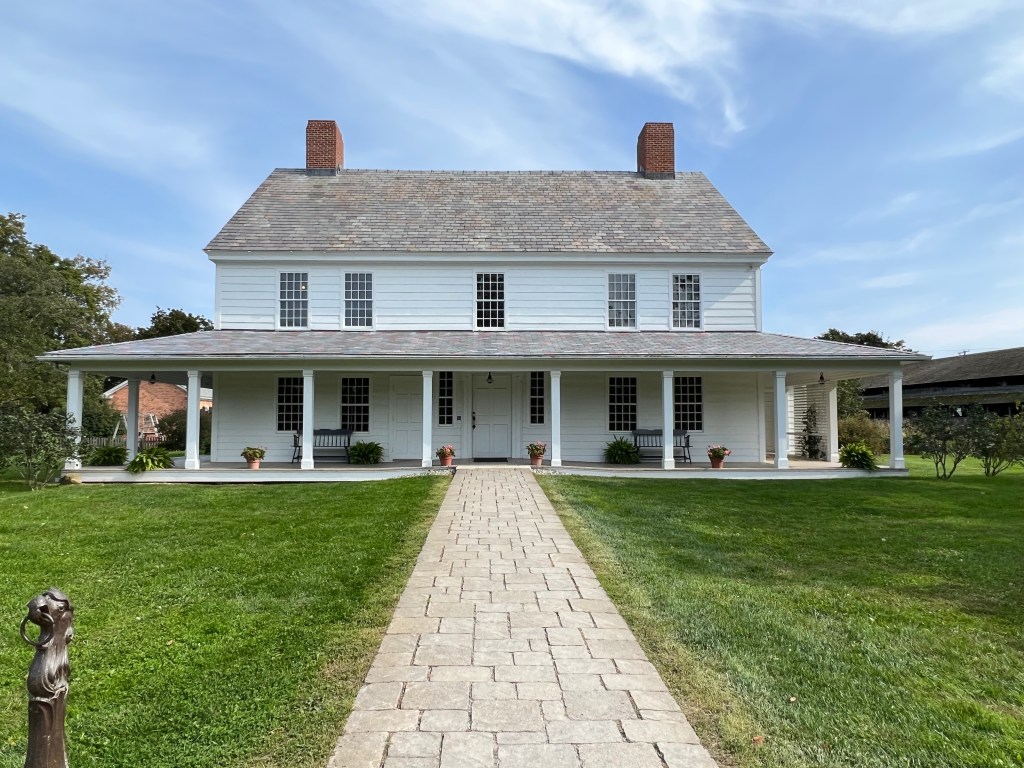
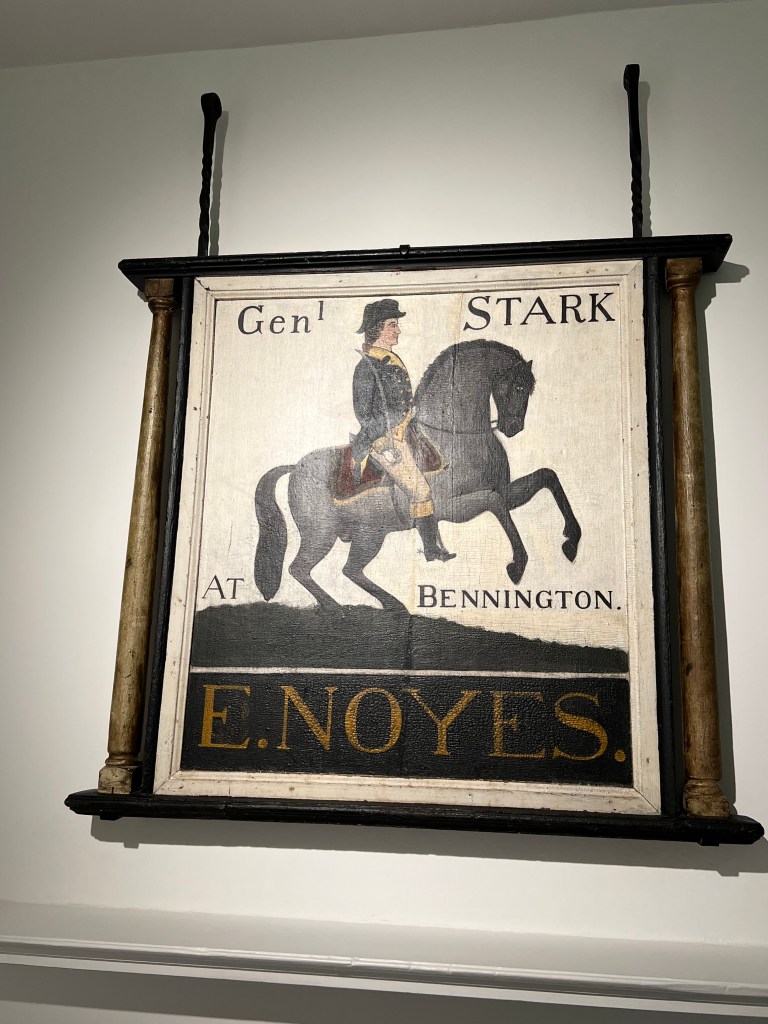

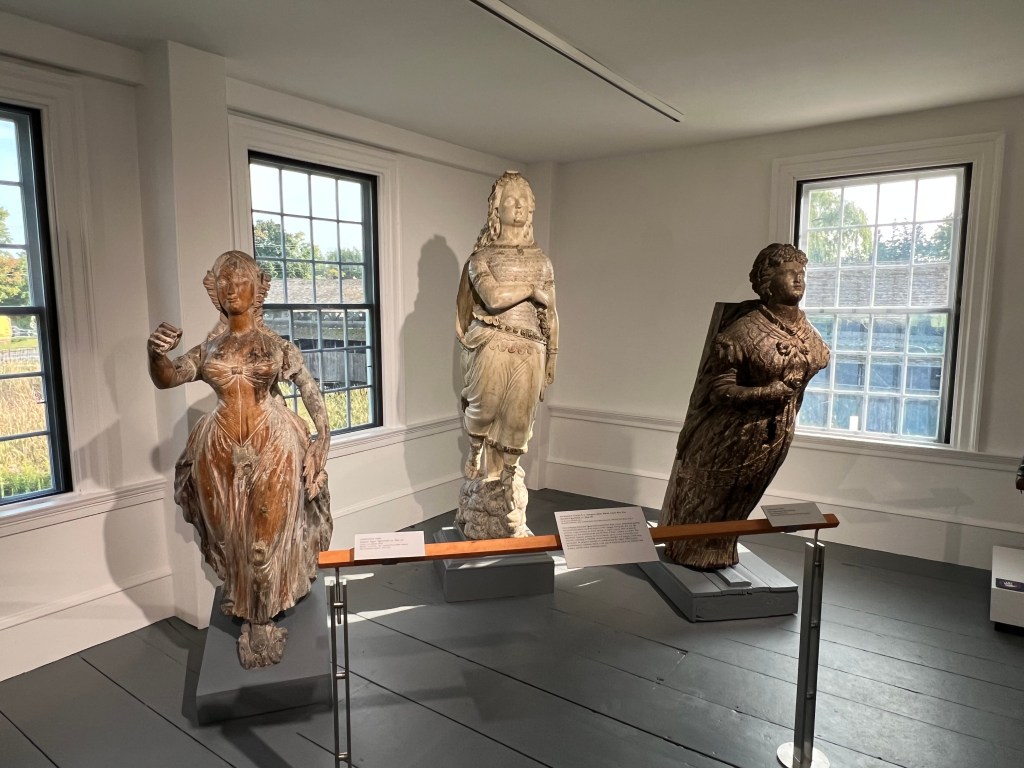
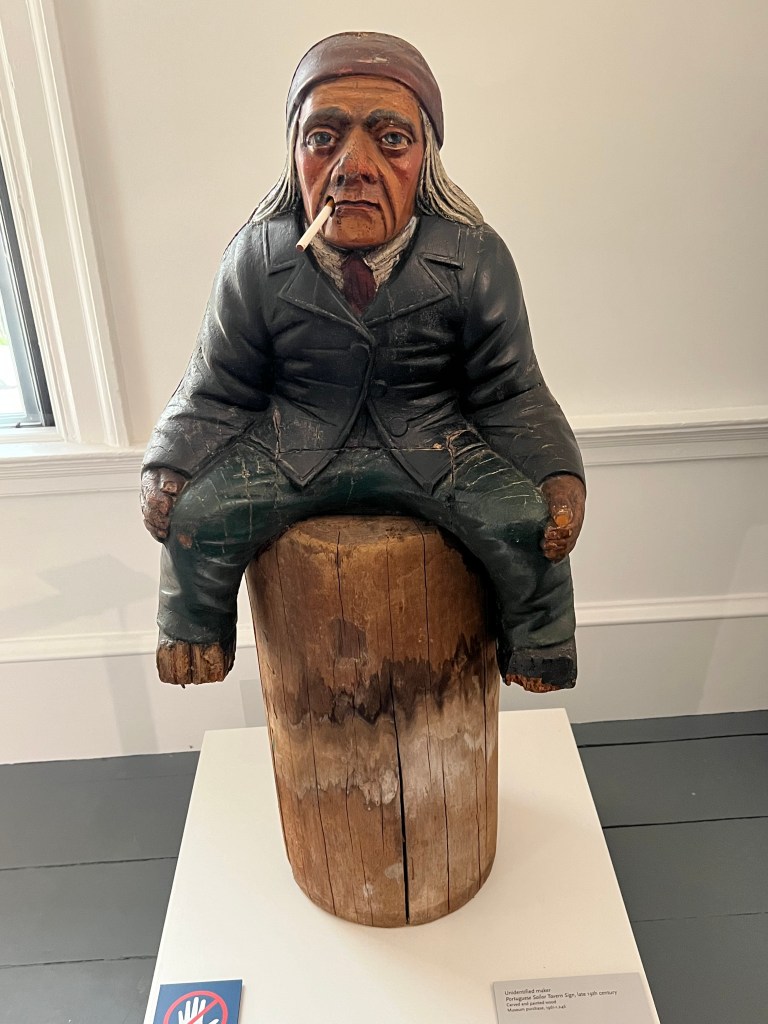
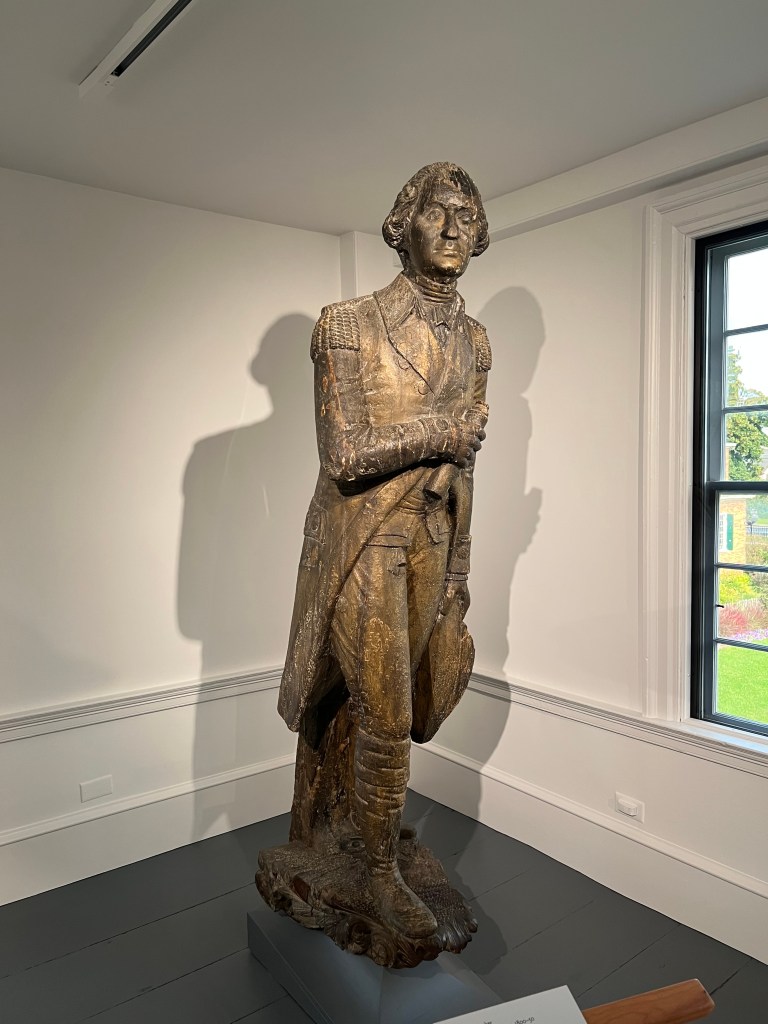
The Shelburne Museum closes for the season this year on October 22, 2023. Please refer to the museum’s website for information by clicking here. There is so much more to see than is shown in this blog post, including New England barns, horse-drawn carriages, the Lake Champlain steamboat Ticonderoga, an 1871 lighthouse, Mrs. Webb’s recreated 1930s Park Avenue apartment containing a collection of French Impressionist masterpieces, and much more. Our admission tickets were good for two days.
 Sandra's Town & Country
Great, as usual, Sandra — both the write-up and the photos. Thank you.
LikeLike
Thank you Mark. Unfortunately, we missed the last ferry of the day across Lake Champlain from Shoreham, Vermont to Fort Ticonderoga by five minutes. Maybe next year!
LikeLike
Thank you, dear Sandra, for “tour guiding” me thru a few of the buildings that will be passed on my way home, tomorrow! Would love to learn more from you! : )
LikeLike