
by Sandra Hutchinson
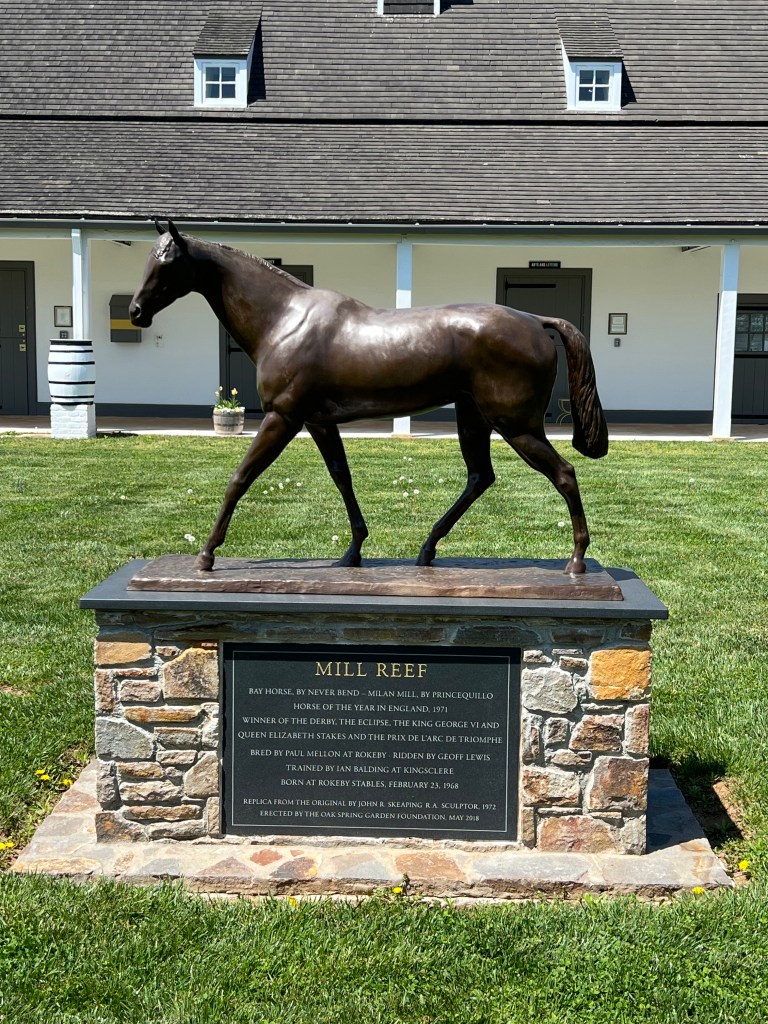
We recently had a rare opportunity to visit the Upperville, Virginia home of Paul Mellon (1907-1999) and Rachel “Bunny” Lambert Mellon (1910-2014), two of the most prominent American art collectors and philanthropists of the 20th century. The property, called Little Oak Spring, is part of what was the much larger Rokeby Farm, where Paul Mellon raised many famous thoroughbreds, including Sea Hero, who won the 1993 Kentucky Derby.
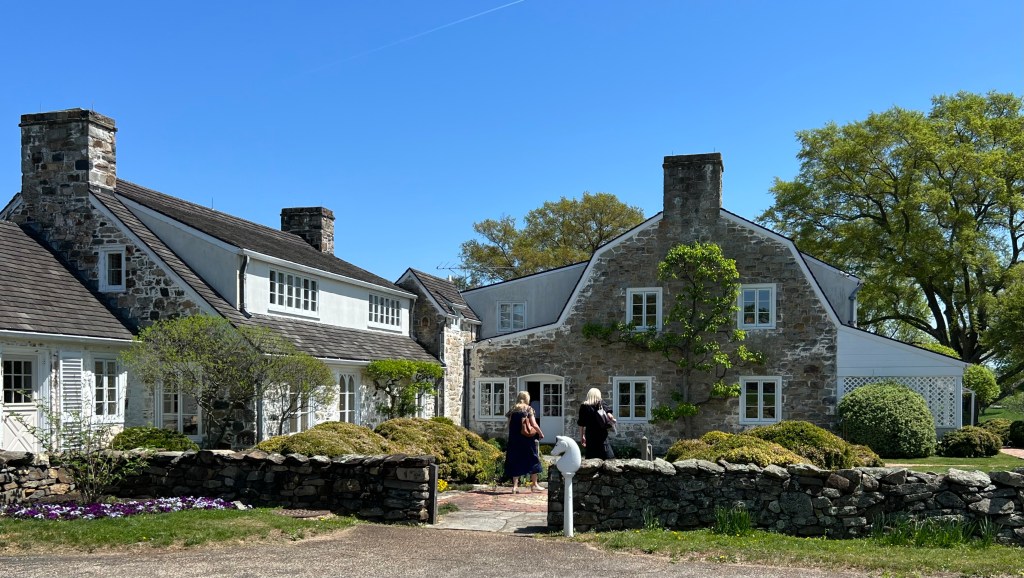
Bunny Mellon was born into a wealthy family (her father was president of Gillette and a founder of Warner-Lambert, most famous for Listerine), and she was an avid gardener her entire life. She is perhaps most well known as the designer of the White House Rose Garden, done at the request of President John F. Kennedy in 1961. She also designed the White House East Garden.
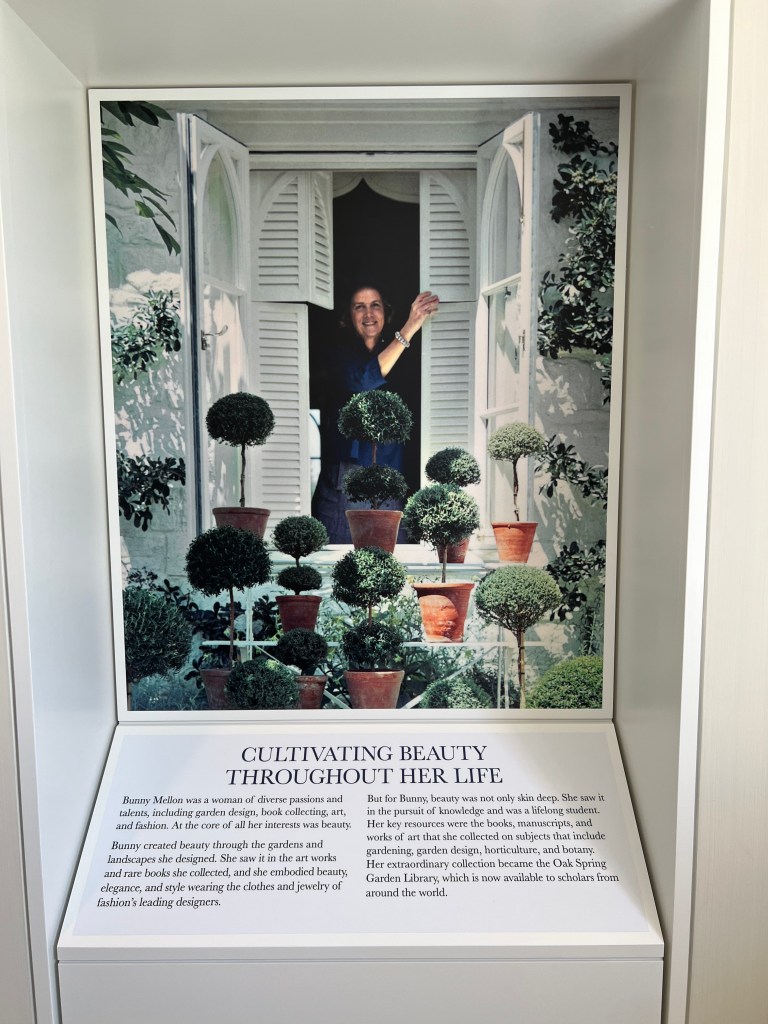
The tour included the Rokeby Broodmare Barn, a portion of the main Mellon residence, the extensive gardens, designed by Bunny, greenhouses and the art gallery. The property was open as part of Historic Garden Week in Virginia. Tickets had to be purchased in advance and they sold out quickly, so I was thrilled to snag a couple, especially since last year I was shut out!
The property is now the home of the Oak Spring Garden Foundation, and it houses a famed horticultural library that contains Mrs. Mellon’s large collection of books, manuscripts and art on plants, gardens and landscapes. The library is open to researchers, writers and artists who come to the foundation for fellowships, classes and residencies. The sprawling stone residence is used by the Foundation for associated events.
To the rear of the main residence is an extensive garden, featuring retaining walls, specimen trees, perennials, espaliered fruit trees, vegetables and herbs. This view is facing away from the main residence, looking towards the pleached arbor that leads to the formal greenhouse.

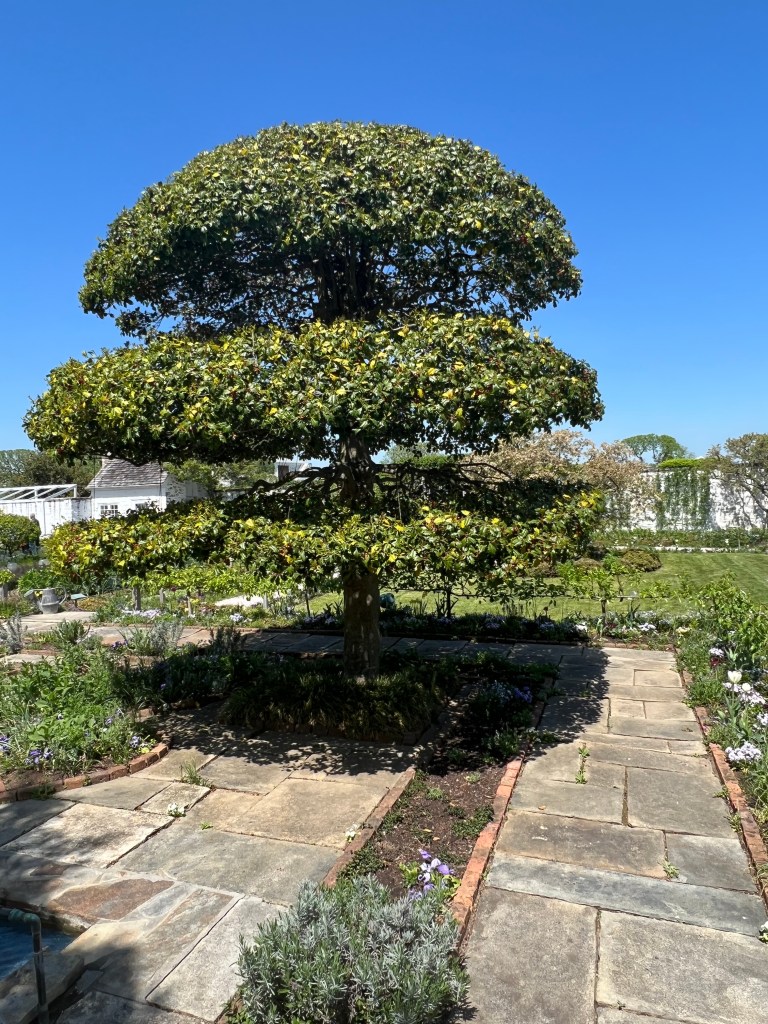
Below is an American Holly tree that has been pruned into a large topiary.
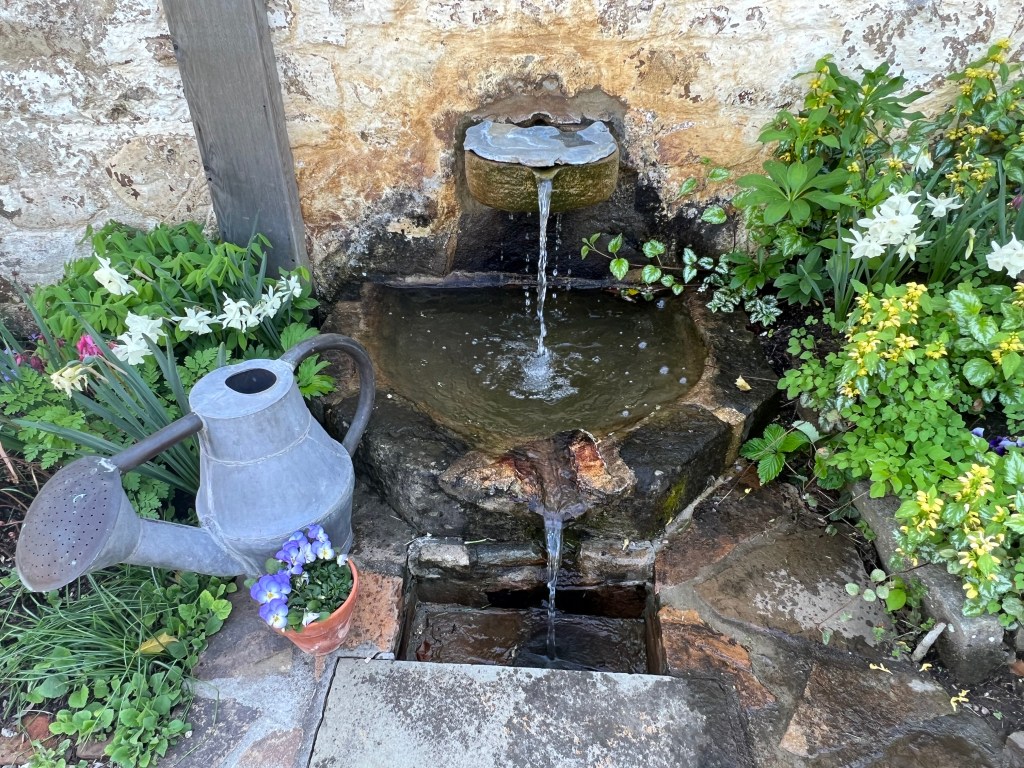
A nice water feature with one of Mrs. Mellon’s trademark watering cans, which a gardener confirmed are “wicked heavy.”
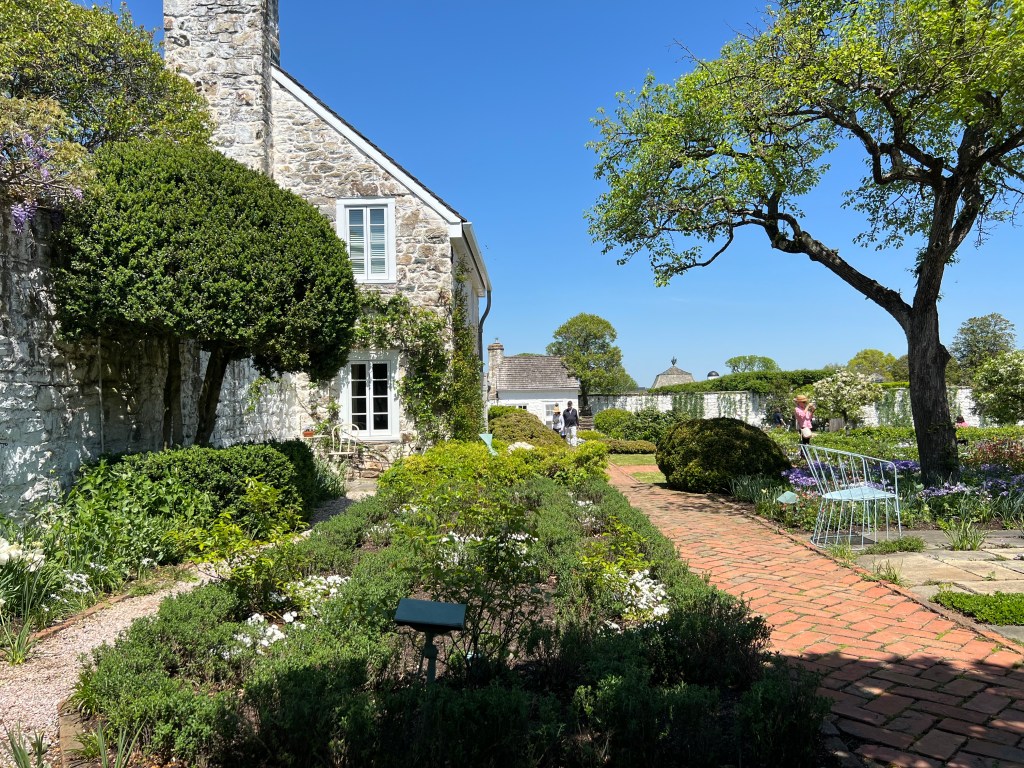
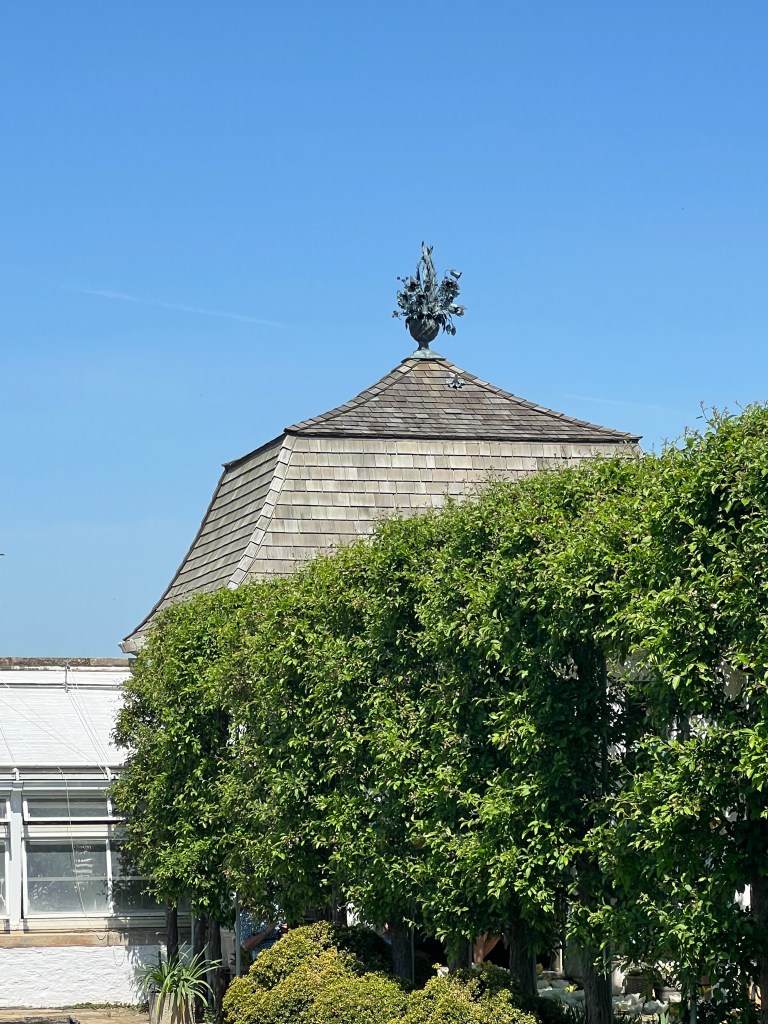
Another view looking past a stone guest cottage towards the formal greenhouse (with finial in distance).
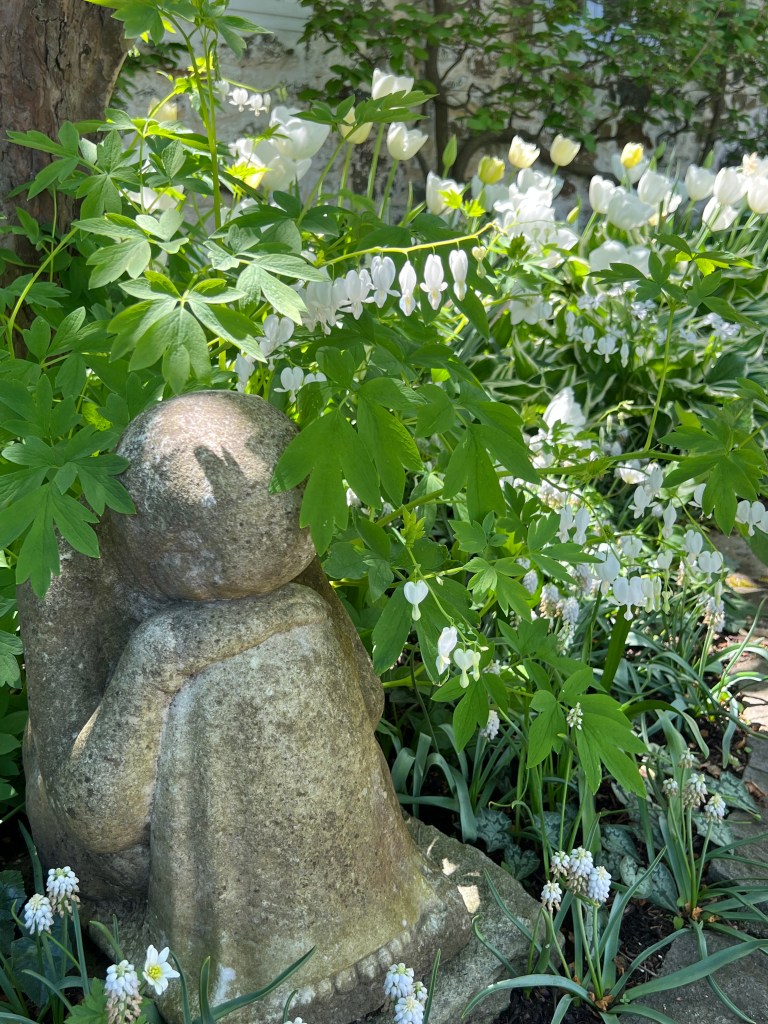
A close up of a portion the white garden, in bloom in late April with white bleeding hearts and tulips.
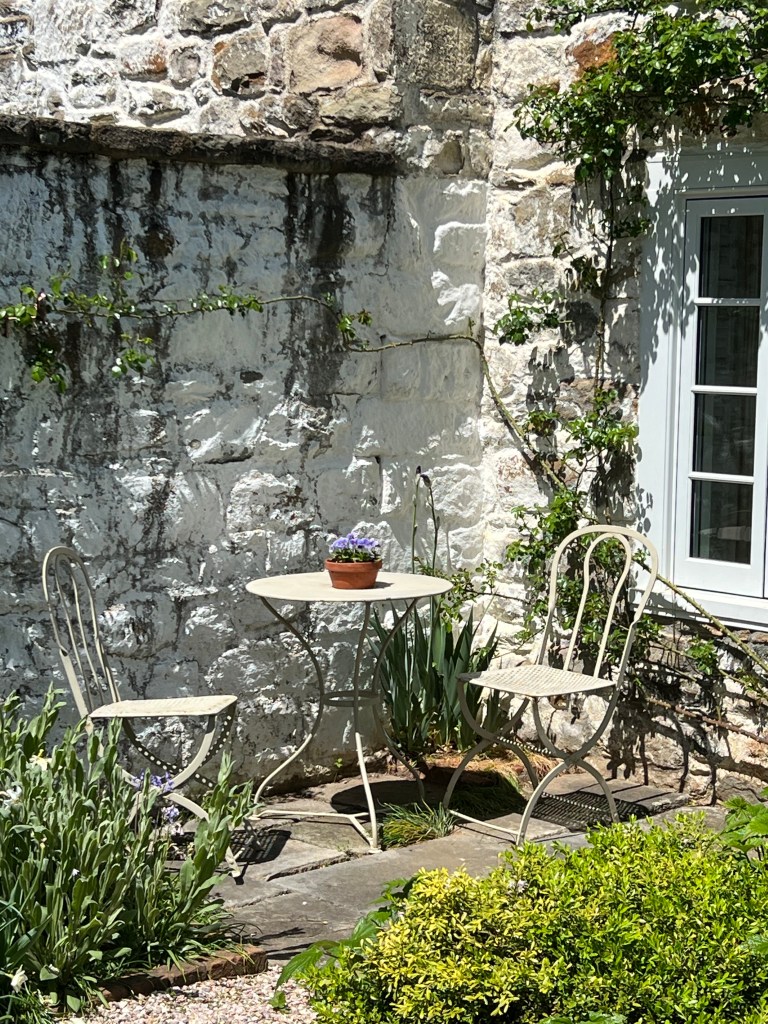
A sunny corner.
Here’s signage about William Edmondson, the first African American folk art sculptor to have a solo show at New York’s Museum of Modern Art. The stone bird bath, in the left photo, was sculpted by him.
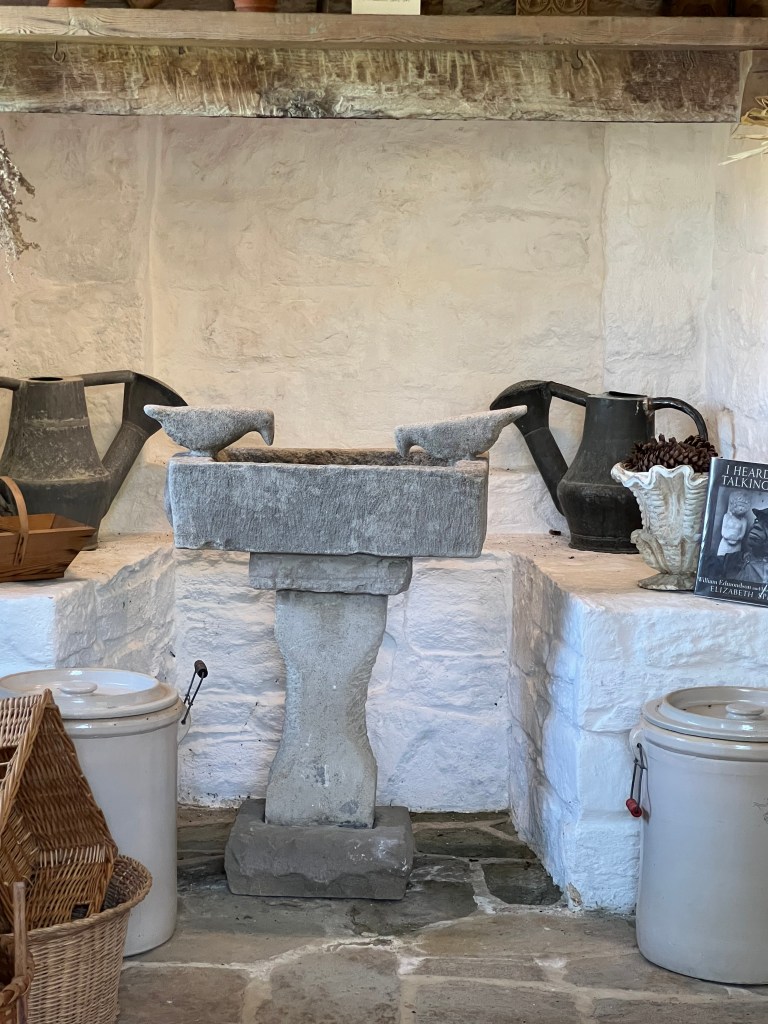
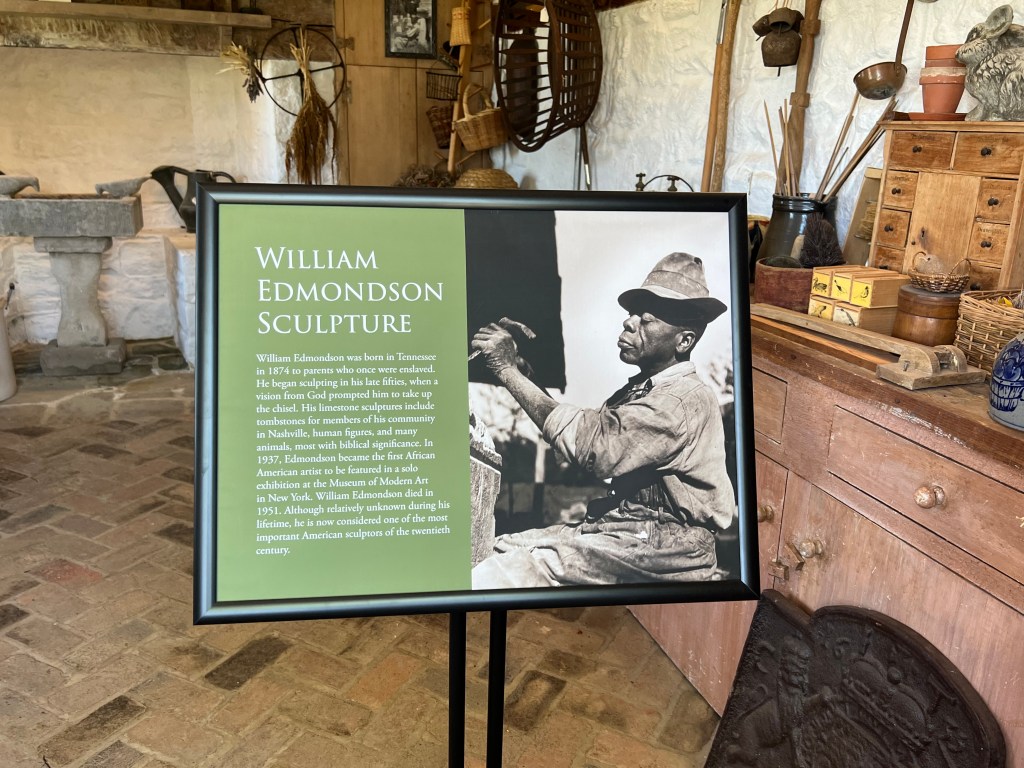
I love this metal garden bench with oak leaves and acorns.

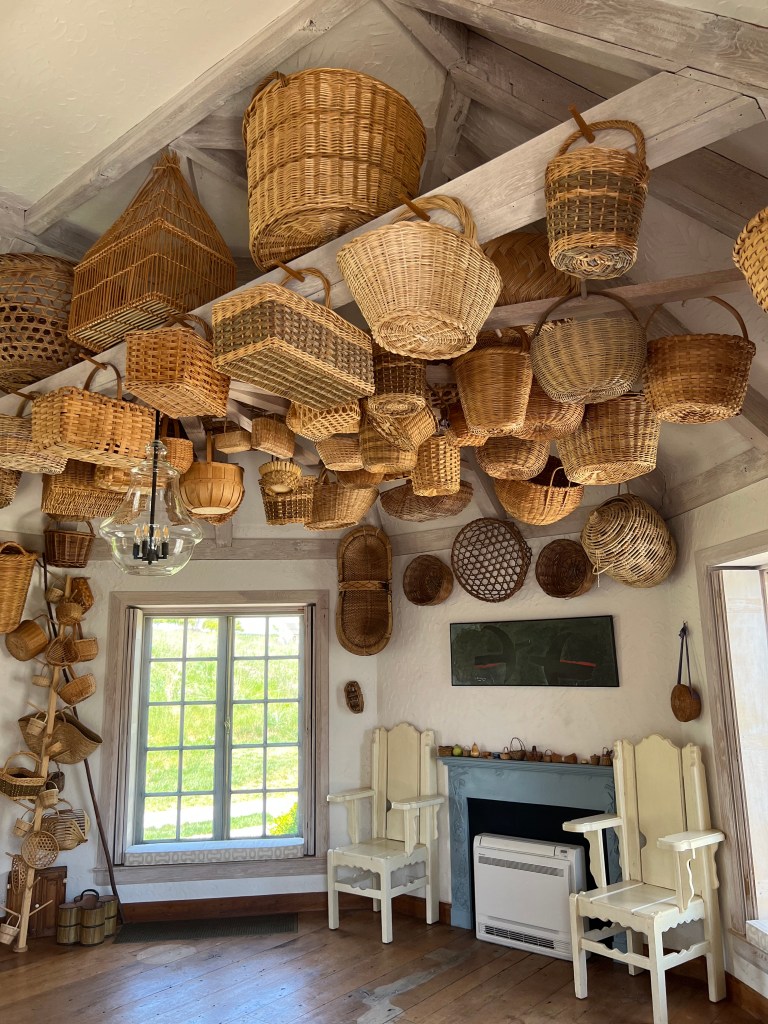
Below is a photo of one end of the basket house, which Mrs. Mellon used for entertaining and relaxation.
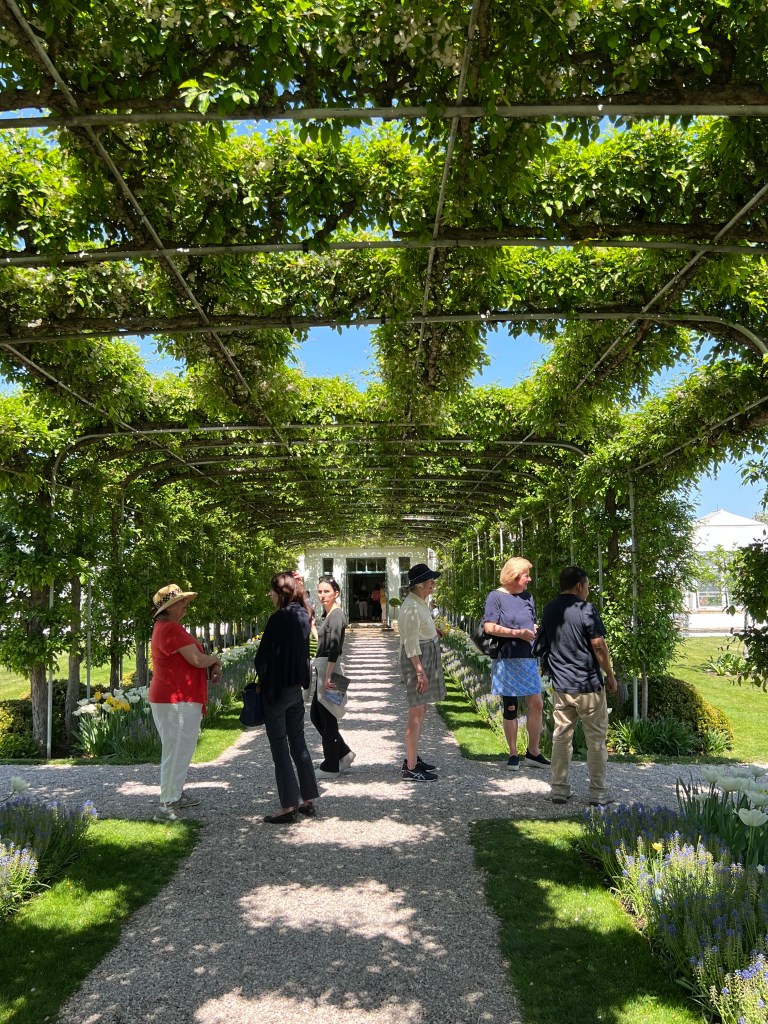
Below is a view through the pleached arbor of Mary Potter crabapple trees, which leads to the formal greenhouse. One of the gardeners told us she did not believe the variety of crabapple is available any longer.
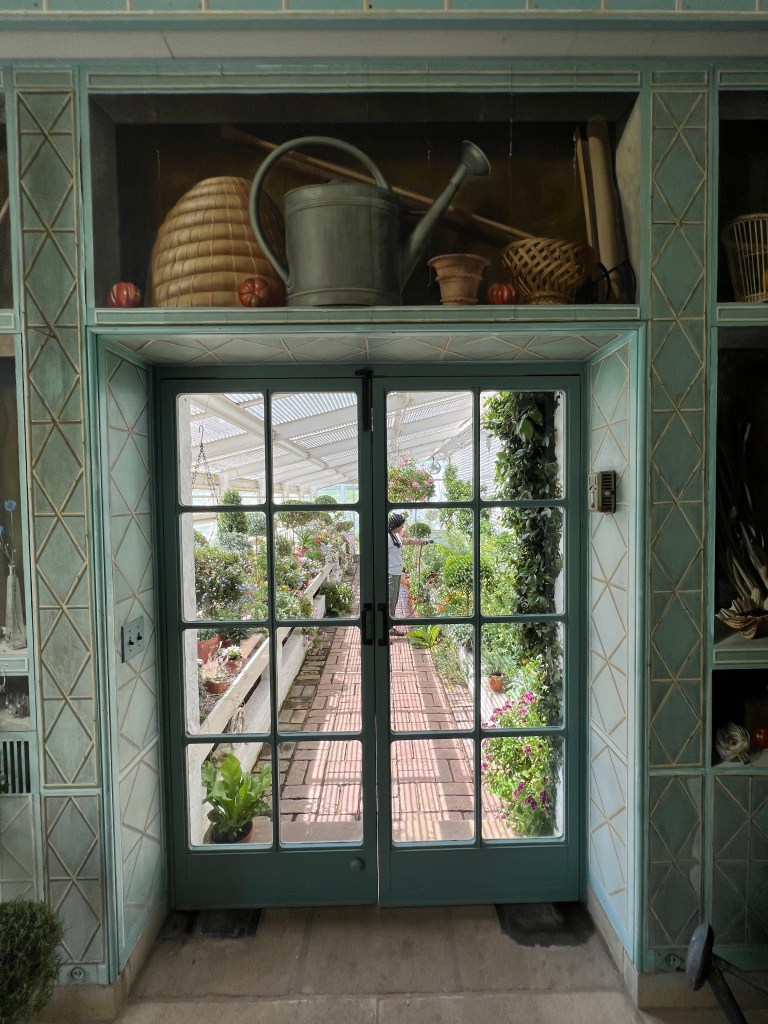
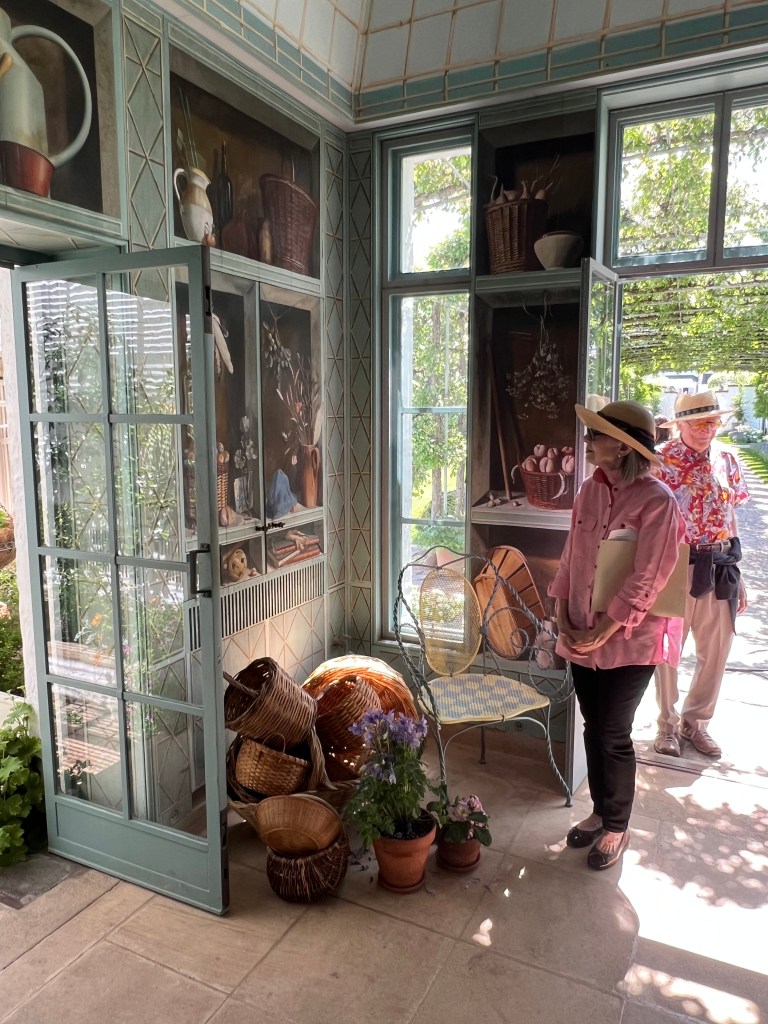
One of the most well known features of the Oak Spring garden is the interior of the formal greenhouse, with its stunning trompe l’oeil paintings in the central pavilion, commissioned of French artist Fernand Renard by Mrs. Mellon. The paintings are stunningly realistic. The work was begun in France and completed by the artist on site in 1960. In the first two photos below, doors are open to reveal the (real) work counter. Can you tell which towel is real and which is painted?
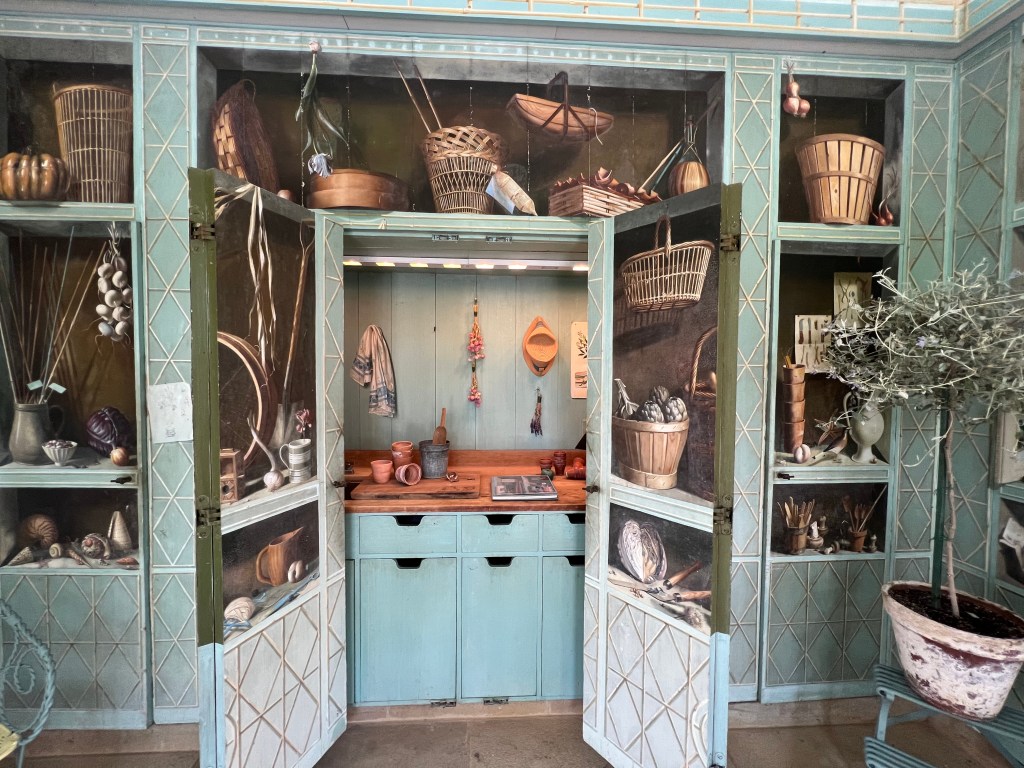
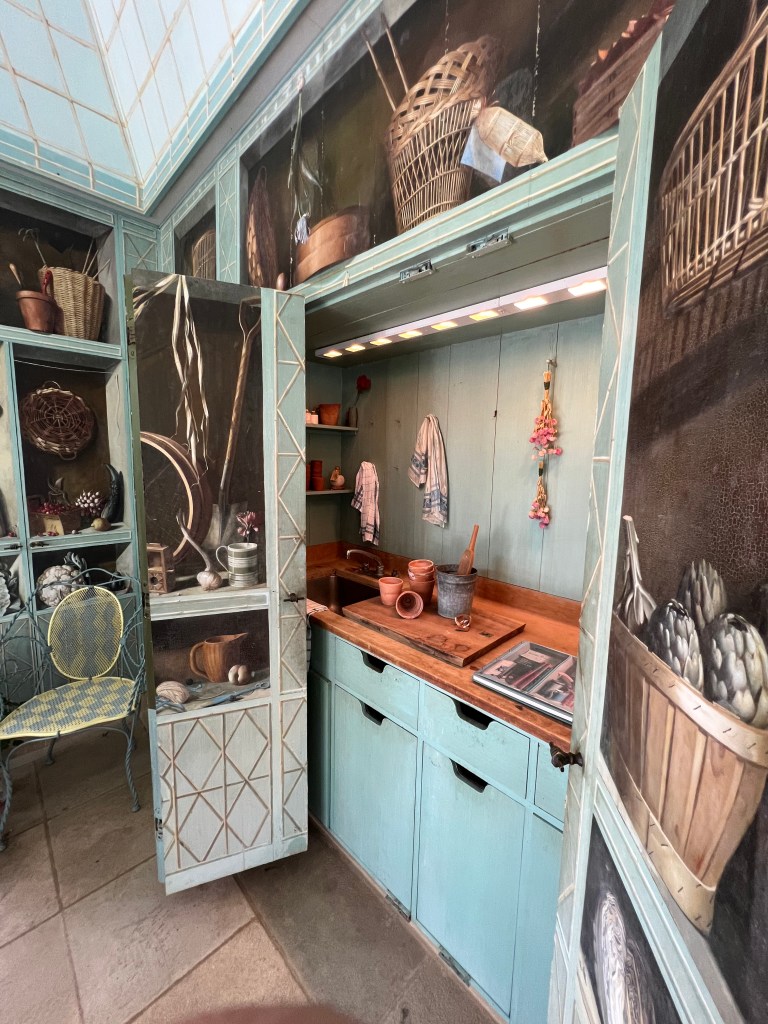
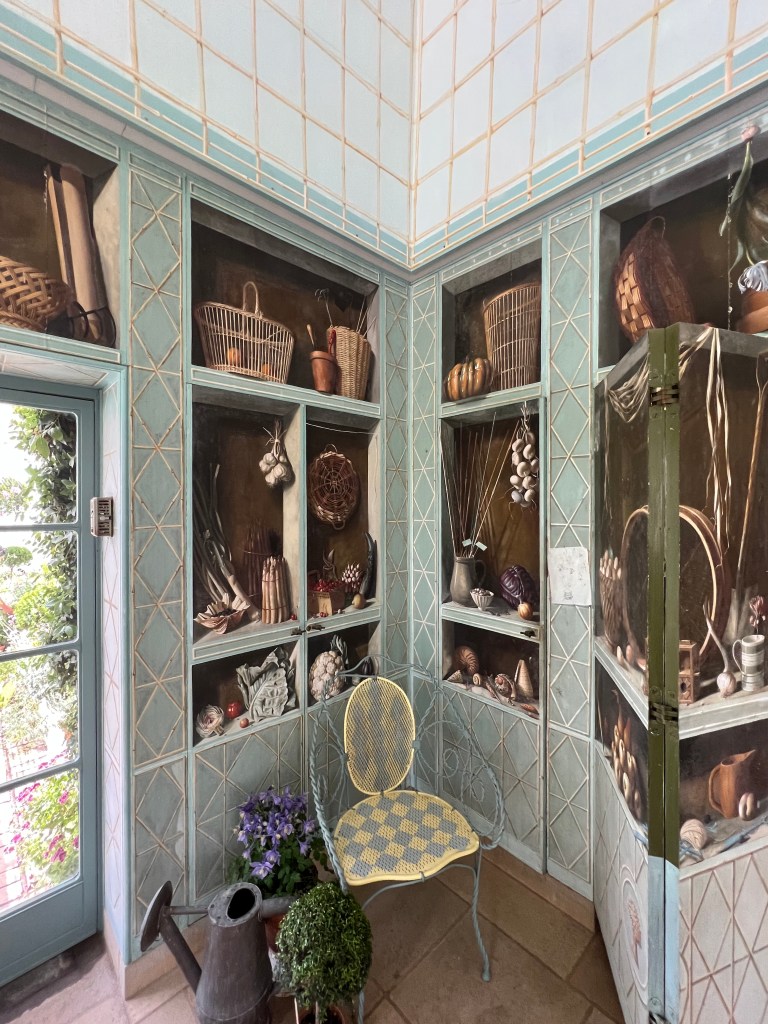
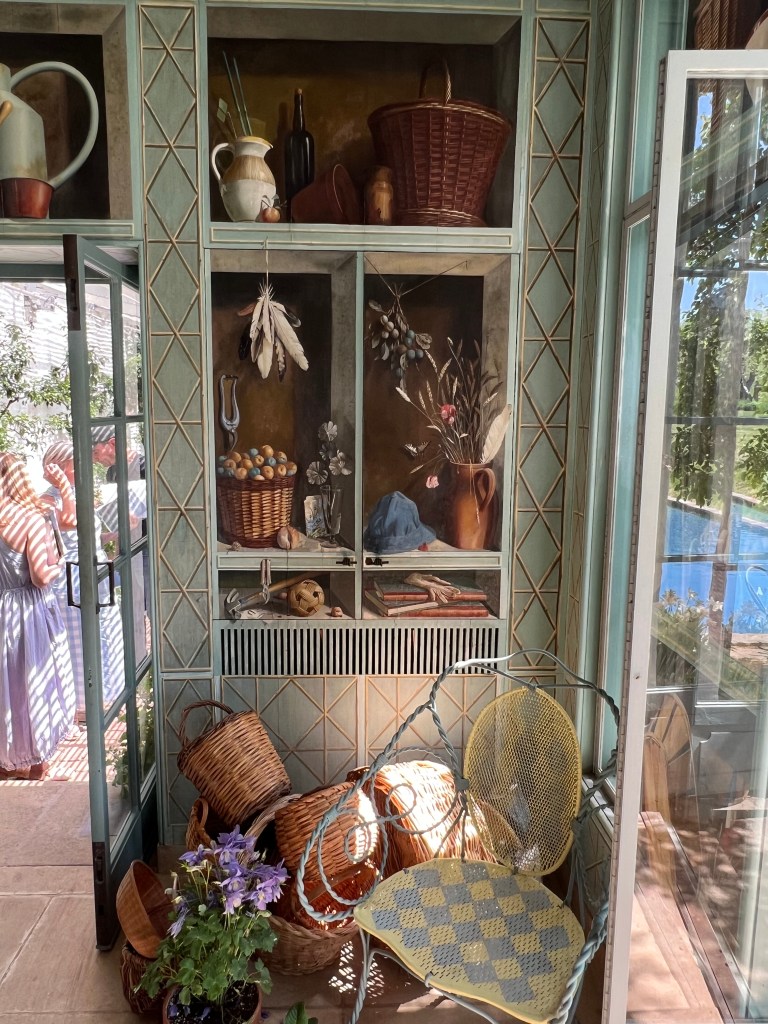
Looking closely at the paintings, one finds details like envelopes addressed to Mrs. Mellon, and tiny seeds alongside two pearl earrings.
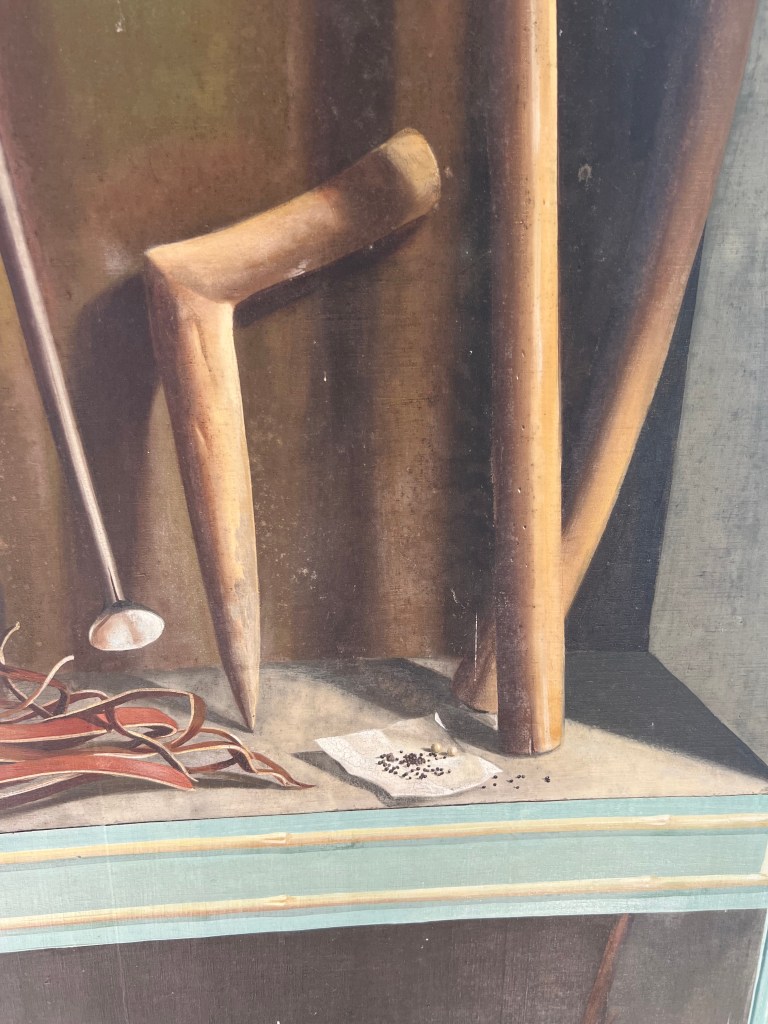
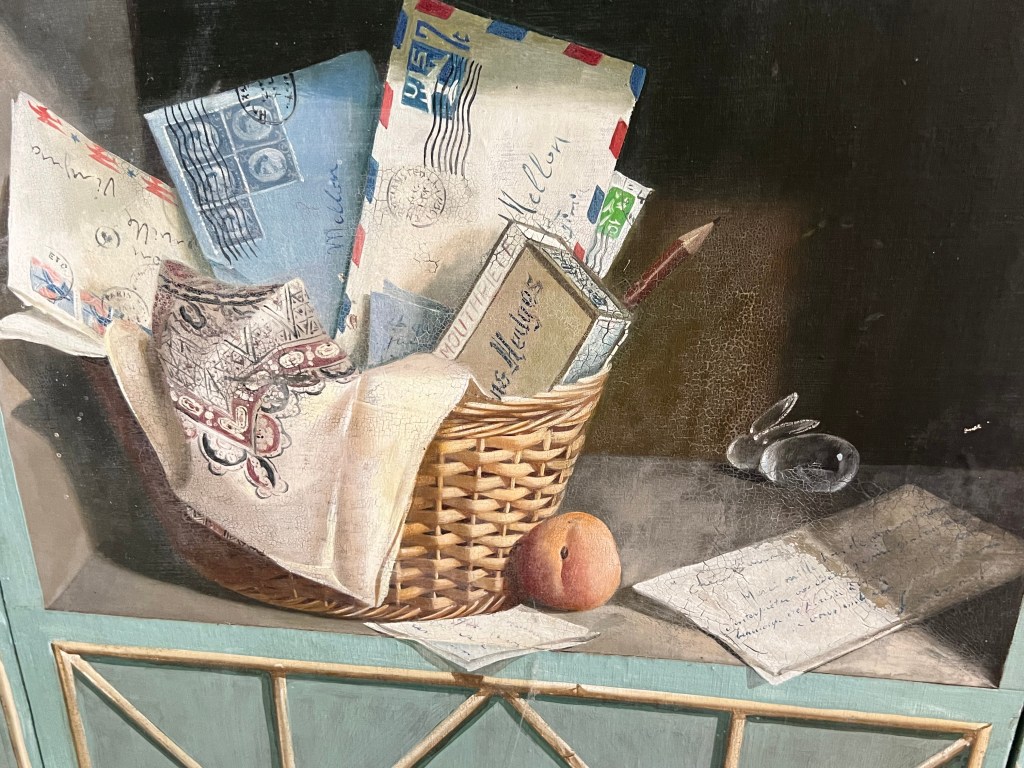
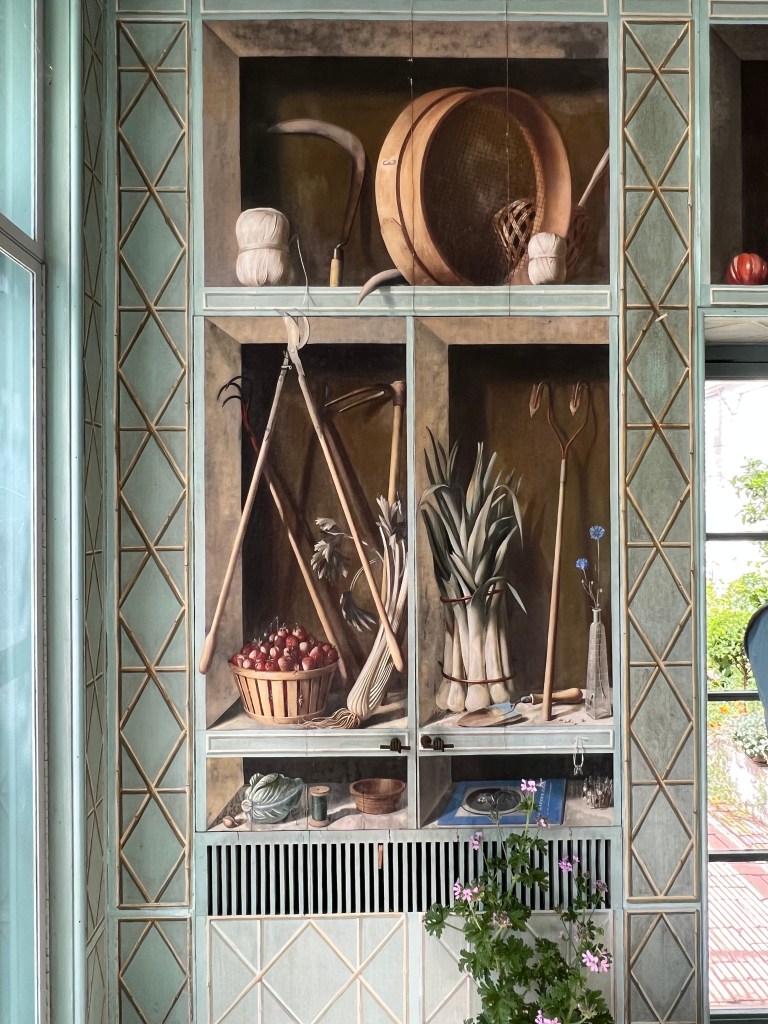
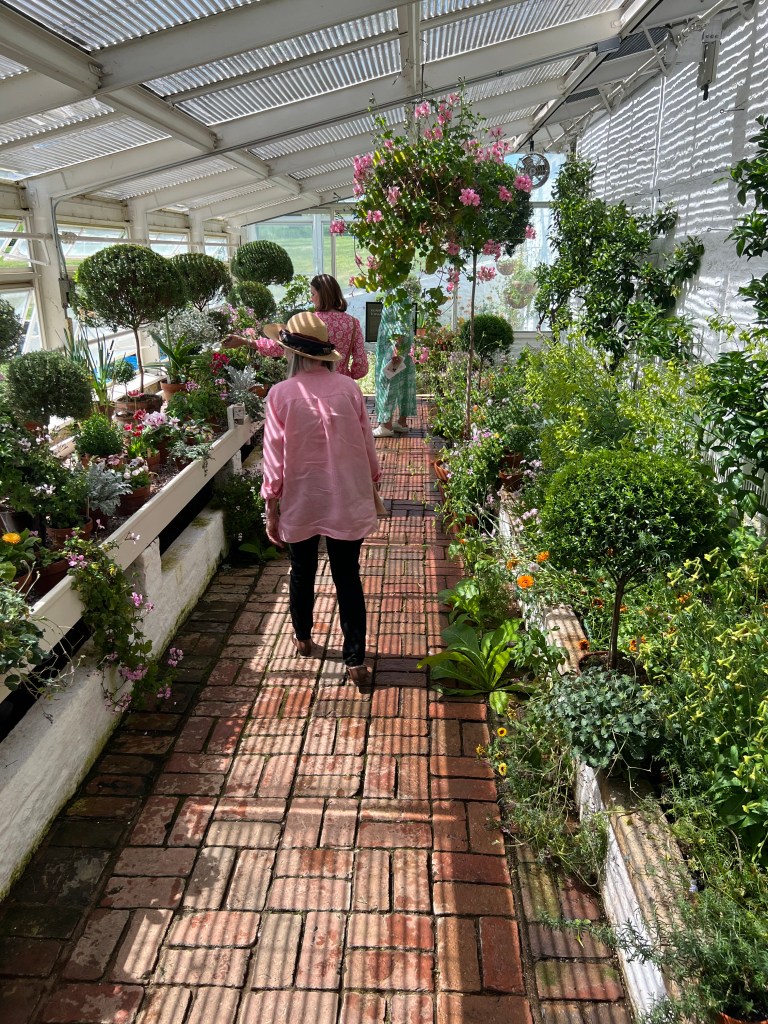
The view from the trompe l’oeil pavilion into one of the greenhouses, below. The greenhouses extend out from two sides of the painted room.
The ceiling of the pavilion.
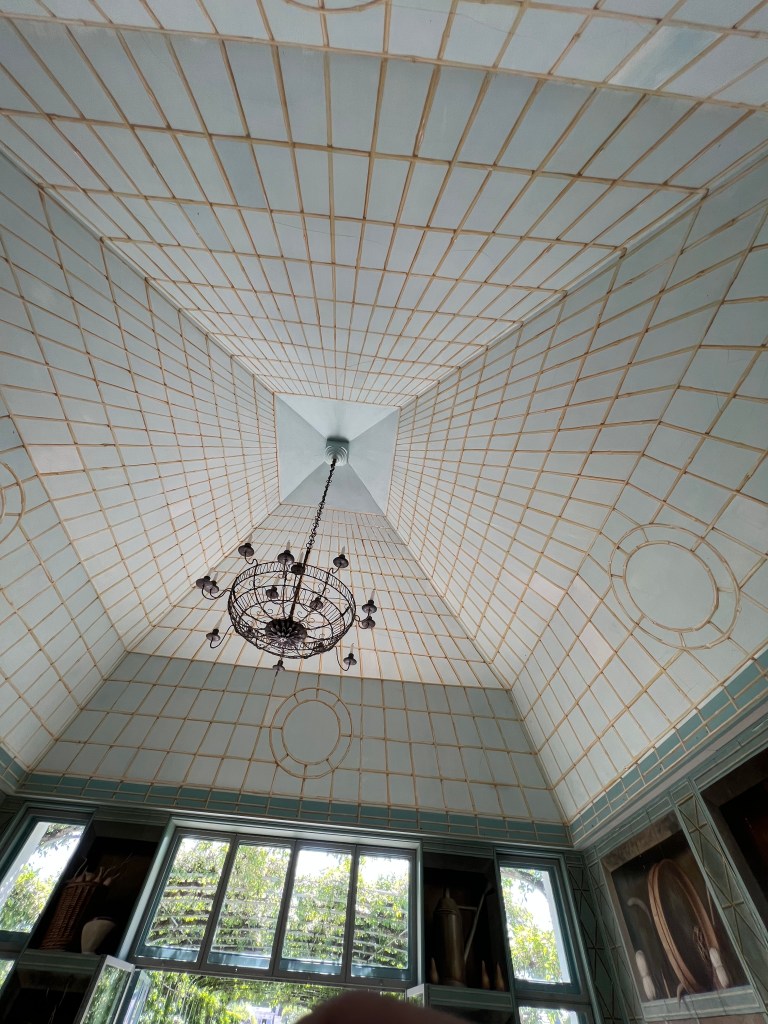
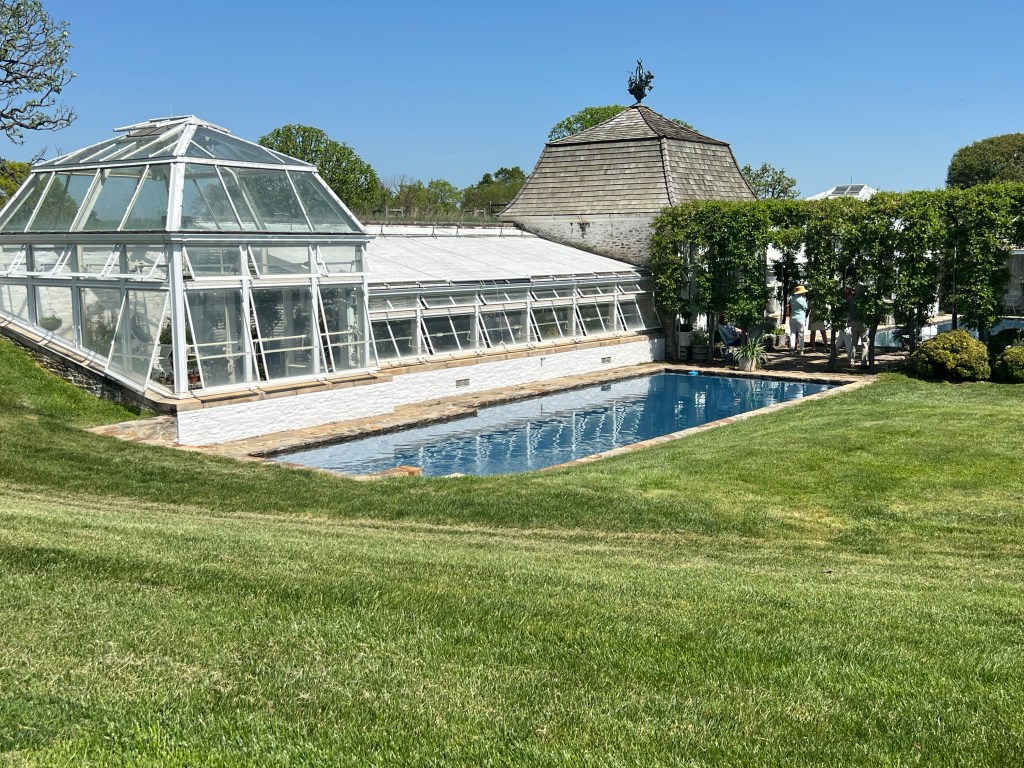
Note the finial on top of the greenhouse central pavilion. It is in the shape of an urn, and filled with flowers. It was designed by Jean Schlumberger, the famous Tiffany jewelry designer favored by Mrs. Mellon, and created by Robert Bradford. The finial on the pavilion is a reproduction, but the lead original was on display within the art gallery on the property during our visit.

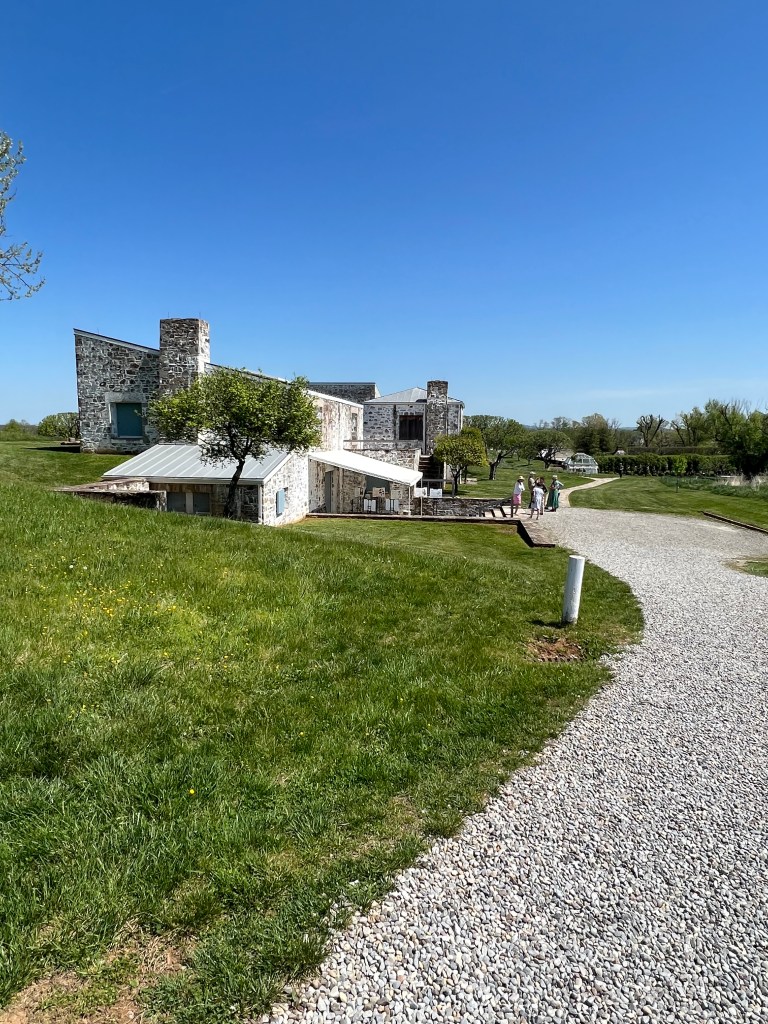
This is a view of the Oak Spring Garden Library, built in 1981 and expanded in 1997, to hold the thousands of books, manuscripts and objects relating to gardens and horticulture that Mrs. Mellon collected over her lifetime. The library was not open to visitors the day we were there. You can just make out the end of one of the greenhouses at the end of the path.
In the art gallery are some exhibits on the Mellons, including the first book about flowers acquired by Bunny as a young girl.
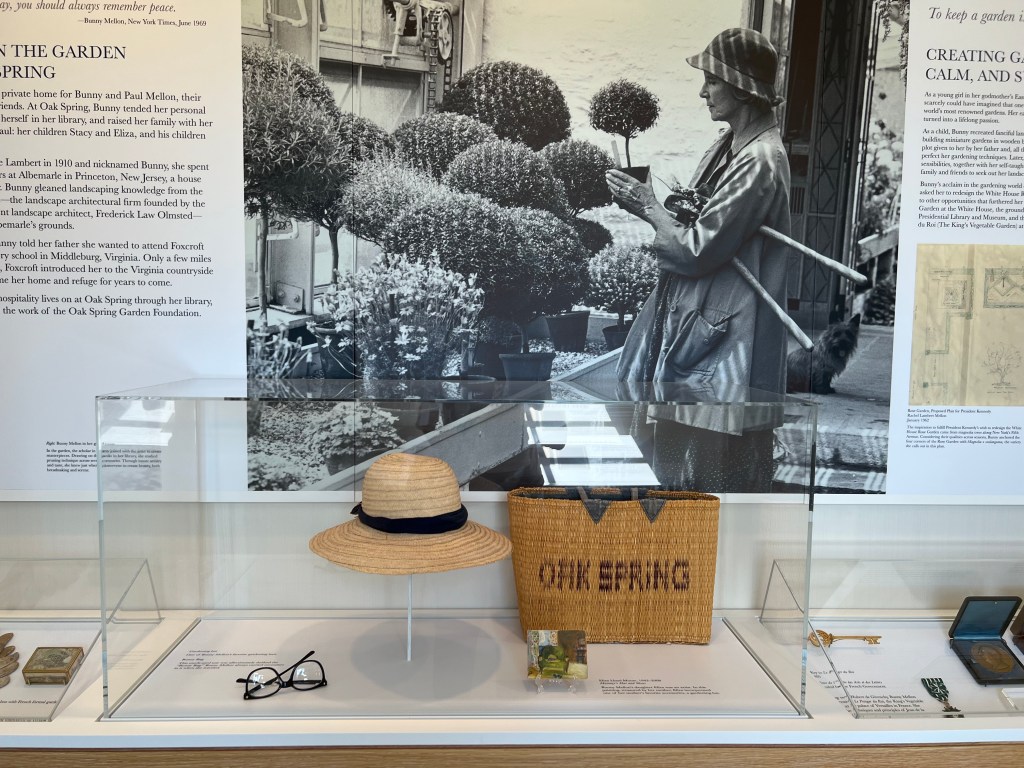
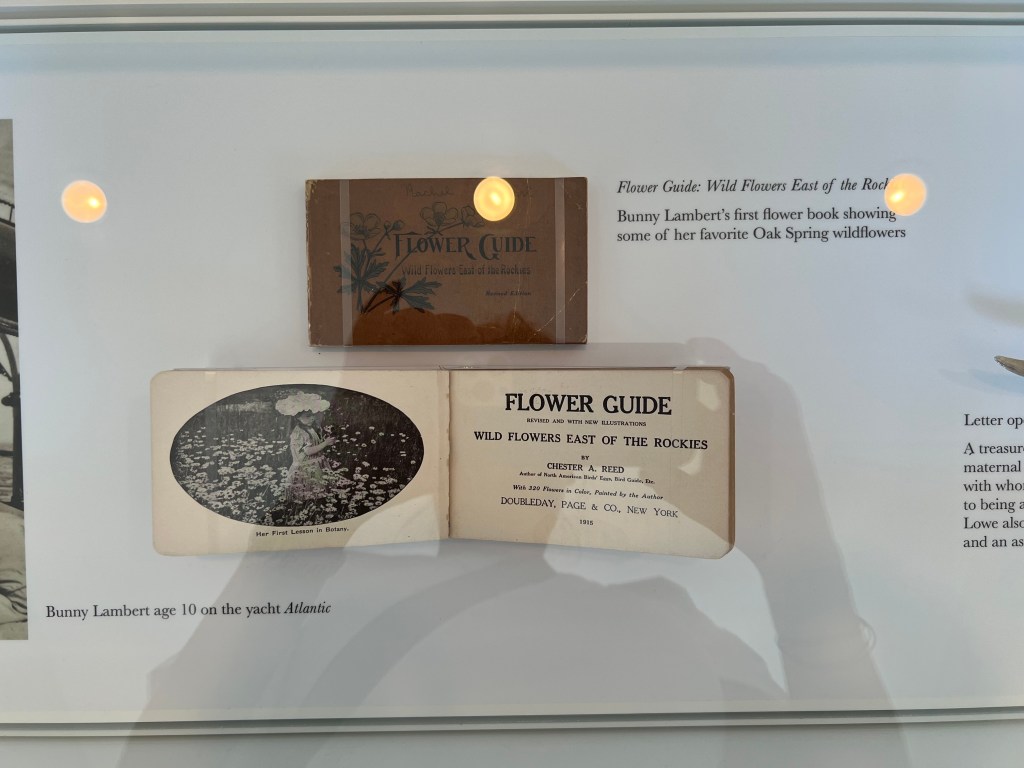
Exterior signage has interesting information on the property.
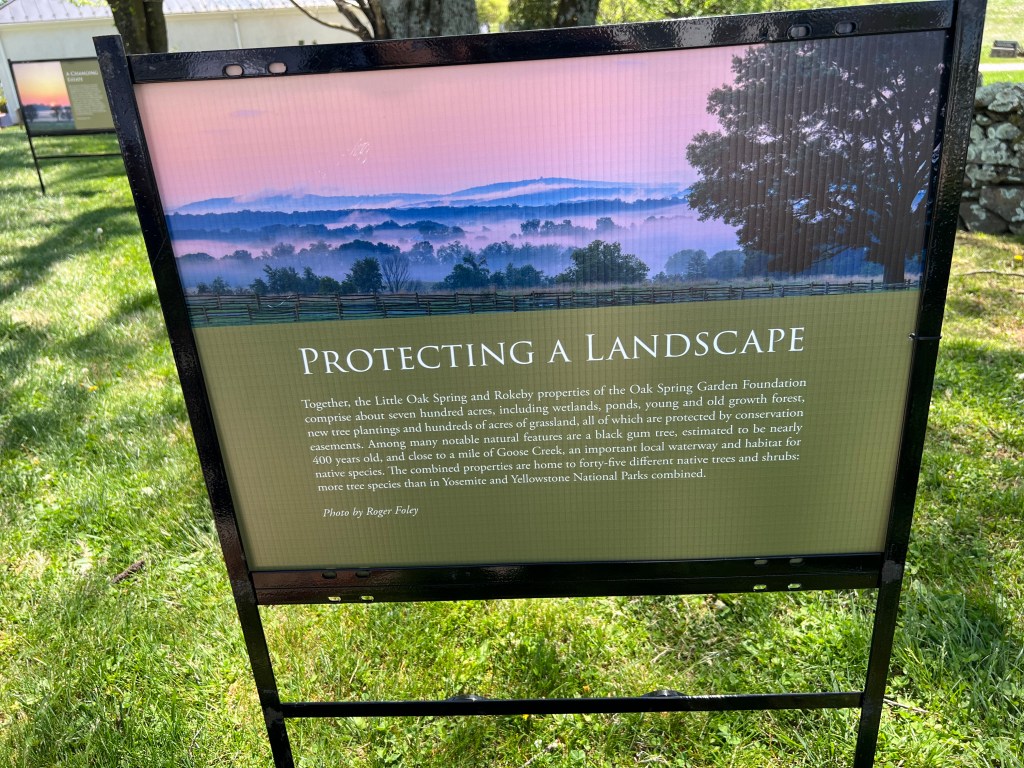
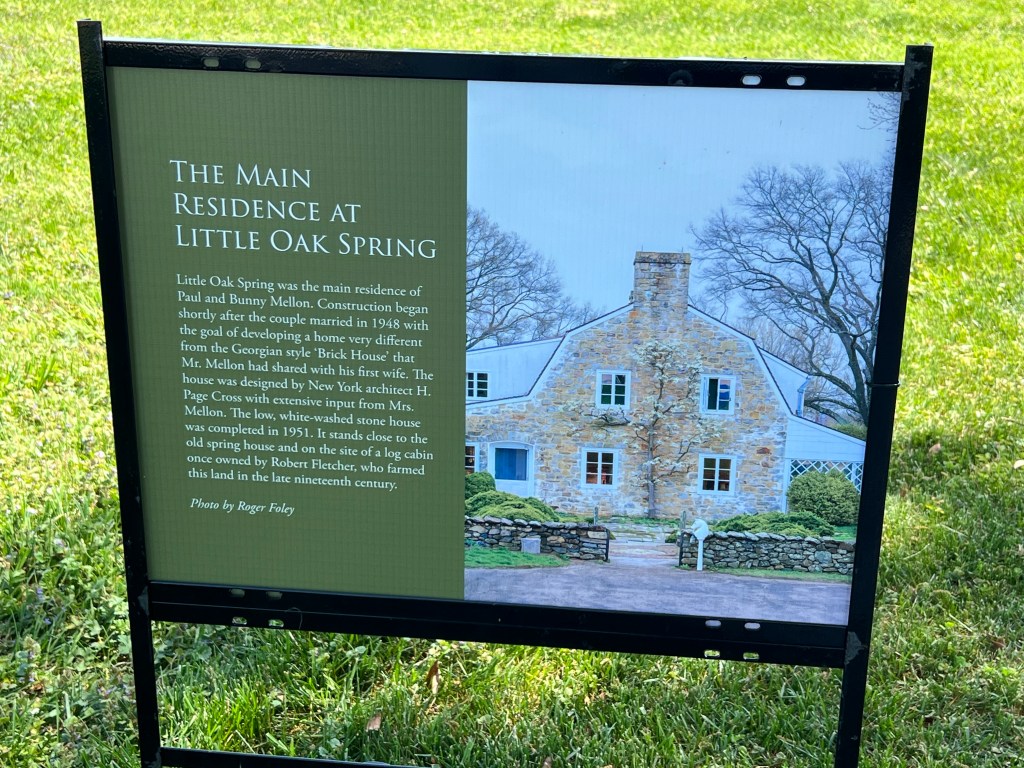
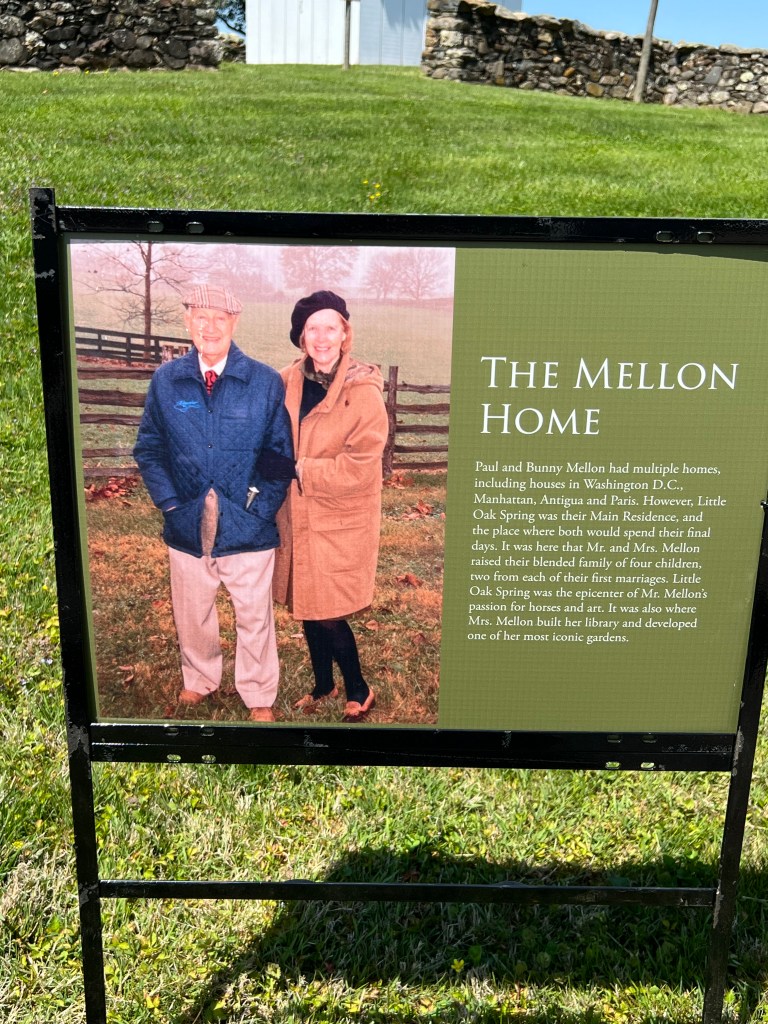
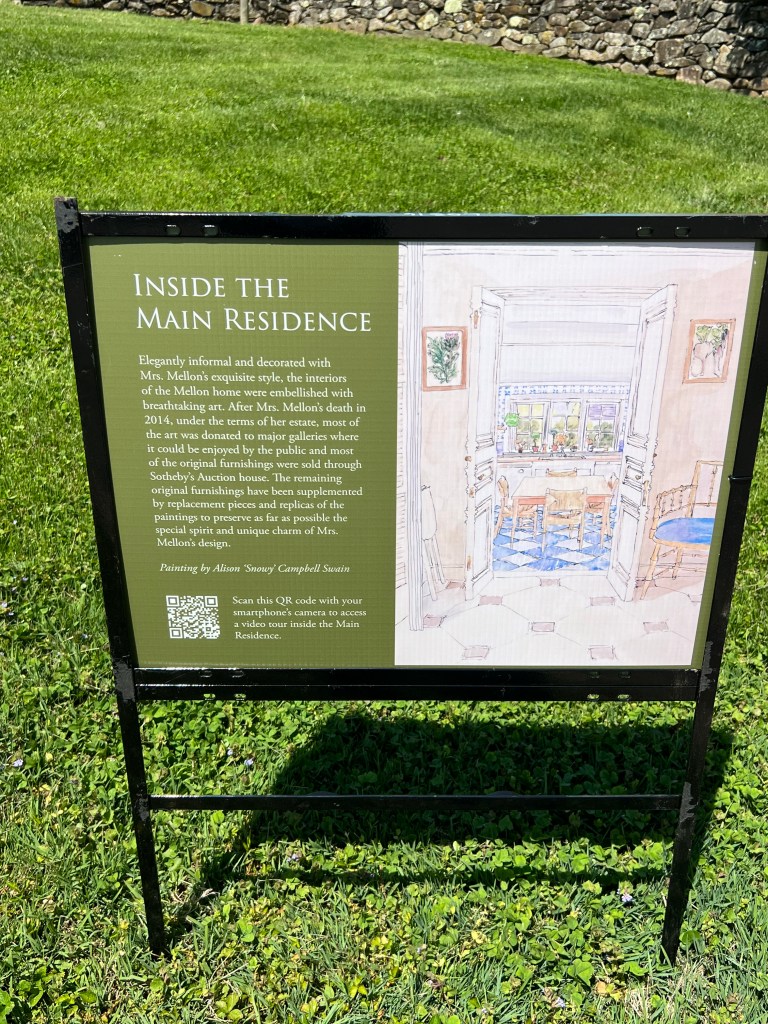
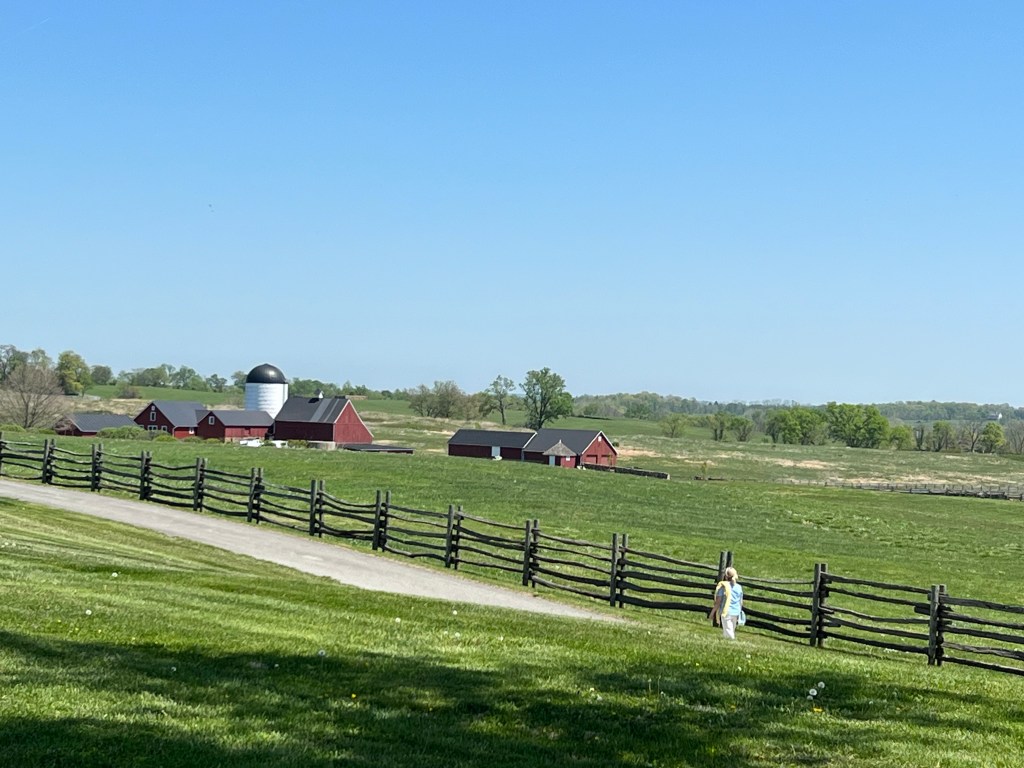
A view to some nearby barns and outbuildings.
Here are few few links for more information: Oak Spring Garden Foundation, click here; Historic Virginia Garden Week, click here.
There’s a lovely large hardcover book, The Gardens of Bunny Mellon, by Linda Jane Holden, photographs by Roger Foley, published by Vendome, that describes gardens designed by Mrs. Mellon in Virginia, Massachusetts, the Caribbean, at the White House and in France. It’s pricey ($60) but fabulous eye candy! Click here to view.
 Sandra's Town & Country
What an interesting and insightful article on an amazing property that without you, I’d never know was there to explore. Thank you, Sandra for sharing yet another hidden gem.
LikeLike
Thank you Cathy! Maybe you can get there on a road trip sometime. The neighboring town of Middleburg is charming and there are many beautiful horse farms in the area. We have stayed at the historic Red Fox Inn in the past and I recommend it. The area is the center of Virginia’s “hunt country.” One beautiful farm after another. Hope all is well with you!
LikeLike
Little Oak Spring looks divine Sandra and I very much enjoyed your tour of the property and gardens. I’d never heard of it before but it’s gorgeous. I loved all the wicker baskets hung from the ceiling, the finial on the glass pavilion and of course, the garden design.
LikeLike
Thanks, Marion! It is a lovely property that is only open once or twice a year to the public. Unfortunately the library and basically the entire home was not open (we were allowed to step into a foyer and peek into the front hall). The plants in the garden were not exotic – lots of cottage garden plants that you would be very familiar with in England. Mrs. Mellon may have hobnobbed with the very rich but her choices in plants were quite simple!
LikeLiked by 1 person