by Sandra Hutchinson
The blockbuster film Jaws, was released on June 20, 1975, fifty years ago today. I’m reposting here the article I wrote in 2023 about the filming of the movie on Martha’s Vineyard in 1974.
In the spring of 1974, a young 27-year-old director named Steven Spielberg began filming Jaws on the Massachusetts island of Martha’s Vineyard. Universal Studios had recently bought film rights to Peter Benchley’s not-yet-released thriller about a killer great white shark that terrorizes the fictional New England Amity Island.
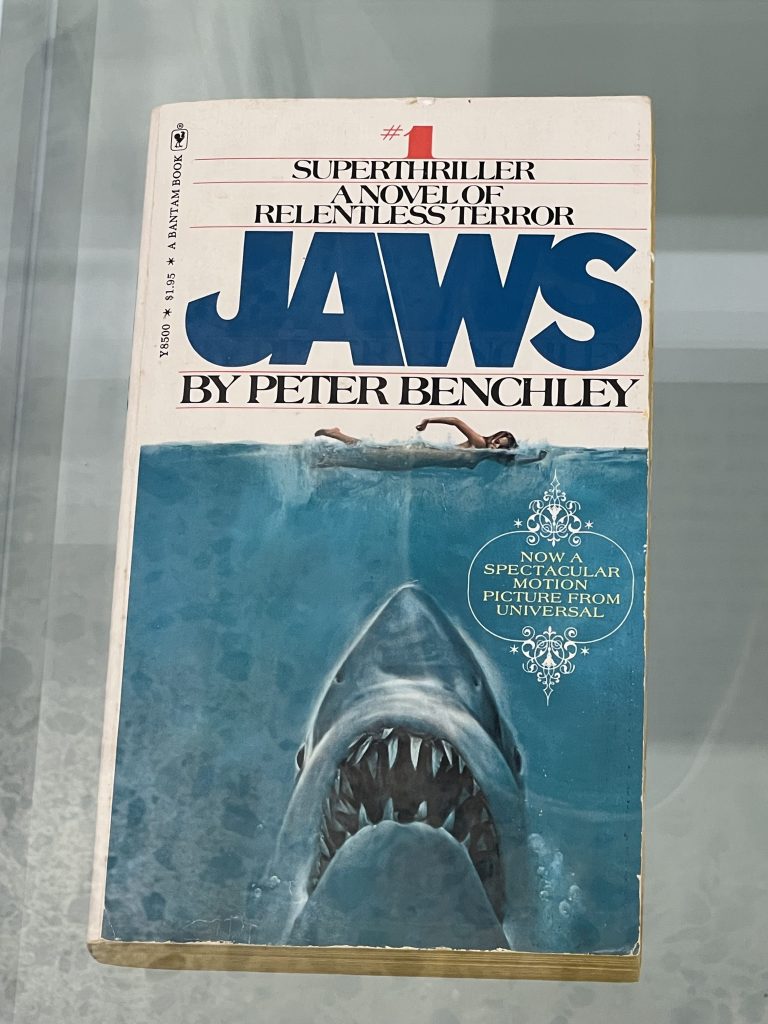
The Martha’s Vineyard Museum, in Vineyard Haven, is currently hosting a “mini-exhibit” on the filming of Jaws, on display until March 24, 2024. I had a chance to visit in August, 2023. Here are some highlights.

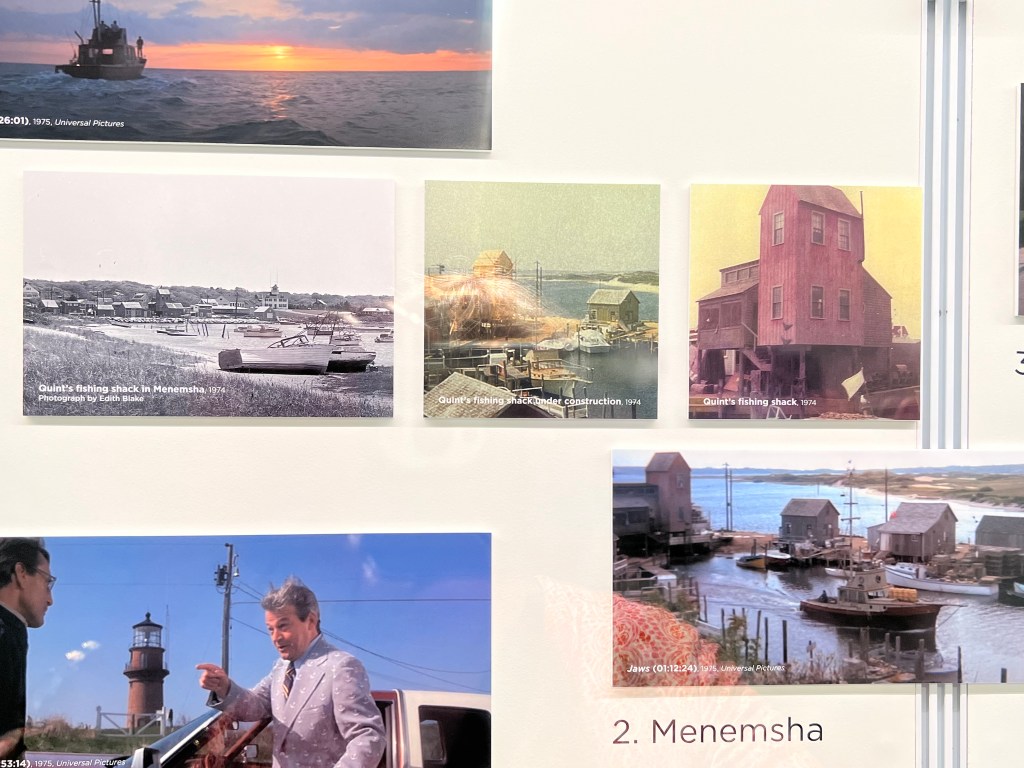
Edgartown was used to depict Amity’s main town, and the beach scenes where shark attacks occur were on State Beach (between Oak Bluffs and Edgartown) and South Beach (the barrier beach at the end of Katama Road). The row of canvas cabanas that appear in key scenes in the film were set up on State Beach; the large billboard “Amity Island Welcomes You” was in Aquinnah; and Quint’s fishing shack was built in Menemsha. The so-called “jumping bridge,” which became famous due to the film, is on the road that borders State Beach.
I learned, interestingly, that the movie’s production designer originally had his eye on Nantucket as a shooting location, but when his boat to Nantucket was turned back in December 1973 due to bad weather, he ended up on Martha’s Vineyard and chose it instead.
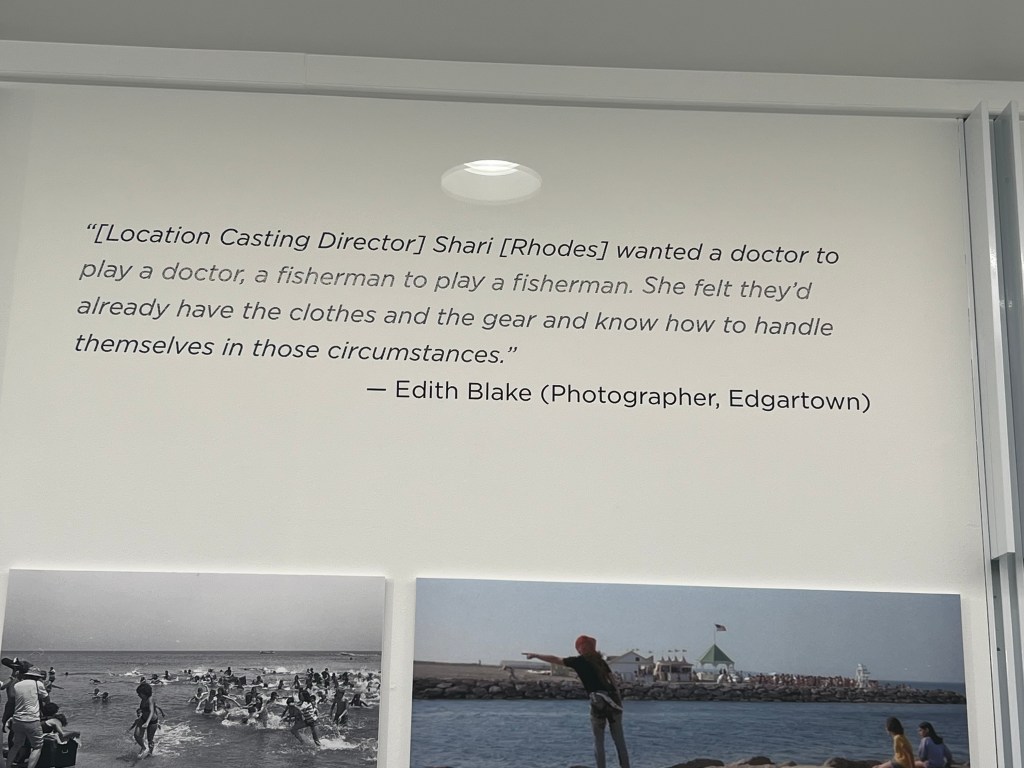
Soon thereafter, the film crew arrived on the island, and local residents were cast in the movie, not just as extras but some as actors with speaking roles. This panel below explains that local drama teacher Lee Fierro at first refused play the role of Mrs. Kintner, whose son is killed by the shark, because the script required her to swear. It was rewritten without the offensive language, and she took on the role. The locals also supported the project by piloting boats and building sets.

Production was delayed because of weather or problems with the mechanical sharks that portrayed the great white, and it finally wrapped up in September, 1974. The movie was released nationwide in June, 1975, and soon became the highest-grossing film ever.
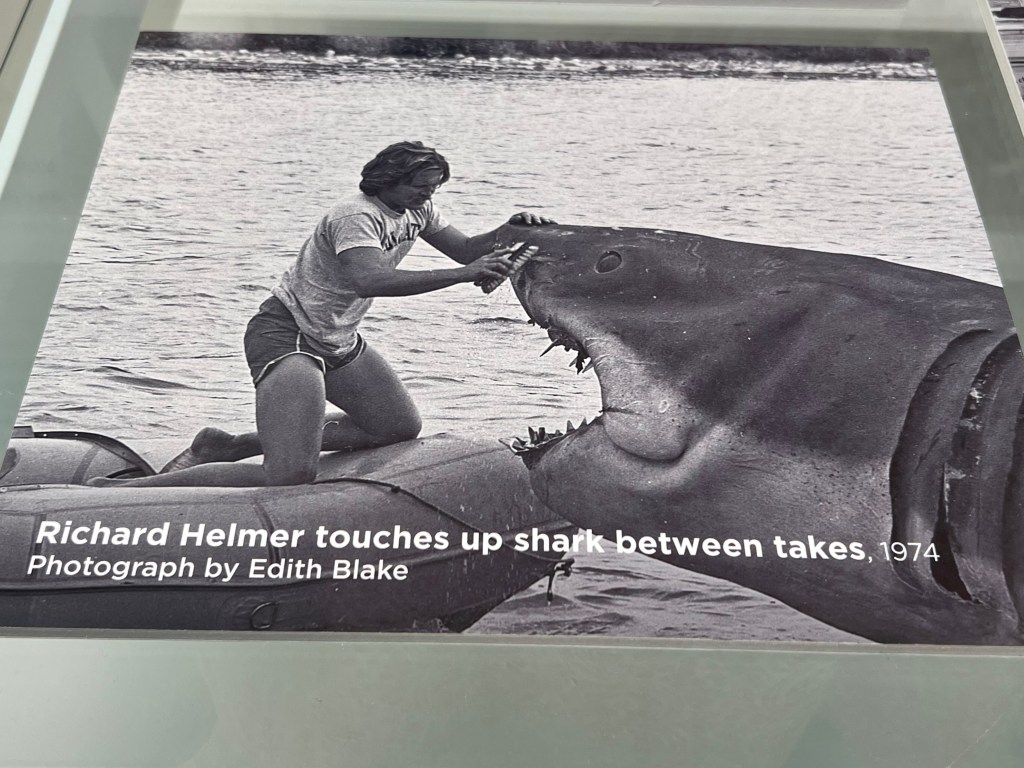
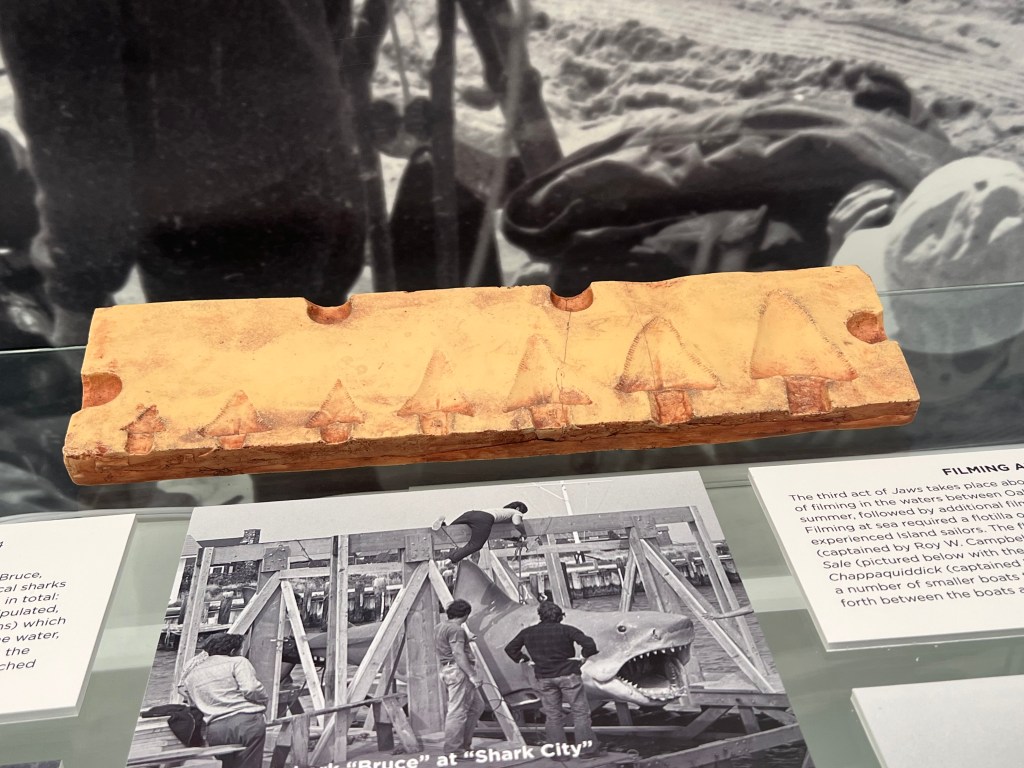
There were five mechanical sharks used in the film. As this panel notes, sometimes the sharks’ teeth needed replacement, and the display includes molds for making new teeth.

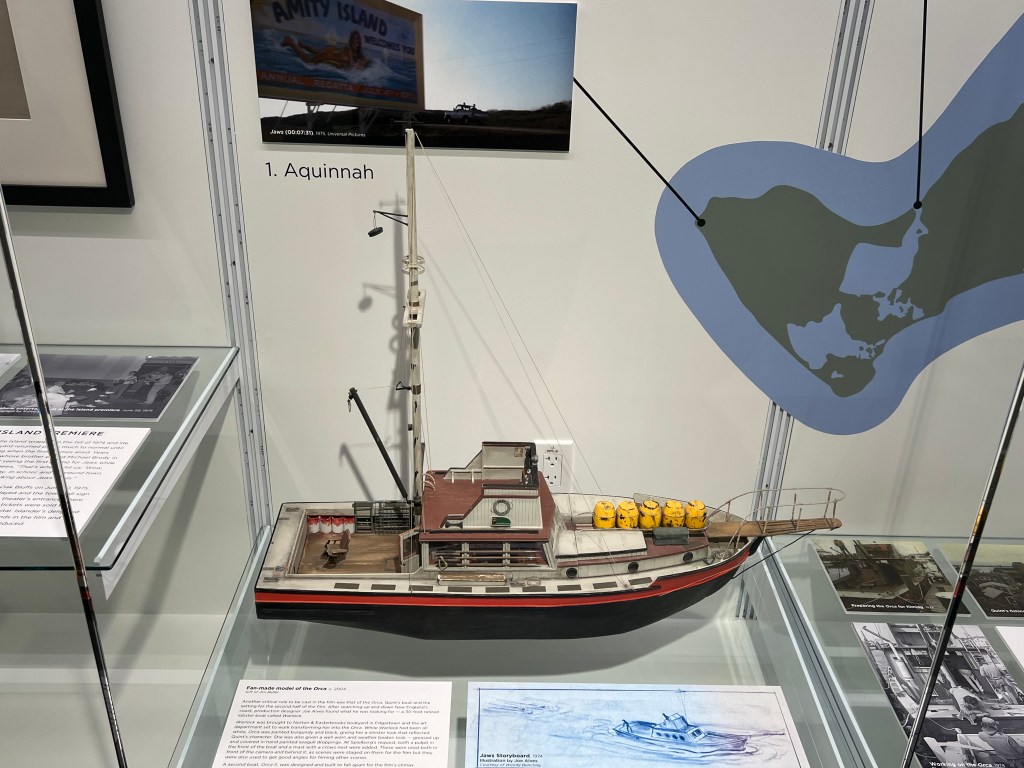
Key to the second half of the film is the gruff Quint and his boat, the Orca. The production designer found a 30-foot retired lobster boat that was transformed into the Orca. Here’s a model of the boat, below.
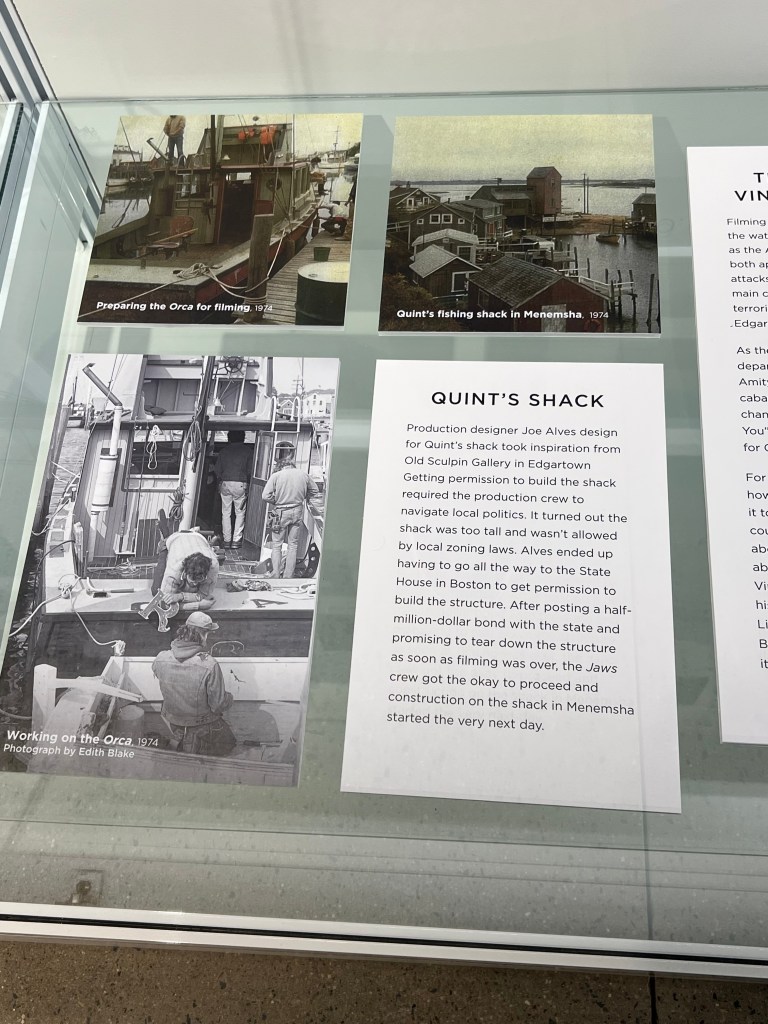
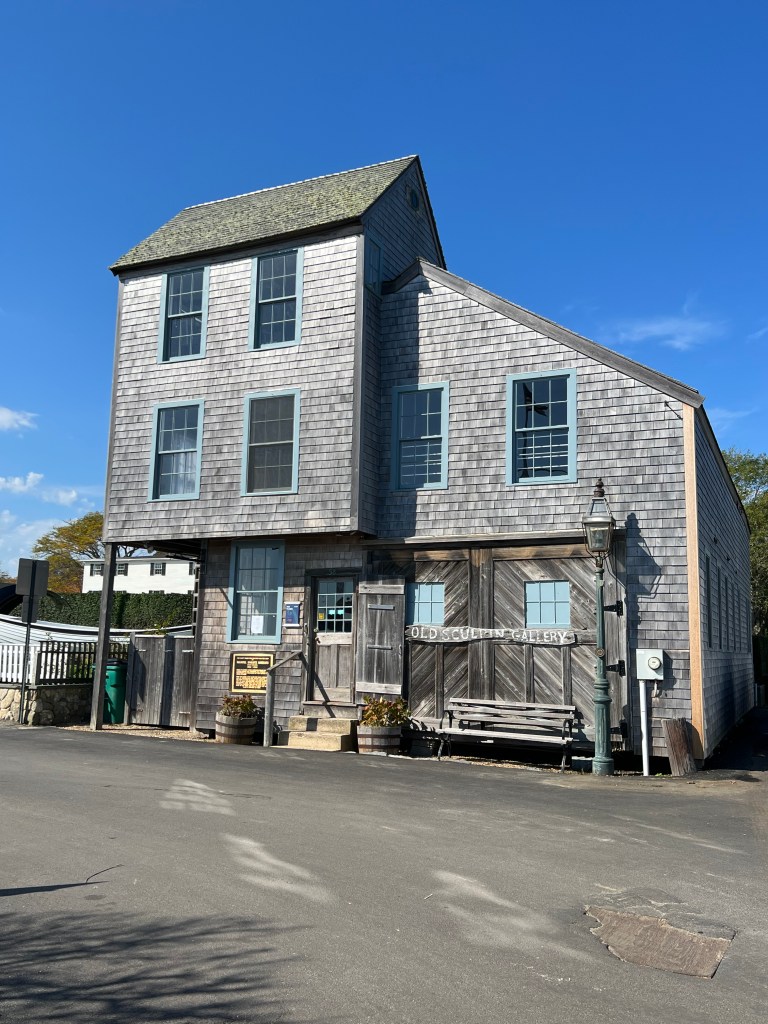
Quint’s fishing shack was based on what visitors to Martha’s Vineyard will know as Old Sculpin Gallery in Edgartown. This panel explains that construction of the reproduction in Menemsha required some political maneuvering.
Here’s my photo of Old Sculpin Gallery, below, taken in 2022. it is located on Dock Street, directly across from the ferry to Chappaquiddick.
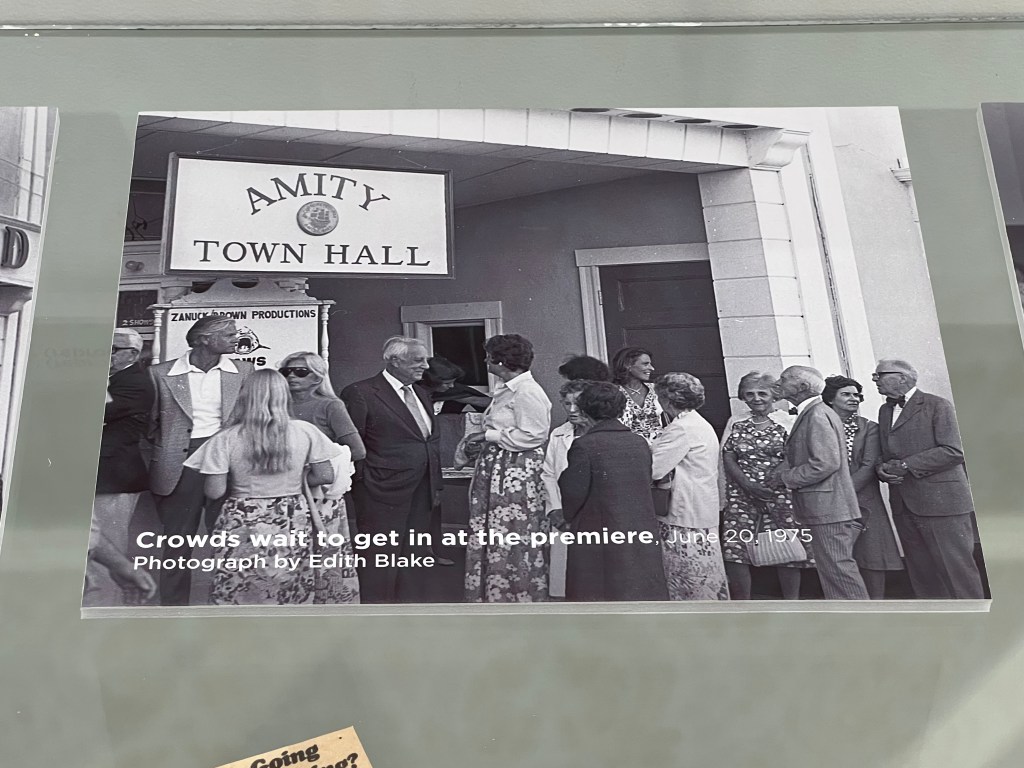
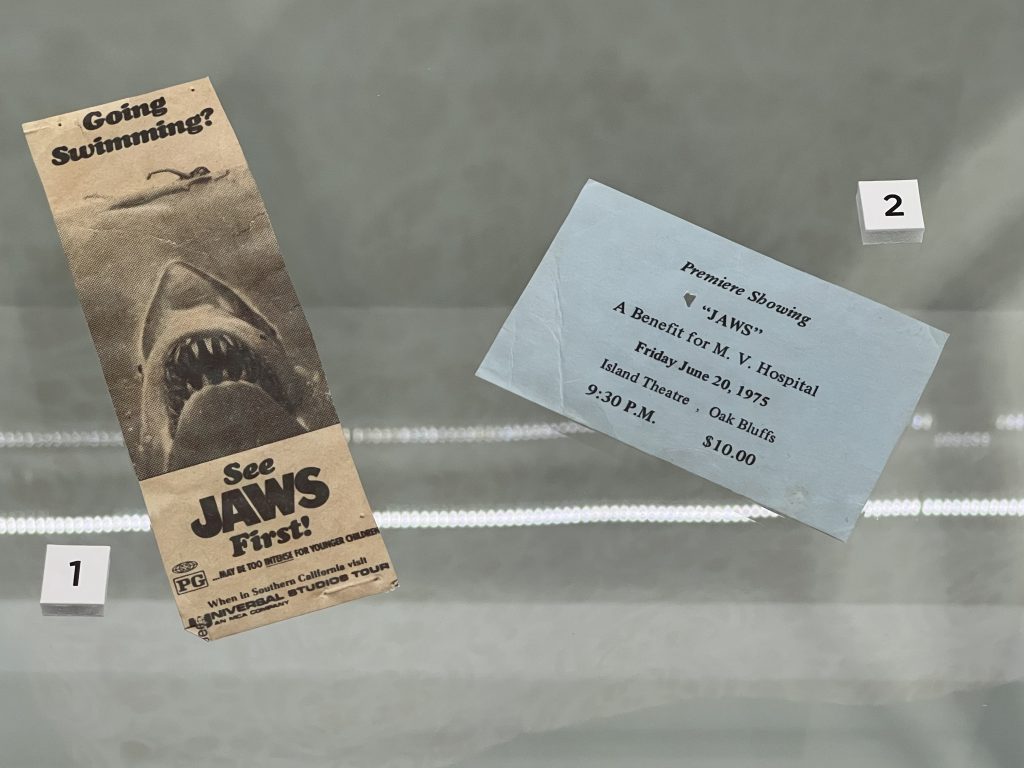
The island premiere of the film was on June 20, 1975, in Oak Bluffs. Ticket sales benefited the Martha’s Vineyard Hospital.

Here’s a sampling of collectibles associated with the film.

Here’s a link to the website of the Martha’s Vineyard Museum: https://mvmuseum.org
The museum has a number of temporary and permanent interesting exhibits about the island’s history, its diverse culture, and the natural environment. The main campus is in Vineyard Haven. The museum is the steward for both the Edgartown and East Chop lighthouses, as well as the 18th century Cooke House in Edgartown (currently closed for preservation work).
 Sandra's Town & Country